What Happened at the UN This Week: Lebanon’s Diplomatic Push, U.S-Iran Talks and Netanyahu’s Defiant Speech
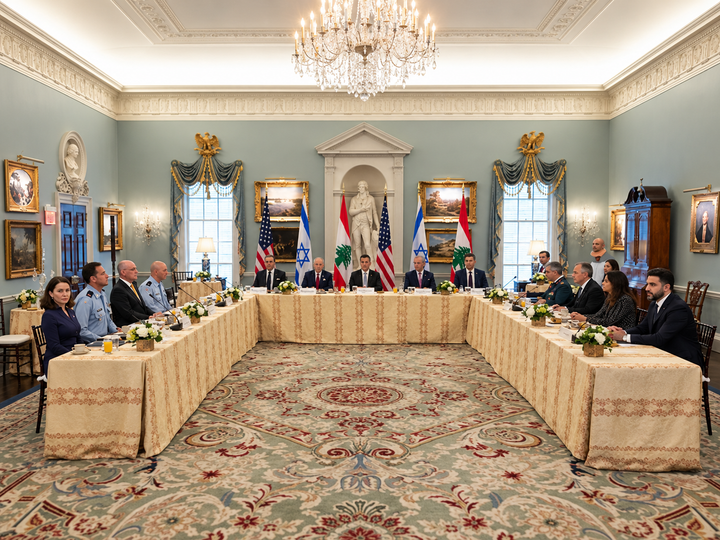
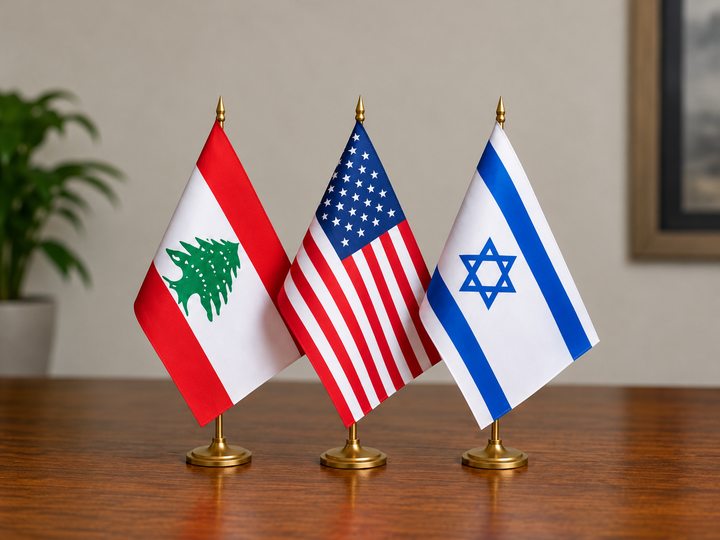
The 2026 UN General Assembly became a diplomatic crossroads for the Middle East. Nawaf Salam used the week to seek reconstruction support, prepare for the post-UNIFIL era and tell Iran that Lebanon wants a new “state-to-state” relationship free from regional proxy conflicts.
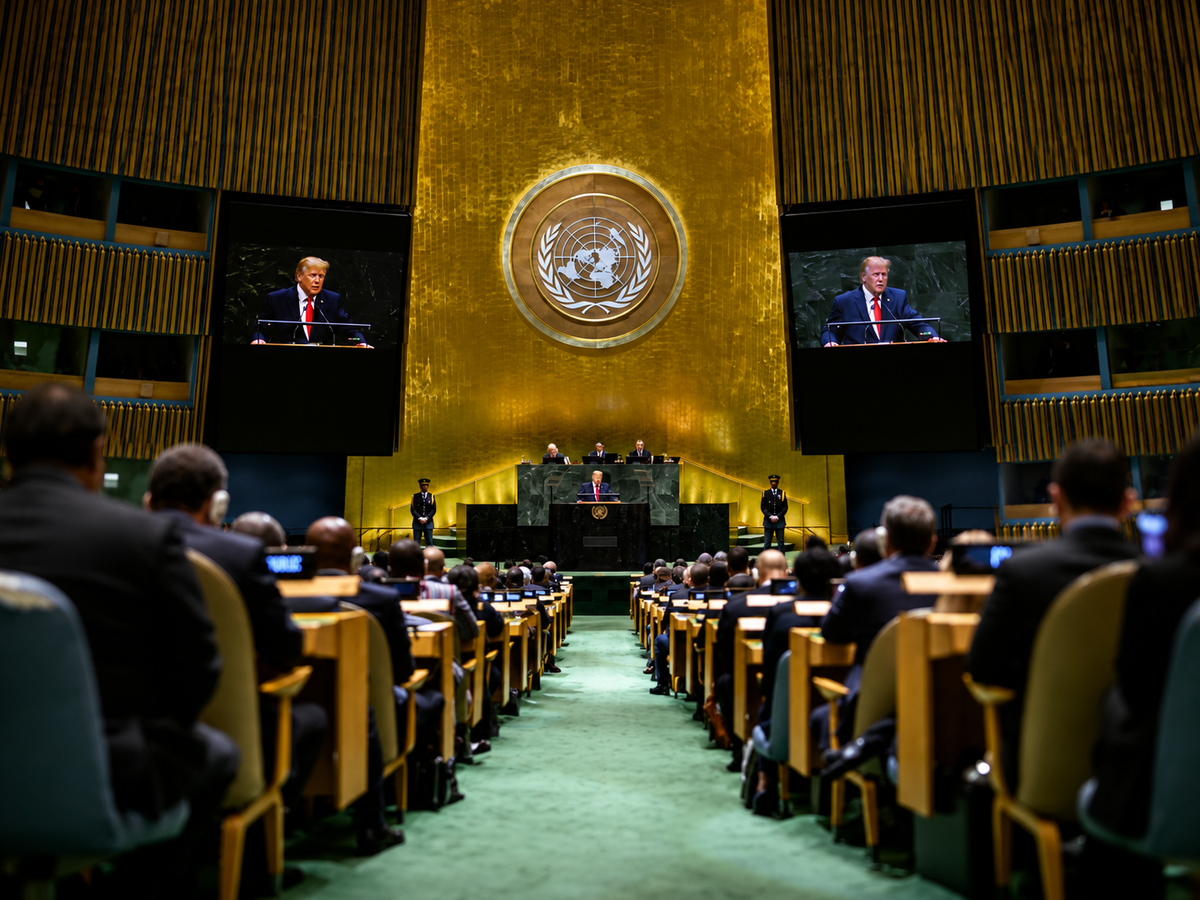
This year’s United Nations General Assembly was dominated by a Middle East already deep into several overlapping conflicts.
The war between the United States and Iran, Israel’s continuing wars across the region, fighting around the Red Sea, Lebanon’s unresolved confrontation with Hezbollah’s weapons, Gaza and the future of the Palestinian question all converged in New York.
For Lebanon, however, the week was unusually important.
Prime Minister Nawaf Salam used the gathering less as a ceremonial visit and more as a diplomatic campaign to reposition Lebanon: away from Iranian influence and regional proxy warfare, toward stronger state institutions, reconstruction, Arab relations and international financial support.
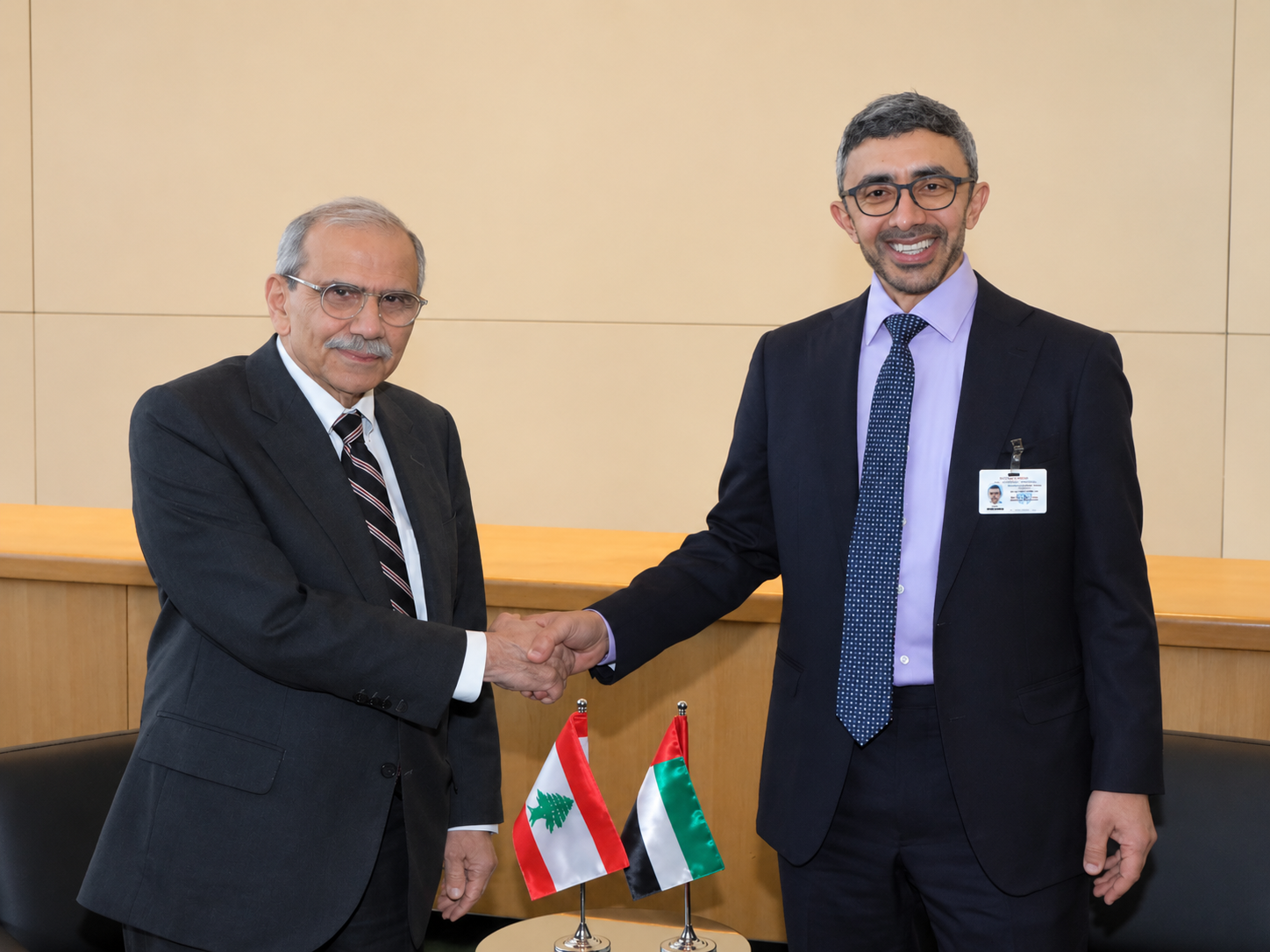
Salam began by meeting UN Secretary-General António Guterres, with southern Lebanon and reconstruction dominating discussions.
He said around 329,000 people remained displaced and called for continued humanitarian funding. More significantly, he proposed maintaining an international presence under a UN framework in southern Lebanon after UNIFIL’s departure, preserving monitoring and liaison functions as the Lebanese Army assumes greater responsibility.
The proposal has sparked debate. The government argues it would prevent a security vacuum while the Army builds its capabilities. But it also raises a difficult question: after UNIFIL has been present since 1978, why is Lebanon still discussing another international force rather than reaching the point where its own military can secure the country independently?
Strengthening the Lebanese state became a recurring theme throughout Salam’s meetings. With Spanish Prime Minister Pedro Sánchez, he discussed a post-UNIFIL arrangement and support for the Army. With the Arab League and Iraqi Prime Minister Ali al-Zaidi, discussions centered on state authority and concentrating weapons under state control.
Perhaps the most important part of Salam’s week, however, was his effort to turn Lebanon’s humanitarian crisis into an international reconstruction agenda.
On Wednesday, Salam co-chaired the “Moving Beyond Crisis” meeting with European Commissioner Dubravka Šuica and UNDP Administrator Alexander De Croo, attended by representatives from the World Bank, UNICEF, Germany, Japan, South Korea and others.
Salam argued that humanitarian relief, the return of displaced people and reconstruction can no longer be treated separately. Families are returning to towns where homes, schools, infrastructure and jobs have been damaged or destroyed, meaning all three processes must happen simultaneously.
He also stressed that international assistance should strengthen Lebanese state institutions rather than create parallel structures around them.
Salam’s New York agenda therefore increasingly resembled a pitch for Lebanon’s next phase: reconstruction funding, economic cooperation, stronger institutions and eventual international financial support.
His discussions also covered energy, electricity, transportation, infrastructure, investment, government modernization and digital services, in meetings with officials from Kuwait, Egypt, the UAE, Romania, Russia, Spain and others.
But two meetings stood out politically.
The first was with Syrian President Ahmad al-Sharaa.
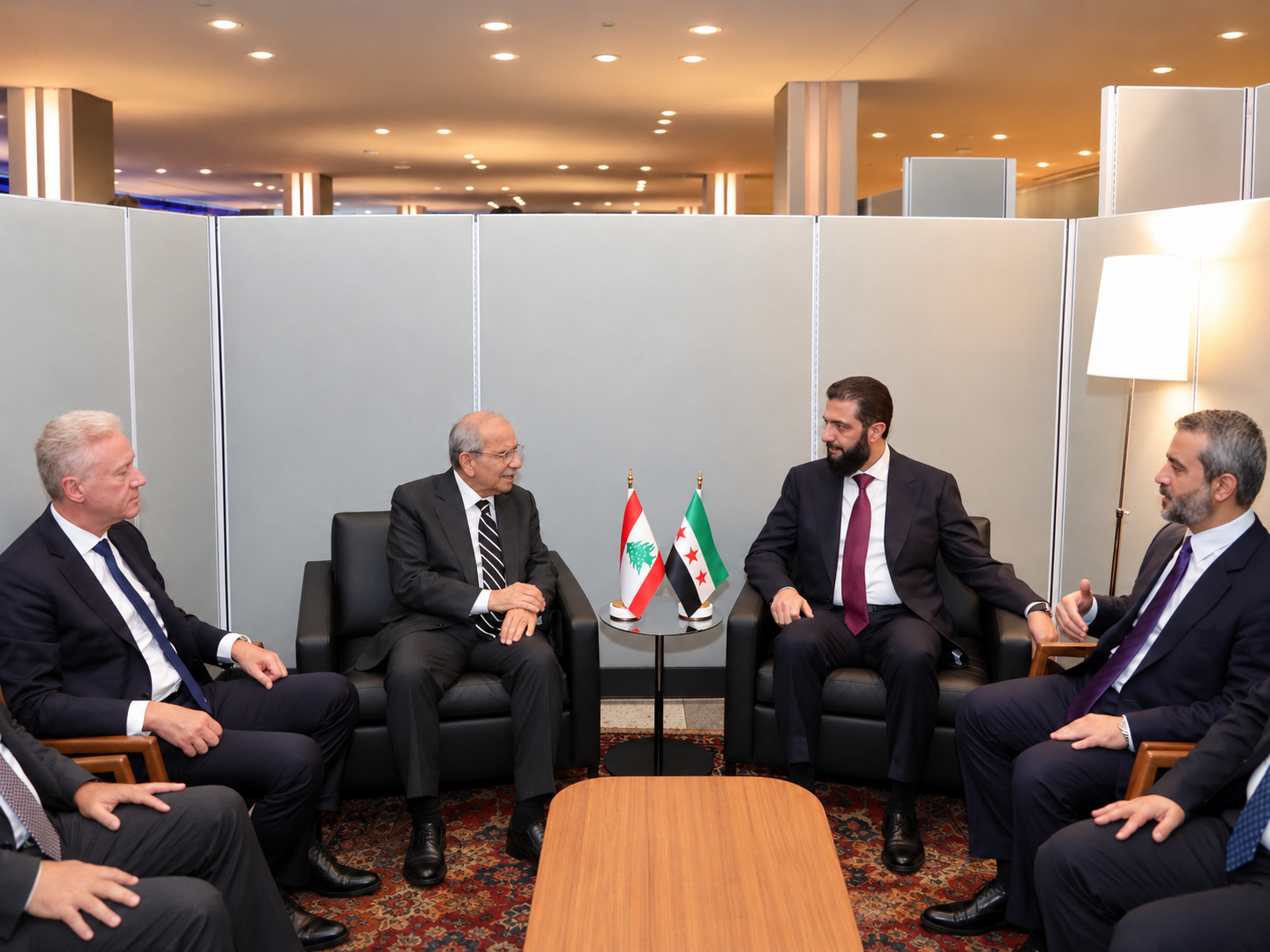
Lebanon and Syria are attempting to reconstruct a relationship deeply damaged by decades of Syrian domination of Lebanon, the Assad regime’s collapse and unresolved questions surrounding borders, prisoners, missing Lebanese and bilateral agreements.
The meeting in New York was presented as part of a broader reset between the two states.
The second, and more consequential, was with Iranian President Masoud Pezeshkian.
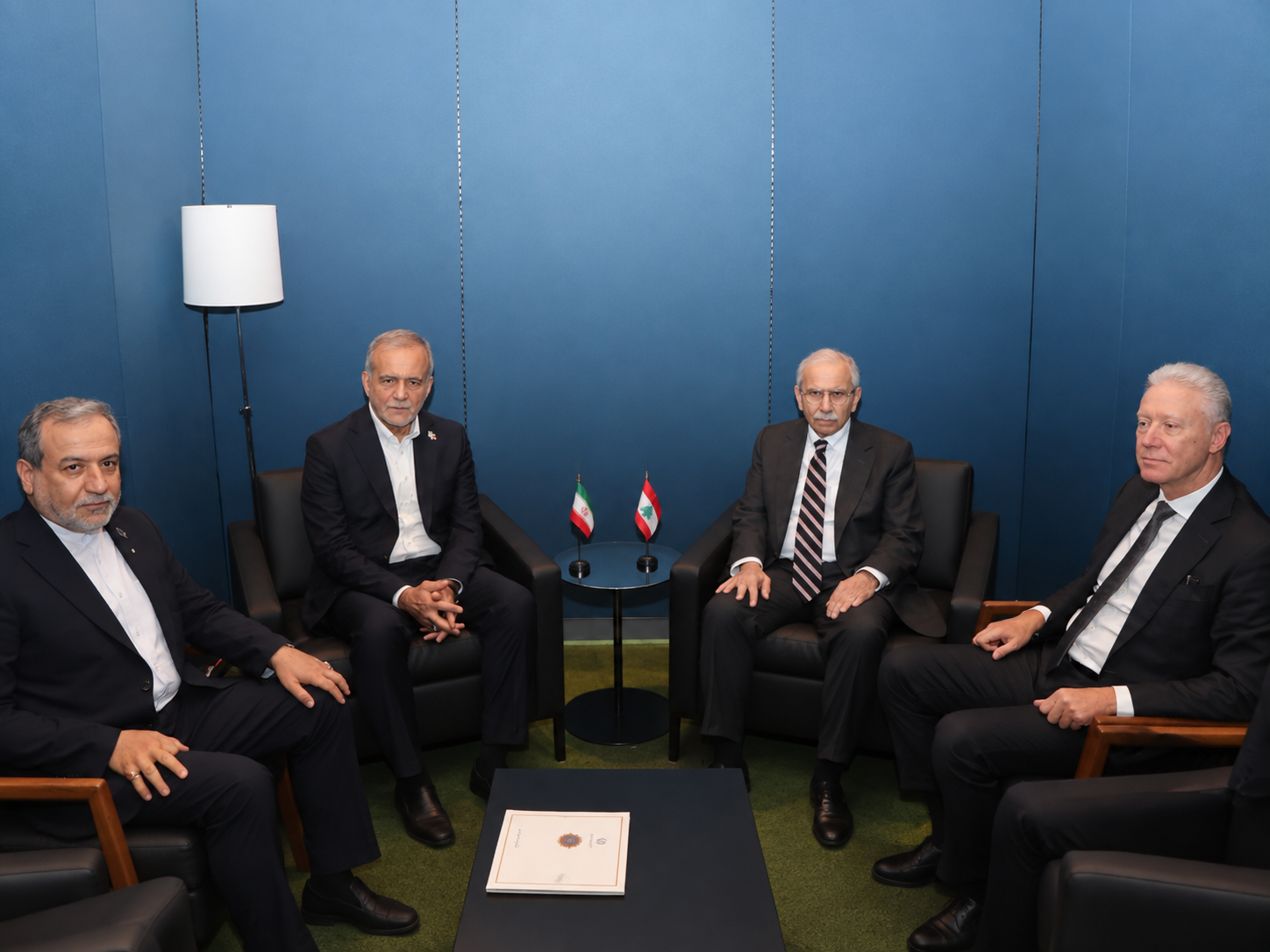
Salam told Pezeshkian that Lebanon had paid a heavy price in its security, stability and economy and “does not want to be an arena for regional conflicts or an exchange of messages.”
He called for a new relationship with Iran “from state to state,” based on sovereignty, non-interference and mutual interests.
Salam also reiterated that Lebanon’s priorities were complete Israeli withdrawal, an end to Israeli attacks and extending state authority across Lebanese territory with weapons exclusively in the hands of the state. He even asked Tehran to nominate a new ambassador to Lebanon.
The language was significant because Iran’s relationship with Lebanon has for decades been inseparable from its sponsorship of Hezbollah.
Salam was effectively trying to establish a different formula: Lebanon can maintain diplomatic relations with Iran, but those relations should run through the Lebanese state rather than through an armed organization operating outside full state control.
While Lebanon was pursuing that diplomatic reset, the biggest geopolitical development of the week was happening between Washington and Tehran themselves.
On Tuesday, U.S. and Iranian representatives held roughly three hours of talks in New York.
Trump said his envoys Steve Witkoff and Jared Kushner had participated and described the discussions as “very productive,” adding that another meeting was already planned. Iranian Foreign Minister Abbas Araghchi participated on Tehran’s side, although accounts differed somewhat over whether parts of the discussion were direct or mediated.
Iran used the talks to present conditions for reopening the Strait of Hormuz, which has become one of Tehran’s primary sources of leverage during the conflict.
Iranian state media said its demands included ending the naval blockade, releasing frozen Iranian assets and addressing the wider regional conflict. No agreement was reached.
Iranian President Masoud Pezeshkian then took the UN podium and made clear that negotiations did not mean capitulation.
He accused the United States of attacking Iran while diplomacy was underway and said Iran would not surrender under pressure. A senior Iranian official later told Reuters that Washington and Tehran remained far apart despite the renewed talks.
Trump had set the tone a day earlier with one of the week’s most confrontational speeches.
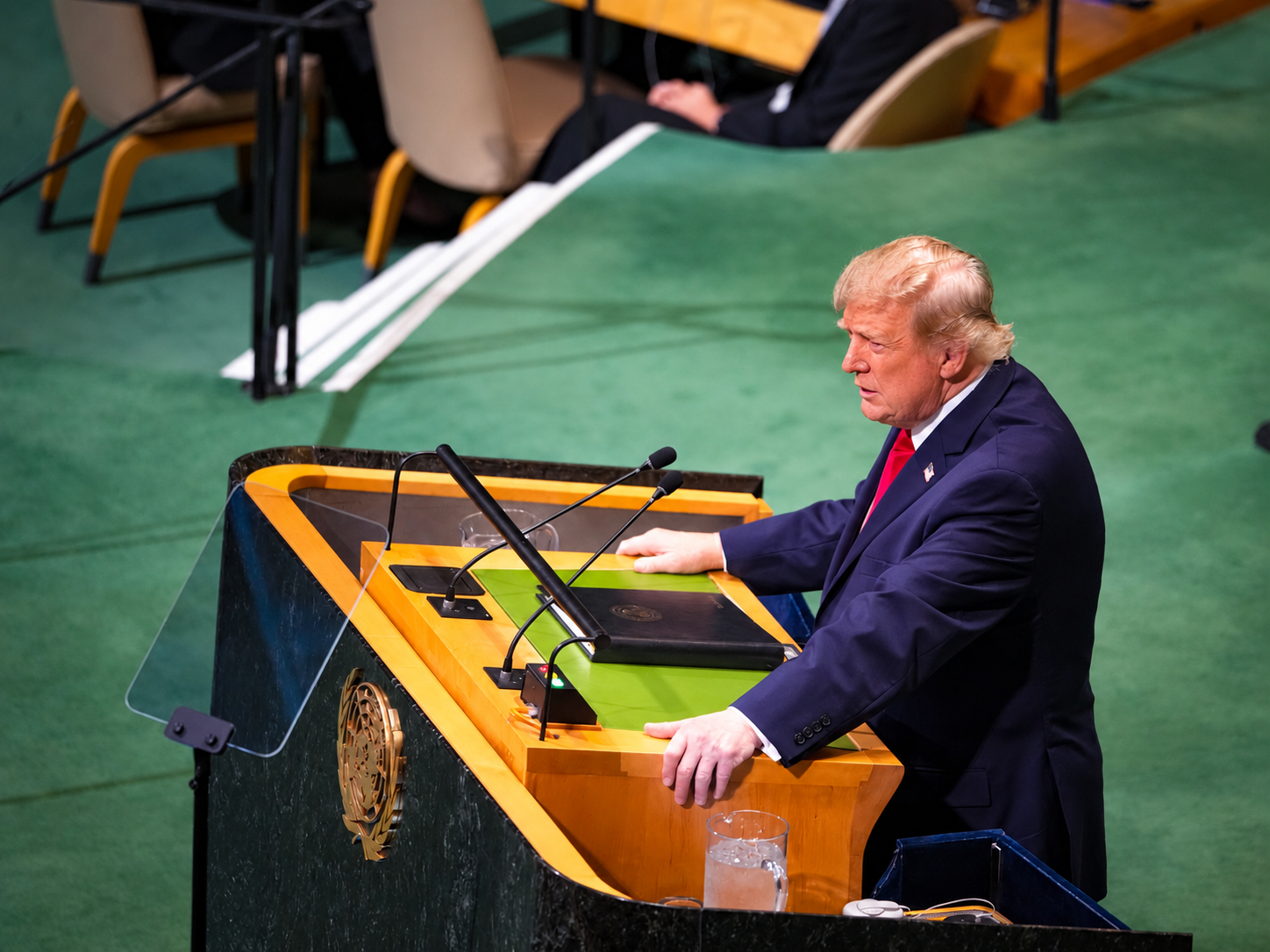
He defended the U.S. war against Iran, insisted Tehran would never be allowed to acquire a nuclear weapon and warned of devastating consequences if diplomacy failed. At the same time, he predicted that an agreement could eventually be reached.
Trump also attacked the International Criminal Court, defended a more aggressive American foreign policy and used part of his speech to promote American dominance in artificial intelligence, which he repeatedly referred to as “super intelligence.”
That combination, military threats followed hours later by negotiations, captured much of the strange character of this year’s General Assembly.
Countries were simultaneously fighting and talking.
Nowhere was that contradiction clearer than in Netanyahu’s appearance on Thursday.
Dozens of delegates walked out as the Israeli prime minister began speaking, an indication of Israel’s growing diplomatic isolation over Gaza. Netanyahu nevertheless delivered a defiant defense of Israel’s military record.
He called accusations that Israel committed genocide in Gaza the “biggest lie of the century” and argued that Israel had instead prevented genocide against its own population.
Netanyahu’s speech also focused heavily on Iran.
He ensured that Israel and the United States acted together against a threat to Western civilization and thanked Trump for his support.
In one of the speech’s most talked about moments, Netanyahu held up a Starlink terminal while talking about the Iranian population and later raised a pager while referring to the 2024 pager attacks against Hezbollah, a pointed message aimed directly at the outlawed organization.
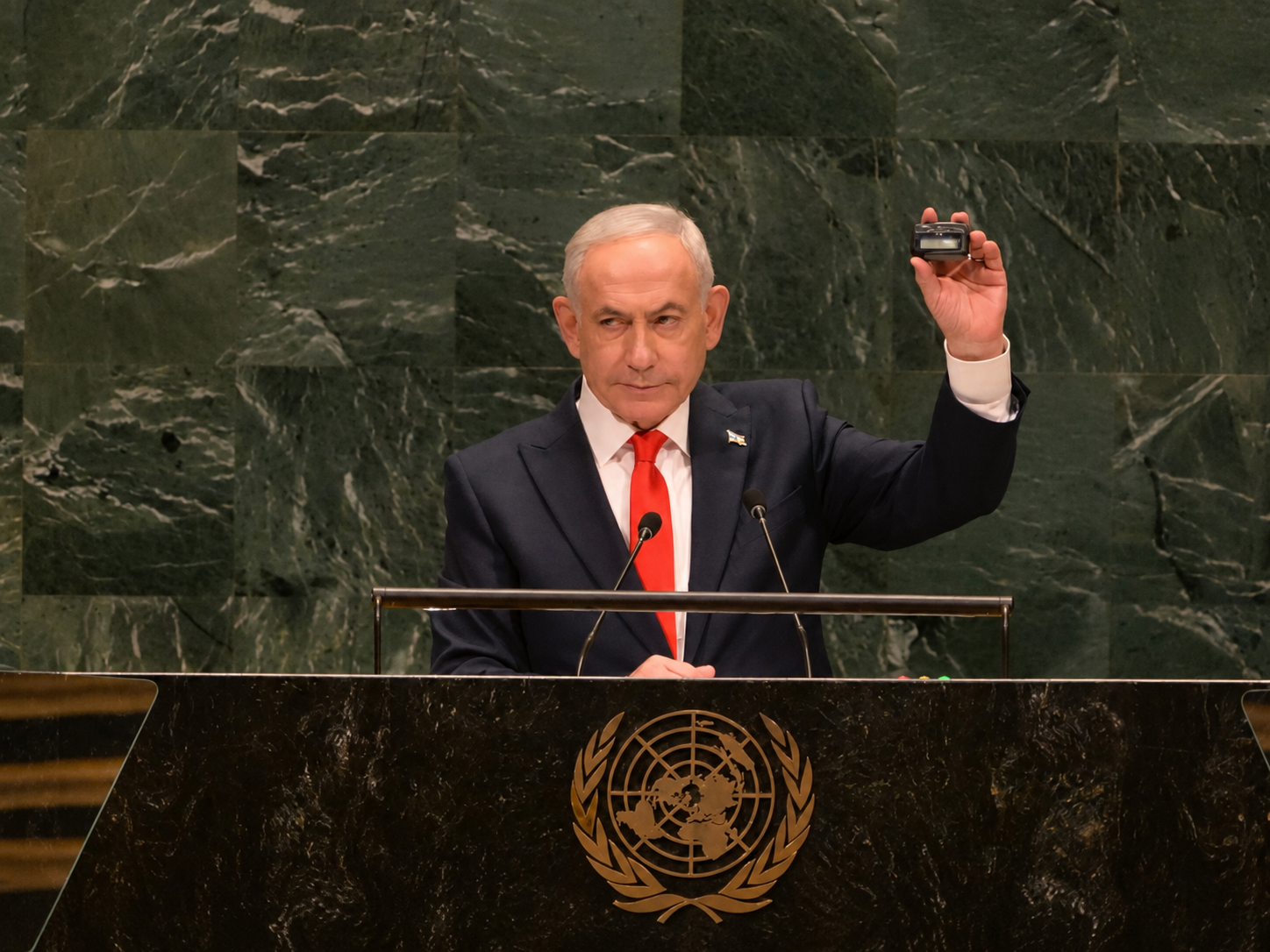
He also attacked Qatar and Türkiye, accusing both governments of contributing to hostility toward Israel, while notably saying little about Saudi Arabia or expanding the Abraham Accords, themes that had featured prominently in some of his earlier international speeches.
His appearance came amid a noticeably complicated relationship with Washington.
Netanyahu’s U.S. visit lasted only hours and included no meeting with Trump, a sharp contrast with previous visits. Reuters described the unusually short trip as reflecting strains in the relationship, particularly as Trump pursues negotiations with Iran while Netanyahu continues emphasizing military pressure.
Ukraine remained another major theme.
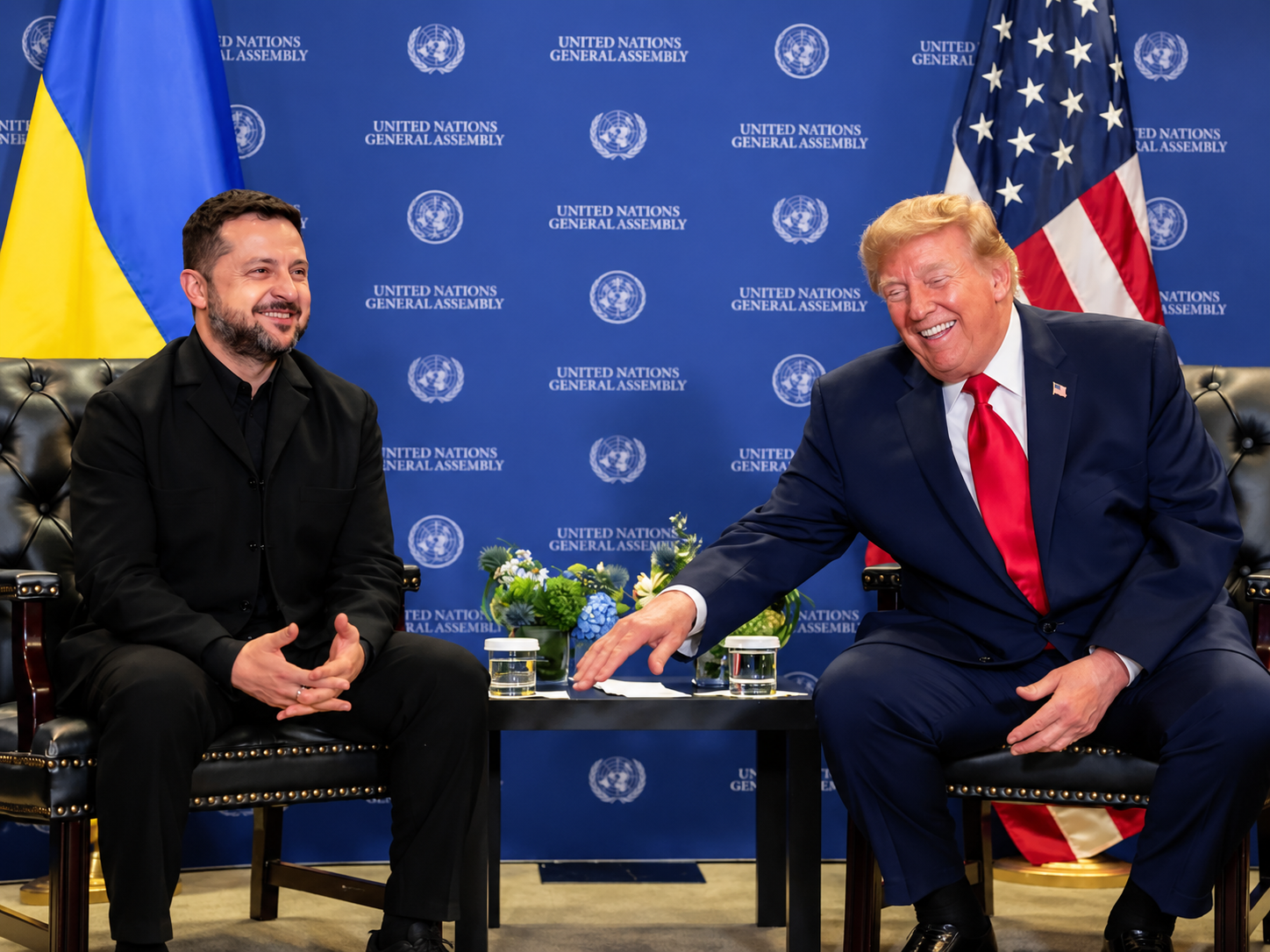
President Volodymyr Zelenskyy travelled to New York seeking further diplomatic support and discussions with Trump as Ukraine and Russia continue exchanging increasingly deep strikes against one another’s infrastructure.
Zelenskyy has been pressing particularly for renewed attempts to establish an energy truce before winter and for additional air-defense capabilities.
The broader UN message was therefore unusually bleak.
Secretary-General António Guterres opened the week warning that international law was under severe pressure and urging leaders to use the gathering for genuine de-escalation rather than simply delivering speeches.
He also placed artificial intelligence unusually high on the international agenda, warning that an uncontrolled technological arms race could create risks extending far beyond traditional geopolitics.
Even the president of the General Assembly framed the central problem bluntly: people are no longer asking whether the United Nations exists, but whether it works.
That question hung over almost every major issue discussed in New York.
Wars continued while leaders spoke about peace.
Iran and the United States negotiated while publicly threatening one another.
Netanyahu defended Israel before a hall from which dozens of diplomats walked out.
Lebanon asked the international community for reconstruction assistance while simultaneously trying to convince it that the Lebanese state can finally become the dominant authority inside its own territory.
And Gulf states increasingly used the week to push for regional de-escalation because the economic consequences of the wars, disrupted shipping, oil shocks and Houthi attacks, are becoming increasingly difficult to contain.
For Lebanon, however, the week may ultimately prove important if Salam can translate diplomacy into something concrete.
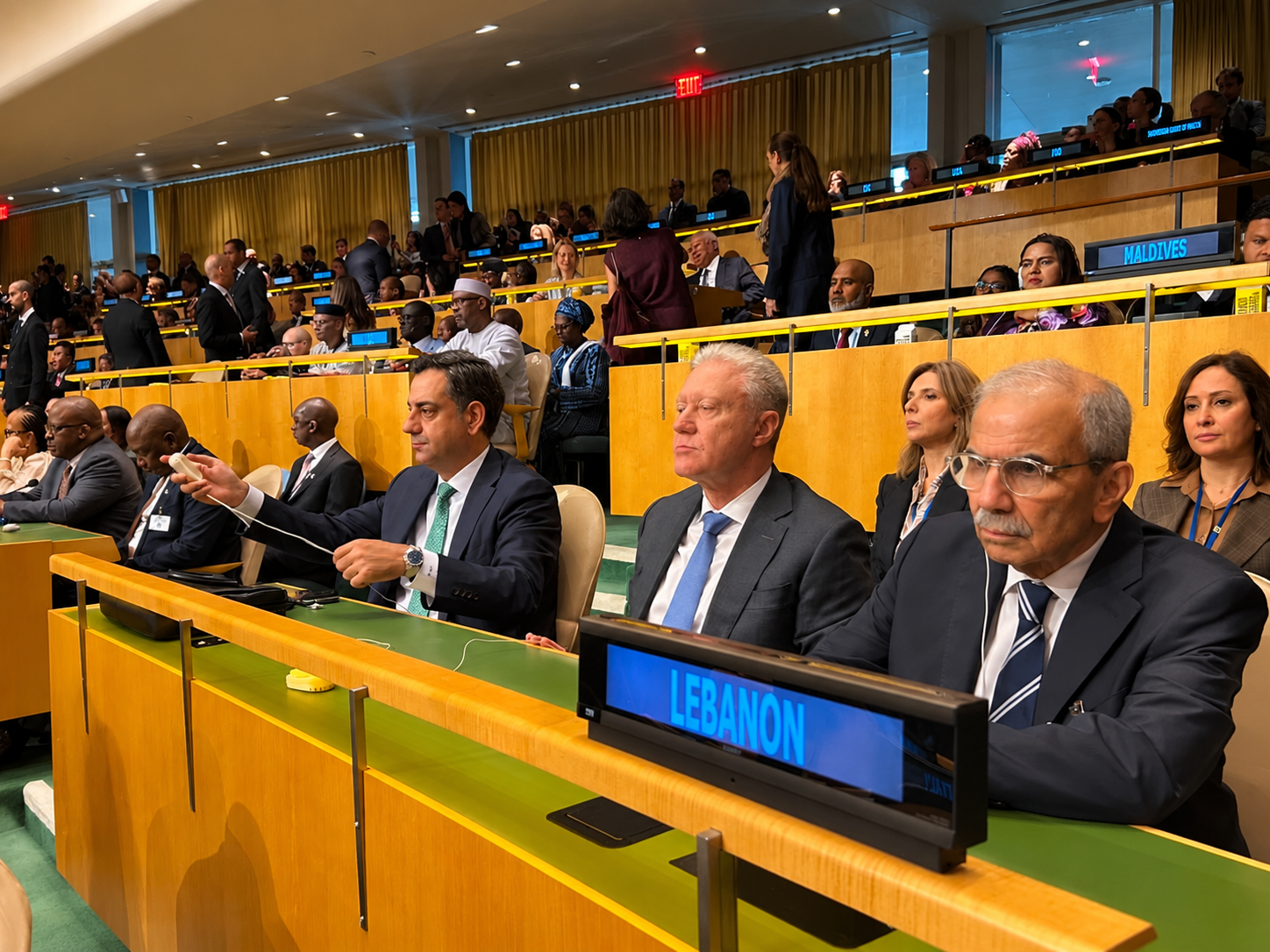
The question now is execution.
Lebanon has attended many international conferences.
It has received many declarations of support.
And it has repeatedly presented plans for reform, sovereignty and reconstruction.
The significance of this General Assembly will therefore not ultimately be measured by the number of meetings Salam held in New York.
It will be measured by whether Lebanon returns home with enough political and financial support, and enough domestic willingness, to turn those meetings into a stronger state.