Why Do Lebanese People Refer to Buildings by Their Former Owners?
In Lebanon, directions often refer to buildings by the names of former owners, long-closed businesses or landmarks that disappeared decades ago. These informal addresses reveal how neighborhoods preserve memories through everyday language, even as their physical surroundings change.
Ask a Lebanese person for an address, and you may receive directions that sound more like a family history than a location.
“Next to the old Khoury building.”
“Behind the house that belonged to the Haddads.”
“Across from the former pharmacy.”
The building may have changed owners decades ago. The pharmacy may have closed before the person giving directions was born. Yet longtime residents may still know exactly where to go.
In Lebanon, addresses are often more than street names and building numbers.
They are fragments of collective memory.
A City That Learned to Navigate Through Landmarks
Before digital navigation applications, finding an address in Beirut often depended on knowing the neighborhood.
People gave directions using churches, mosques, schools, shops, prominent families and recognizable buildings.
This practice is not unique to Lebanon, but it became particularly important in areas where formal addresses were inconsistently displayed or rarely used in everyday conversation.
Even where streets had official names, residents frequently preferred landmarks that were easier to recognize.
A building might be identified by a former owner's surname, a family that occupied it for generations or a business that once operated on the ground floor.
These informal names became part of the neighborhood's shared vocabulary.
They were not necessarily recorded on maps.
Yet they could be more useful than an official address.
When a Family Name Became a Place Name
In traditional Lebanese neighborhoods, buildings were often closely associated with the families who owned or occupied them.
A prominent family might own a large house, a commercial property or several adjoining buildings.
Over time, residents could begin using the family's name to identify the location.
Even when the property was sold or inherited by someone else, the familiar name could survive.
This was particularly useful in neighborhoods where generations of residents knew one another.
The name did not simply identify a building.
It recalled the family associated with it.
Across Beirut and other Lebanese towns, family names remain familiar references in descriptions of houses, buildings and streets.
Some family names are also found in official geographical names, although their origins vary.
Others survive only through spoken directions.
Shops That Disappeared but Never Left the Map
Family names are only part of the story.
Lebanese people also use businesses as informal geographical markers long after those businesses disappear.
A grocery store, bakery, cinema, pharmacy or petrol station might become the defining landmark of an intersection.
Years later, the business may be replaced by an apartment building, restaurant or clothing shop.
But the original name remains.
In Beirut, even the former Cinema al-Madina was documented as a reference point after the original establishment had disappeared.
Such names survive because directions are passed between residents and across generations.
A parent uses the landmark when explaining where to go. Their children may adopt the same expression without ever seeing the original establishment.
The place continues to exist in language after it has disappeared physically.
Beirut's Changing Streets
Beirut's urban history helps explain why these informal references became so durable.
The city experienced rapid expansion during the late nineteenth and twentieth centuries.
Residential districts expanded, older buildings were replaced and commercial streets developed.
The Civil War, from 1975 to 1990, then transformed large parts of the urban landscape.
Buildings were damaged or demolished. Families relocated. Businesses closed or moved.
After the war, reconstruction and real estate development brought further changes.
In neighborhoods such as Achrafieh, Hamra, Gemmayzeh and Zokak el Blat, successive generations witnessed the replacement of familiar landmarks.
Older names could nevertheless remain in everyday conversation.
An address might therefore preserve a reference to a building or business that no longer existed.
In a city where the physical landscape changed repeatedly, language offered a form of continuity.
The Address as a Social Network
Informal directions also reflect the social structure of Lebanese neighborhoods.
Historically, many communities developed around extended families, local businesses, religious institutions and personal relationships.
Knowing where someone lived could also mean knowing their family.
A building associated with a well-known household became a useful point of reference.
The same applied to doctors, shopkeepers, teachers and other familiar figures.
Their homes or workplaces could serve as landmarks because people recognized their names.
This made directions deeply personal.
Instead of describing a location exclusively through a numbering system, residents identified it through someone connected to the neighborhood.
The address became a small expression of local social history.
Why Official Street Names Never Fully Replaced Them
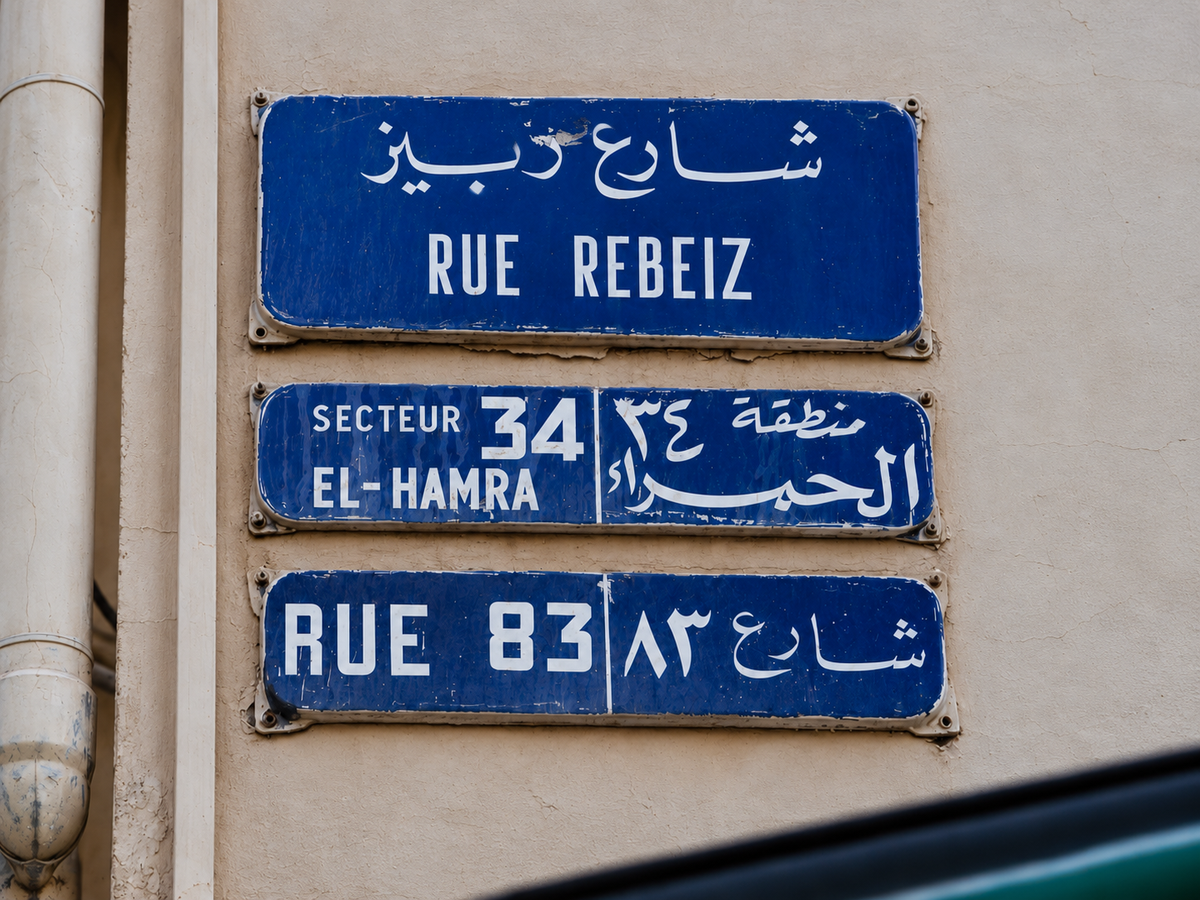
Lebanon has official street names, municipal records and a recognized postal-addressing format.
That format can include a building name, floor, street and nearby landmark.
But formal addresses have never completely displaced informal directions.
One reason is familiarity.
Residents may know a landmark better than the official name of the street where it stands.
Another is continuity.
Street names can change, while neighborhood expressions may remain familiar.
Building numbers may also be missing, difficult to locate or inconsistently displayed.
As a result, people frequently combine formal and informal information.
An address might include a district, street, building name and nearby landmark.
Even delivery drivers and visitors may find a recognizable shop or family building more useful than a number alone.
The Memory Hidden in Everyday Directions
What makes this habit particularly interesting is the history it preserves.
A former owner's name can reveal which families were once associated with a neighborhood.
An old cinema can recall a period when movie theaters were important gathering places.
A vanished bakery may preserve the memory of a commercial street before its transformation.
These references are not always documented in official records.
They survive through ordinary conversations.
In that sense, informal addresses function as a kind of oral map.
They record how residents remember a place rather than simply how authorities classify it.
But this memory is fragile.
When older residents leave or die, the meaning of a familiar landmark can disappear with them.
Younger generations may continue using a name without knowing its origin.
Eventually, even the name may be forgotten.
What Happens When the Neighborhood Changes?
Lebanon's continuing urban transformation makes these informal addresses increasingly significant.
Old houses are demolished. Long-established businesses close. Families move abroad.
New residents may not recognize the names that once defined a street.
A landmark that made perfect sense to one generation can become meaningless to another.
This creates an unusual situation.
Two people can live in the same neighborhood but navigate it through entirely different maps.
One uses the names of modern businesses and buildings.
The other still refers to families, shops and landmarks that disappeared years earlier.
Both are describing the same place.
But each is also describing a different period of its history.
A Living Archive of Lebanese Neighborhoods
There is something distinctive about a building retaining the name of someone who no longer owns it.
It shows how strongly places can become associated with the people who inhabited them.
Official maps document streets and geographical locations.
Informal addresses preserve relationships, memories and local identities.
Neither system tells the complete story on its own.
Together, they reveal how Lebanese neighborhoods have developed and changed.
The next time someone gives directions using the name of a former owner or a long-closed shop, the reference may sound outdated.
But it carries a piece of history.
A building can change hands. A business can close. An entire street can be rebuilt.
Yet the old name may survive for another generation.
And sometimes, that name is one of the last reminders of what once stood there.