Why Does France Keep Erupting? Immigration, Integration and a Growing Crisis in the Banlieues
France’s latest unrest began as a student revolt over failing schools, but its rapid spread through disadvantaged suburbs has again exposed deeper problems involving inequality, integration and distrust of the state.
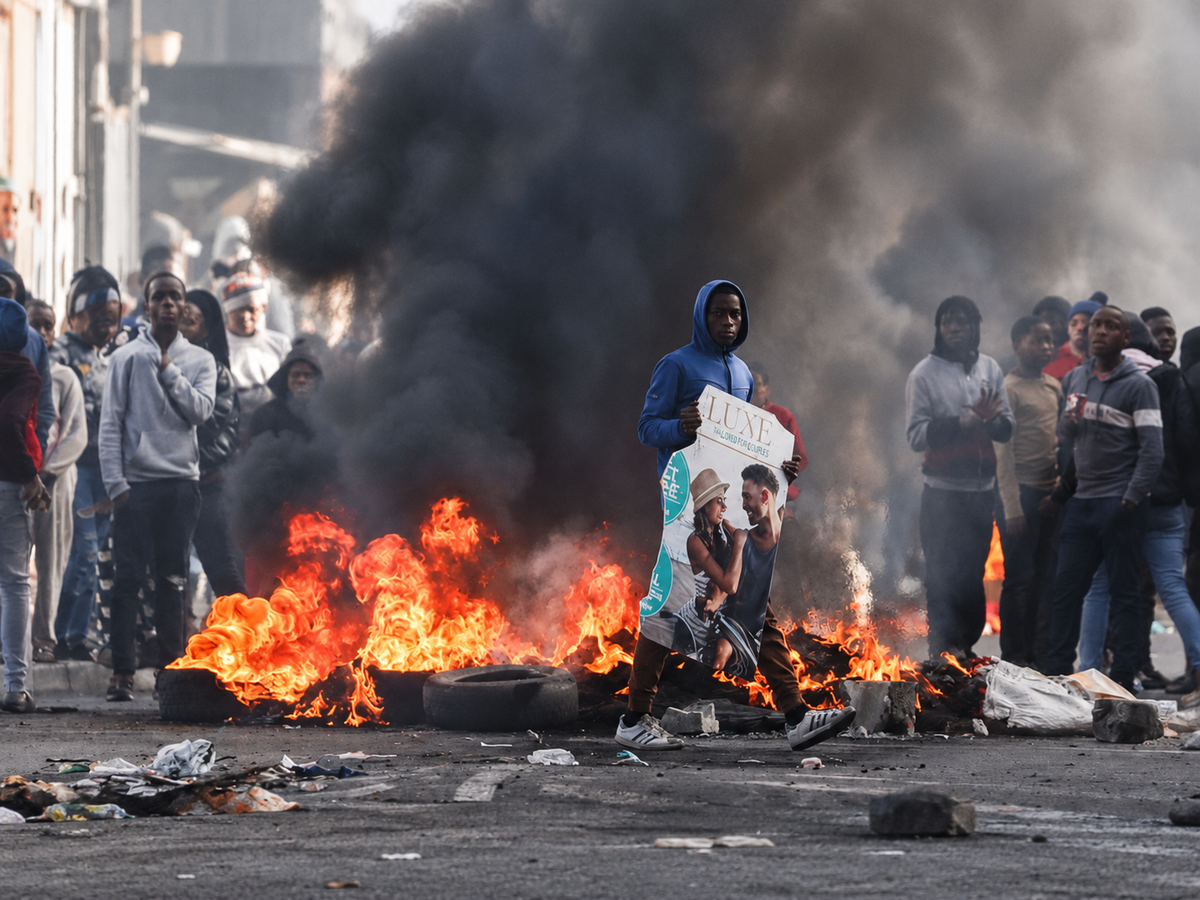
France is once again dealing with scenes of burning vehicles, smashed property, clashes with riot police and thousands of arrests.
The unrest that began in late September started as a high-school protest movement over teacher shortages, overcrowded classrooms, deteriorating school buildings and frustration with France’s education system. It began in disadvantaged areas around Paris before spreading to more than 1,200 schools across the country. Around 5,000 people, many of them teenagers, have been arrested, while hundreds of police officers have been injured.
But the speed with which another protest movement turned into widespread urban violence has reopened a much larger question France has struggled with for decades.
Why does this keep happening?
There is no single explanation.
France has a deep tradition of disruptive protest extending far beyond immigrant communities, from the May 1968 uprising to the Yellow Vests, pension protests and farmers blocking highways.
But many of the most explosive episodes of urban unrest have repeatedly emerged from the same places: poorer suburbs surrounding cities such as Paris, Lyon and Marseille.
And that is where France’s immigration and integration policies become difficult to separate from the wider story.
France has accepted large-scale immigration for decades without consistently succeeding at integrating parts of the resulting population into the economic and social mainstream.
In 2025, France had approximately 7.97 million immigrants, representing 11.6% of its population, according to the national statistics agency INSEE. The OECD uses a broader foreign-born measure and estimates roughly 9.3 million foreign-born residents, around 14% of the population.
Those figures do not make France exceptional by European standards.
Foreign nationals actually represented a smaller share of France's population in 2024 than the EU average.
The issue is less simply how many immigrants France has accepted than what happened afterward.
Large numbers of immigrant families and their descendants became concentrated in suburban housing estates where unemployment, weaker schools, poor public services and limited social mobility often persisted across generations.
That produced a contradiction at the heart of the French model.
Officially, France emphasizes assimilation.
The Republic generally avoids organizing society around ethnic or religious communities. The expectation is that newcomers eventually become simply French.
But assimilation requires more than citizenship.
It requires access to functioning schools, employment, housing, language acquisition and meaningful participation in the wider economy.
In many banlieues, that process has been incomplete.
The current protests illustrate the problem particularly clearly.
Students in places such as Seine-Saint-Denis have complained about schools where teachers are routinely absent because replacements cannot be found, buildings are deteriorating and classrooms are overcrowded.
Those grievances are not fundamentally about immigration.
But they exist in areas where decades of immigration, housing policy and economic segregation have created unusually young and socially disadvantaged populations.
When those institutions fail, frustration can become combustible.
This is not a new phenomenon.
In 2005, riots spread across France after two teenagers, Zyed Benna and Bouna Traoré, died after fleeing police in Clichy-sous-Bois.
The unrest lasted weeks and resulted in thousands of vehicles being burned.
In 2023, France experienced another enormous wave of riots after a police officer shot and killed 17-year-old Nahel Merzouk during a traffic stop in Nanterre.
Once again, unrest spread rapidly through many of the same suburban communities.
Those episodes were triggered by policing.
The current one began with schools.
The common denominator is deeper distrust between parts of the population and the institutions surrounding them.
Immigration policy is therefore only one piece of the problem.
But European governments have often made that problem harder by treating immigration policy and integration policy as separate questions.
For years, much of Europe focused on whether migrants could enter.
Far less political attention was devoted to what happens twenty years later.
France continued receiving substantial numbers of newcomers even while struggling to integrate parts of previous generations.
In 2024 alone, the country received around 298,000 new long-term or permanent immigrants. Around 34% came through family migration, 22% through European free movement, 20% for work and 14% through humanitarian routes.
That does not mean those migrants cause riots.
It means every new arrival creates another long-term integration obligation.
Housing must exist.
Schools must have capacity.
Language training must work.
Employment must be available.
The state has to maintain authority.
And newcomers have to accept the legal and social rules of the society they are entering.
When immigration continues faster than these institutions can absorb it, problems accumulate rather than disappear.
Europe has often avoided confronting that trade-off.
For years, governments allowed asylum systems designed for relatively limited refugee flows to become one of the primary pathways for irregular migration.
Rejected asylum seekers have frequently been difficult to remove.
Migrants can cross several European countries before their legal status is determined.
Individual states blame neighboring countries.
And the European Union has spent years negotiating increasingly complicated systems for deciding which country should process which applicant.
The new EU Migration and Asylum Pact, which entered into application in France in June 2026, is intended partly to address those weaknesses through faster screening, border procedures and burden-sharing between member states.
Even its implementation has already produced legal and political disputes in France.
At the English Channel, the limits of existing policy are equally visible.
France and Britain are now preparing to abandon their experimental "one in, one out" migration arrangement after France concluded that it had failed to produce the expected results.
Nearly 50,000 people attempted to cross the Channel in 2025, despite years of additional policing and bilateral agreements intended to stop the journeys.
That illustrates a broader European problem.
Governments have repeatedly promised tighter migration control while struggling to demonstrate that they can actually control who enters, who remains and who must leave.
At the same time, political debate frequently swings between two simplistic positions.
One treats almost every discussion of immigration as inherently hostile to immigrants.
The other treats immigration as the explanation for almost every social problem.
Neither is particularly useful.
France’s current unrest cannot simply be described as "immigrant riots."
Many participants were born in France.
Many are French citizens.
The present demonstrations began over genuine failures in education, not migration.
But it is equally difficult to deny that decades of poorly managed integration, concentrated deprivation and repeated immigration into already strained communities have contributed to the environment in which some of France’s most persistent social tensions now exist.
France has spent enormous sums attempting to regenerate disadvantaged neighborhoods.
It has built transport links, renovated housing estates and created special education and employment programs.
Yet disparities persist.
Immigrants and descendants of immigrants continue to experience significant differences in employment outcomes depending on their backgrounds, according to INSEE.
Discrimination also plays a role.
So does geography.
So does educational failure.
So does crime.
So does the collapse of stable employment in many former working-class areas.
And so does the difficulty of integrating large populations arriving from societies with different languages, institutions, religious traditions and social norms.
A serious immigration policy has to acknowledge all of those things simultaneously.
Europe needs workers.
It has an aging population.
It has humanitarian obligations.
And immigration has produced millions of successful citizens, businesses and communities.
But immigration is not cost-free simply because it can produce economic benefits.
Numbers matter.
Selection matters.
Border control matters.
Integration capacity matters.
And a country has the right to expect people who settle permanently within it to participate in its economy, respect its laws and become part of its civic society.
The lesson from France is therefore not that immigration inevitably produces unrest.
It is almost the opposite.
Immigration without effective integration creates risks that can persist long after the original migrants have arrived.
France’s problem today is not simply that millions of immigrants came to the country.
It is that parts of the country have developed parallel social realities in which unemployment, weak schools, distrust of police and limited upward mobility reinforce one another.
Every new riot has a different trigger.
Police violence.
Pensions.
Fuel prices.
Schools.
Government spending.
But when disturbances repeatedly ignite in the same disadvantaged urban environments, eventually the underlying structure has to be examined as well.
Europe has spent years debating how many migrants it should accept.
The harder question may be the one France is confronting now.
What happens when a country accepts people faster than it can successfully integrate them?