800 Kilograms of Explosives, Two Hezbollah Members, and a Question Lebanon Cannot Ignore
Lebanese security forces reportedly arrested two Hezbollah members at Dahr al-Baidar while transporting a massive cache of explosives, with MTV placing the total at around 800 kilograms.
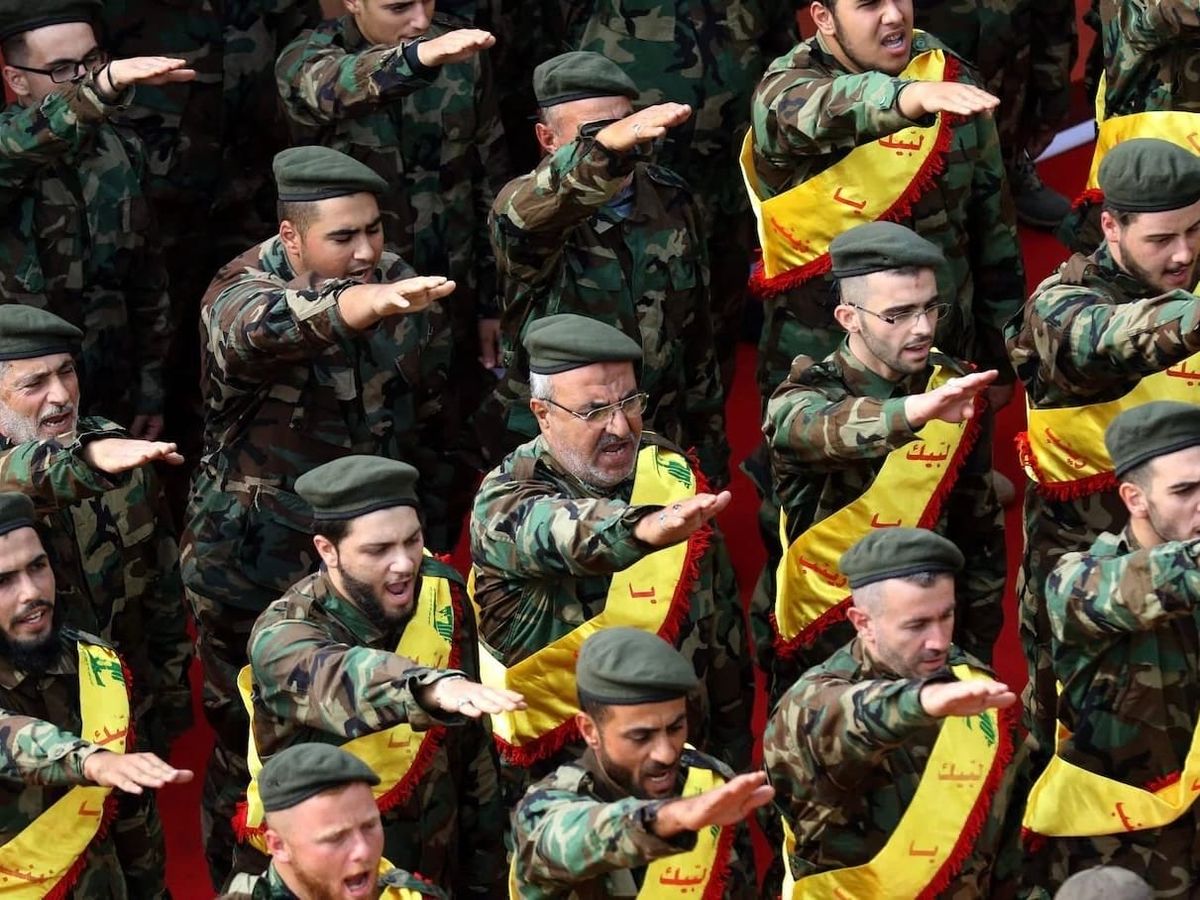
Lebanon’s security forces have intercepted a vehicle carrying a massive quantity of explosives and arrested two men identified by multiple Lebanese outlets as Hezbollah members.
According to MTV, the arrests took place at the Dahr al-Baidar checkpoint on October 9 after Internal Security Forces discovered hundreds of kilograms of C4 inside the vehicle. MTV later reported that the total quantity of explosives reached approximately 800 kilograms. The two suspects were transferred to the Army’s Military Police for questioning over the shipment and whether additional people were involved.
Other Lebanese reporting has added further detail.
An-Nahar, citing a Lebanese security source, said the cache consisted of around 800 kilograms of explosives, including TNT and C4. Other outlets have reported somewhat different breakdowns, including roughly 250 kilograms of TNT and 250 kilograms of C4, meaning the exact composition has not yet been officially clarified.
What is clear is the scale.
This was not a handful of weapons.
It was not ammunition for individual fighters.
It was an industrial quantity of high explosives moving through Lebanon in a vehicle driven by two Hezbollah members.
That immediately raises the most important question:
What was it for?
For now, no official authority has publicly established the final destination or intended target of the shipment.
Military Police are still investigating.
One major possibility: assassination operations.
IMLebanon reported, citing its own sources, that the way the explosives were divided and prepared raised suspicions that they could have been intended for bombings or assassinations. An-Nahar similarly noted that Lebanese media circles were discussing the possibility of an assassination plot.
Even without proving the intended target, however, the discovery should be treated as a national security scandal.
Hezbollah is under growing pressure to surrender its weapons and place all military activity under state authority.
The Lebanese government has repeatedly said that the state must possess the monopoly on arms.
The Army has begun confiscating weapons and dismantling military infrastructure in parts of the south.
Yet two alleged Hezbollah members have now reportedly been caught transporting hundreds of kilograms of C4 and TNT through the country.
If the reporting is confirmed by the investigation, that would suggest Hezbollah’s covert military infrastructure is still operating far beyond the front line.
And Lebanon has seen before where clandestine explosives networks can lead.
The most important established case is the assassination of former Prime Minister Rafik Hariri.
Hariri was killed on February 14, 2005, when a massive truck bomb exploded in central Beirut, killing him and 21 others.
A United Nations-backed tribunal later convicted three Hezbollah members in absentia for their roles in the assassination. Hezbollah denied responsibility and rejected the tribunal.
That history is why the Dahr al-Baidar seizure cannot be treated as an ordinary weapons-smuggling case.
Lebanon has lived through decades in which political violence, car bombs and assassinations repeatedly altered the country’s political trajectory.
Journalists.
Politicians.
Security officials.
Intellectuals.
Party figures.
Many Lebanese still remember the years when every major political confrontation seemed to carry the possibility that another explosion would follow.
Not every unresolved assassination can responsibly be attributed to Hezbollah.
But the Hariri case established through an international tribunal that Hezbollah members were involved in at least one of the most consequential political assassinations in Lebanon’s modern history.
That makes any unexplained movement of hundreds of kilograms of high explosives by alleged Hezbollah personnel a matter requiring complete transparency.
The state must establish where the shipment originated.
Where it was going.
Who ordered its movement.
Who financed it.
Who was supposed to receive it.
And why weapons of this scale were moving through Lebanon outside state authority at all.
Anything less would reinforce the central problem Lebanon has failed to resolve for decades.
Hezbollah does not simply possess weapons.
It possesses an independent military and security infrastructure beyond the control of the Lebanese government.
That has allowed it to make decisions about war and peace, maintain weapons depots, operate communications networks and move military matériel independently of the state.
In 2008, when the government attempted to challenge Hezbollah’s private telecommunications network, Hezbollah fighters seized large areas of Beirut during several days of fighting. That episode was one of the clearest examples of the group using armed force in a domestic political confrontation.
The events of recent years were supposed to end that arrangement.
Hezbollah suffered devastating losses in its wars with Israel.
Much of its senior leadership was killed.
Its Syrian supply corridor was badly weakened after Bashar al-Assad fell.
The Lebanese government formally committed itself to establishing a monopoly over weapons.
The Army began expanding its presence and confiscating Hezbollah infrastructure.
Yet the basic question remains unresolved.
Does Hezbollah still consider itself entitled to move military explosives across Lebanese territory without state authorization?
If the answer is yes, then Lebanon’s claim to restored sovereignty remains largely theoretical.
And if the explosives were intended for domestic use, the implications would be even more serious.
Lebanon cannot begin another era in which political disputes are accompanied by hidden explosives, intimidation or the possibility of assassination.
The country has already paid that price.
The Military Police investigation therefore needs to go far beyond the two men who were reportedly arrested.
A cache of this size does not appear spontaneously.
It has a source.
A logistics chain.
Storage facilities.
Command responsibility.
And an intended destination.
Finding those answers is now a test of the Lebanese state itself.
For years, politicians have spoken about establishing exclusive state control over weapons.
This case gives them an opportunity to demonstrate whether that promise means anything.
Eight hundred kilograms of explosives were reportedly stopped at a checkpoint.
The real question is what would have happened if they had not been.