Palestinians Are Being Denied Elections Again
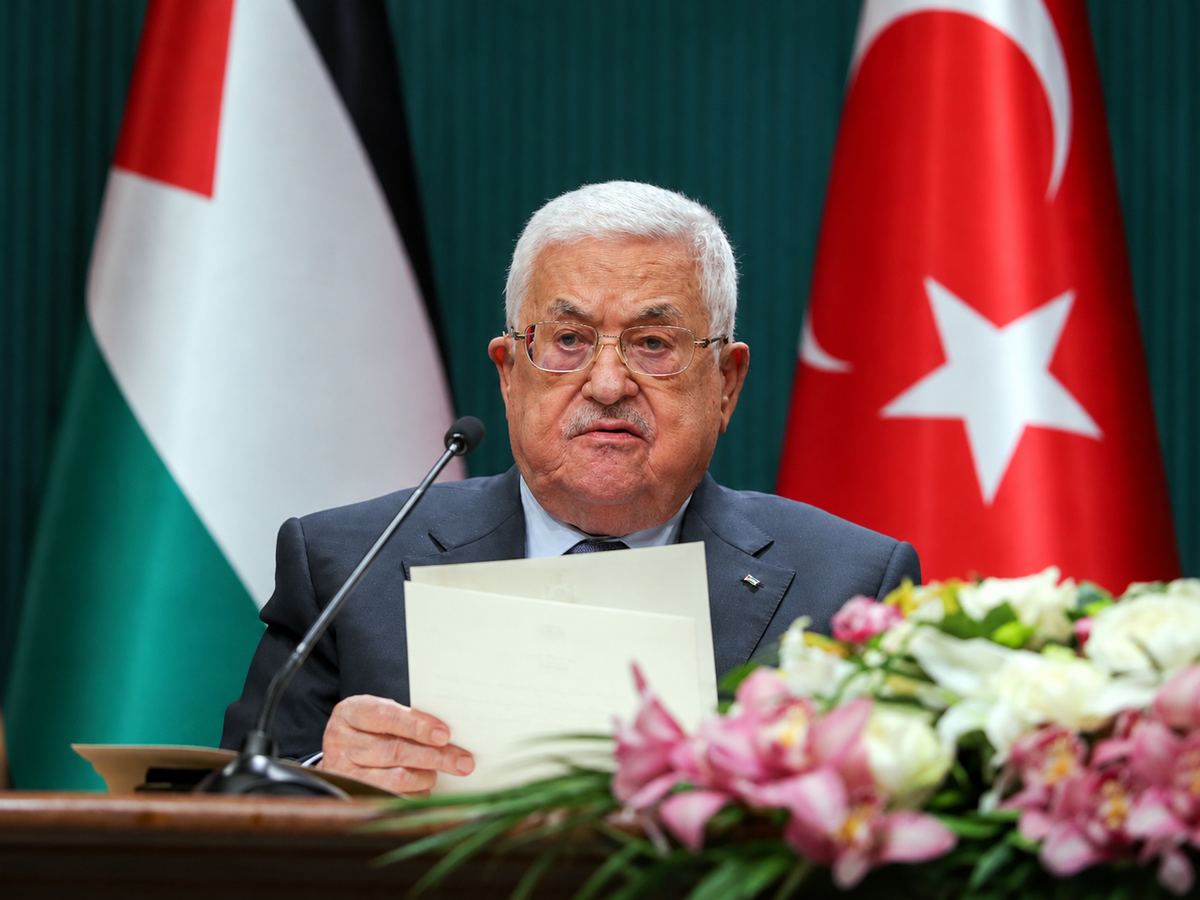
Palestinian factions have agreed in principle to postpone the November legislative elections, potentially denying Palestinians their first parliamentary vote in two decades. Mahmoud Abbas has remained president since 2005, while Hamas has governed Gaza without a renewed national mandate since 2007.
Palestinians were supposed to vote on November 28.
Now, once again, they are being told to wait.
Fatah, Hamas, Palestinian Islamic Jihad and the Popular Front for the Liberation of Palestine have agreed in principle to postpone the Palestinian legislative elections, according to officials involved in talks in Cairo. Islamic Jihad deputy leader Mohammed al-Hindi said an official announcement would follow, while the PFLP said the factions had agreed to delay the vote for one year. Fatah had not yet formally confirmed the final decision at the time of writing.
If implemented, it would mean that Palestinians will once again be denied the opportunity to choose who governs them.
That should be treated as a democratic scandal.
Mahmoud Abbas was elected president in January 2005.
His presidential term was supposed to last four years.
More than two decades later, he is still in office.
The last Palestinian Legislative Council election took place in January 2006. Hamas won. The subsequent conflict between Hamas and Fatah culminated in Hamas taking control of Gaza in 2007 and the Palestinian political system splitting in two.
There has been no functioning elected Palestinian parliament since.
Abbas increasingly governs the Palestinian Authority by decree, while Hamas has ruled Gaza without a fresh electoral mandate for nearly twenty years.
This is not temporary emergency government anymore.
It is a political system in which the leadership has simply stopped asking the public for permission.
And the excuses have become painfully familiar.
Gaza is devastated.
East Jerusalem presents serious logistical and political obstacles.
Israel restricts Palestinian political activity.
The Palestinian factions remain divided.
Palestinians have heard versions of the same explanation for years.
The 2021 elections were cancelled at the last minute after Abbas cited Israel’s refusal to guarantee voting in East Jerusalem.
This year was supposed to be different.
In August, Abbas publicly insisted that the November 28 legislative elections would go ahead, calling them a democratic entitlement. The Palestinian Central Elections Commission said preparations were advancing, voter registration was being updated and polling arrangements were being organized.
Two months later, the political factions are preparing to postpone them again.
At some point, “conditions are not right” stops being an explanation and becomes a governing strategy.
The most extraordinary part is who gets to make that decision.
Hamas is sitting at the table determining whether Palestinians are allowed to vote.
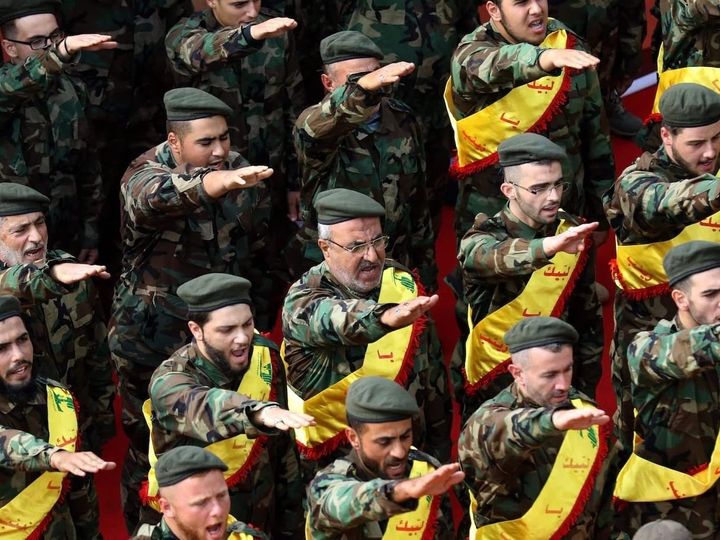
This is the same Hamas whose October 7 attack helped trigger a war that devastated Gaza, killed tens of thousands of Palestinians and left enormous parts of the territory in ruins.
Palestinian Islamic Jihad, another armed faction that has never governed through a democratic national mandate, is part of the same decision.
The PFLP is involved.
Fatah is involved.
The Palestinian public is not.
That is the central contradiction.
Political movements that claim to represent Palestinians continue deciding when Palestinians may or may not choose their representatives.
A population approaching six million in the West Bank and Gaza is effectively governed by leaderships that have gone years, and in some cases decades, without renewing their mandate through national elections. Palestinian official statistics put the population of the Palestinian territories at roughly 5.9 million in 2026.
The problem cannot be blamed entirely on Israel.
Israeli occupation, movement restrictions and control over East Jerusalem undoubtedly make Palestinian elections harder.
But they do not explain why presidential elections have not been held since 2005.
They do not explain why Palestinian institutions have been allowed to decay for nearly two decades.
They do not explain corruption inside the Palestinian Authority.
They do not explain Hamas’s authoritarian rule in Gaza.
And they do not explain why Palestinian factions repeatedly believe they have the authority to postpone democracy on behalf of the people they claim to represent.
Palestinian politics has developed a destructive habit of externalizing every failure.
When institutions collapse, Israel is blamed.
When elections disappear, the occupation is blamed.
When corruption spreads, international donors are blamed.
When Gaza is destroyed after Hamas initiates a war, responsibility is pushed outward again.
There are genuine external constraints.
But a people cannot build functioning institutions if its political leadership refuses accountability for its own decisions.
That applies equally to Ramallah and Gaza.
Abbas cannot credibly demand Palestinian self-determination abroad while denying Palestinians the most basic form of self-determination at home: the right to replace their leaders.
Hamas cannot claim to defend Palestinians while maintaining armed rule without submitting itself to regular democratic judgment.
And armed factions should not possess a veto over whether elections take place.
There is also a practical consequence.
The absence of democratic legitimacy weakens the Palestinian national movement internationally.
Any future Palestinian state would require functioning institutions, peaceful transfers of power, credible courts, accountable security forces and leaders who derive authority from voters rather than factions, guns or international recognition.
Instead, Palestinians remain trapped between an aging Palestinian Authority in the West Bank and armed organizations in Gaza whose political legitimacy has not been tested nationally for a generation.
The scheduled November election offered at least one opportunity to begin changing that.
It was imperfect.
Holding a credible vote across Gaza, the West Bank and East Jerusalem would have been extraordinarily difficult.
But difficult elections are still elections.
Postponing them does not solve Gaza.
It does not end Israeli occupation.
It does not reconcile Fatah and Hamas.
It does not rebuild Palestinian institutions.
It simply preserves the same leaders for another year.
And Palestinians have already spent far too many years being told to wait.
A serious Palestinian political renewal requires confronting an uncomfortable truth.
Palestinian failures are not imposed from outside.
They are the result of leaders who have accumulated power, avoided elections, tolerated corruption, relied on armed factions and repeatedly postponed accountability.
Until Palestinians are allowed to choose and replace their own leadership, political reform will remain impossible.
No national movement can credibly demand freedom while denying democracy to its own people.