AI Has Attracted More Investment Than Almost Any Technology in History, Now It Has to Prove It Was Worth It
AI investment has reached extraordinary levels, with global corporate spending hitting nearly $582 billion in 2025 while technology companies commit hundreds of billions more to chips, data centers and power infrastructure.
Artificial intelligence has already attracted one of the largest investment waves in modern economic history.
Now comes the harder part.
It has to generate enough productivity, revenue and profit to justify it.
Global corporate investment in AI reached a record $581.7 billion in 2025, more than doubling in a single year, according to Stanford’s 2026 AI Index. Private investment alone reached $344.7 billion, while the United States accounted for nearly $286 billion of that total.
And those figures capture only part of the story.
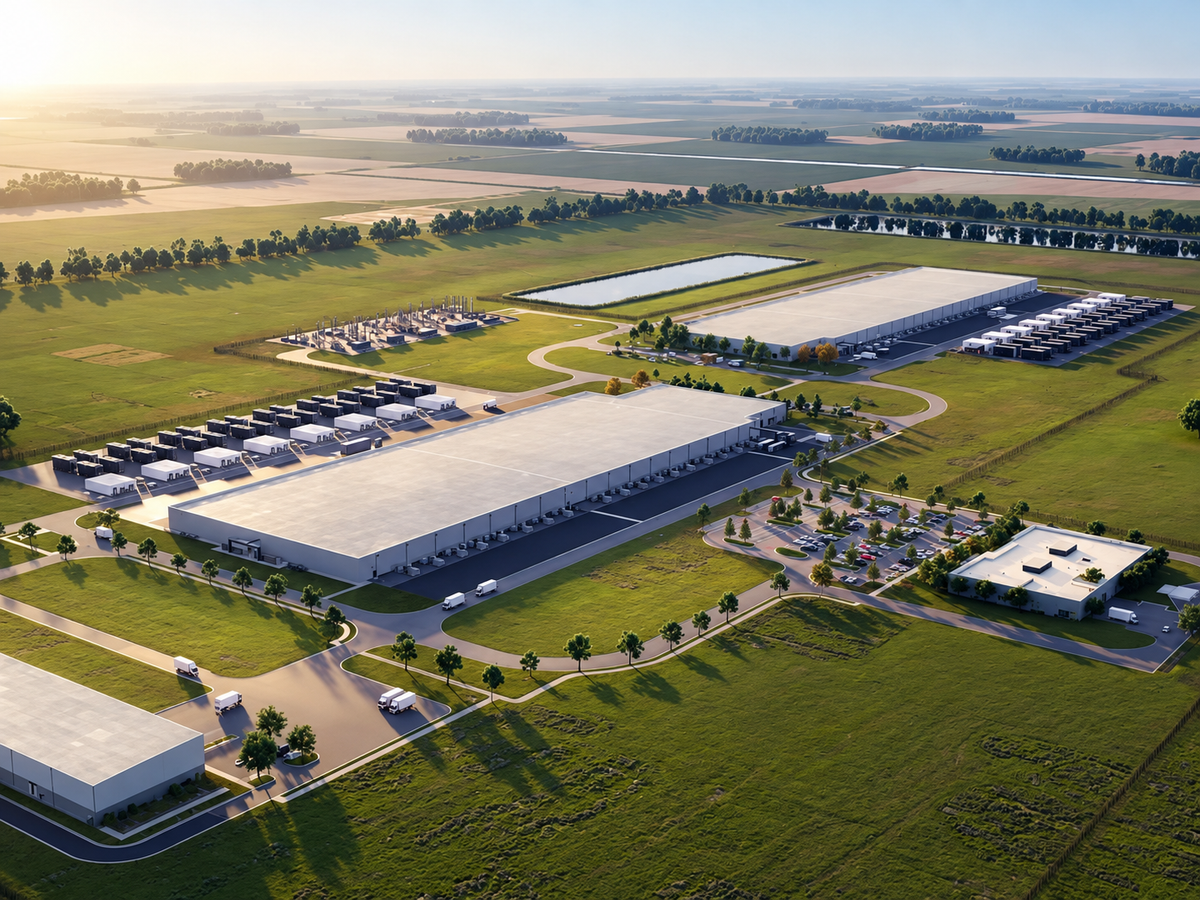
The largest technology companies are simultaneously spending extraordinary amounts on the physical infrastructure required to run AI: data centers, advanced chips, electricity generation, networking equipment and cloud capacity.
Meta alone expects capital expenditure of as much as $145 billion in 2026, much of it connected to AI infrastructure. Across the industry, spending on AI infrastructure could approach $1 trillion annually by 2027.
Longer-term projections are even larger.
PwC estimates that cumulative global spending on data centers could eventually exceed $30 trillion by 2050 if current AI demand continues.
That scale is unusual even when compared with previous technological revolutions.
Railways required enormous networks of tracks and stations.
Electrification required power plants and transmission systems.
The internet required fiber-optic cables, servers and telecommunications infrastructure.
AI is now producing a similar infrastructure race, except it is happening at remarkable speed.
The basic economic logic is straightforward.
Companies believe AI could become a general-purpose technology capable of increasing productivity across almost every major industry.
If that happens, spending hundreds of billions today could eventually look cheap.
AI could automate large parts of software development, customer service, research, administration, logistics, finance, medicine and countless other forms of knowledge work.
There are already signs that adoption is happening quickly.
Stanford estimates that 88% of surveyed organizations were using AI in at least one part of their operations by 2025, up from 55% only two years earlier. Around 70% were already using generative AI in at least one business function.
Consumers are also adopting the technology at extraordinary speed.
Generative AI reached an estimated 53% adoption within roughly three years, faster than the personal computer or the internet reached similar levels. Stanford estimates that the economic value U.S. consumers derive from generative AI tools had already reached around $172 billion annually by early 2026.
The problem is that usage is not the same as profitability.
Many of the most popular AI products remain free or heavily subsidized.
Running advanced AI models is expensive.
Training them requires enormous clusters of specialized processors.
Serving hundreds of millions of users then creates another recurring expense every time someone generates text, code, images or video.
In 2025 alone, Stanford estimated OpenAI’s compute spending at roughly $16.3 billion and Anthropic’s at around $6.8 billion.
The industry is therefore caught in an unusual position.
Demand appears real.
The technology is improving quickly.
But the cost of delivering it is also enormous.
Anthropic provides one of the clearest examples.
The company has grown rapidly and is reportedly planning more than $500 billion in spending on cloud computing and infrastructure over several years, even though its revenue remains far smaller than that figure.
The same question applies to the technology giants.
Google, Microsoft, Amazon, Meta and others can afford enormous AI investments because their existing businesses already generate huge amounts of cash.
But eventually shareholders will expect those investments to produce returns.
According to estimates cited by Reuters, major hyperscale technology companies may need to generate more than $4 trillion in additional revenue over the next five years to justify the scale of infrastructure investment currently being planned.
That is why the conversation around AI is beginning to change.
For the past several years, the central question was whether the technology worked.
Increasingly, that question has been answered.
AI systems can write software, generate media, analyze documents, perform research, automate customer support and increasingly operate software independently.
The next question is economic.
How much value does all of that actually create?
There are reasons for optimism.
History shows that general-purpose technologies often take years before their full productivity impact becomes visible.
Factories had to be reorganized around electricity before electrification produced major gains.
Businesses had to redesign operations around computers before information technology transformed productivity.
The internet required entirely new business models before its economic impact became obvious.
AI may follow a similar path.
Companies are still experimenting with how to redesign workflows rather than simply adding AI tools on top of existing processes.
If AI agents eventually automate entire sequences of work instead of individual tasks, the productivity gains could become significantly larger.
But investors are increasingly unwilling to rely solely on that possibility.
The massive infrastructure buildout is already happening.
Power companies are building new generation capacity.
Technology firms are signing decades-long energy agreements.
Chip manufacturers are expanding production.
Data center developers are borrowing enormous sums.
Even nuclear power investment is accelerating partly because AI data centers are expected to require far more electricity.
The financial system is becoming increasingly exposed as well.
Technology companies are beginning to issue enormous amounts of debt to finance AI infrastructure, with borrowing potentially reaching hundreds of billions of dollars over the coming years.
That makes the outcome important far beyond Silicon Valley.
If AI produces the productivity revolution its supporters expect, this could become one of the most important infrastructure investments ever made.
If the returns arrive much more slowly, the world may discover that it built enormous amounts of expensive computing capacity before businesses had figured out how to use it profitably.
Neither outcome would necessarily mean AI itself failed.
The railways, internet and telecommunications industries all experienced periods of excessive investment even while the underlying technologies eventually transformed the economy.
The same could happen with artificial intelligence.
The technology may prove revolutionary while many of the investments made during the initial boom still turn out to have been too large, too early or directed toward the wrong companies.
That is the stage the AI industry is now approaching.
The infrastructure has been financed.
The data centers are being built.
The models are becoming more capable.
Hundreds of billions of dollars have already been committed.
Now AI has to demonstrate that the economic value it creates can eventually match the extraordinary amount of money being spent to build it.