Houthi Attacks Threaten Saudi Arabia’s Economic Ambitions
Houthi attacks on Riyadh airport and Saudi Aramco are striking directly at the foundations of Saudi Arabia’s Vision 2030 strategy: tourism, aviation, energy security and foreign investment.
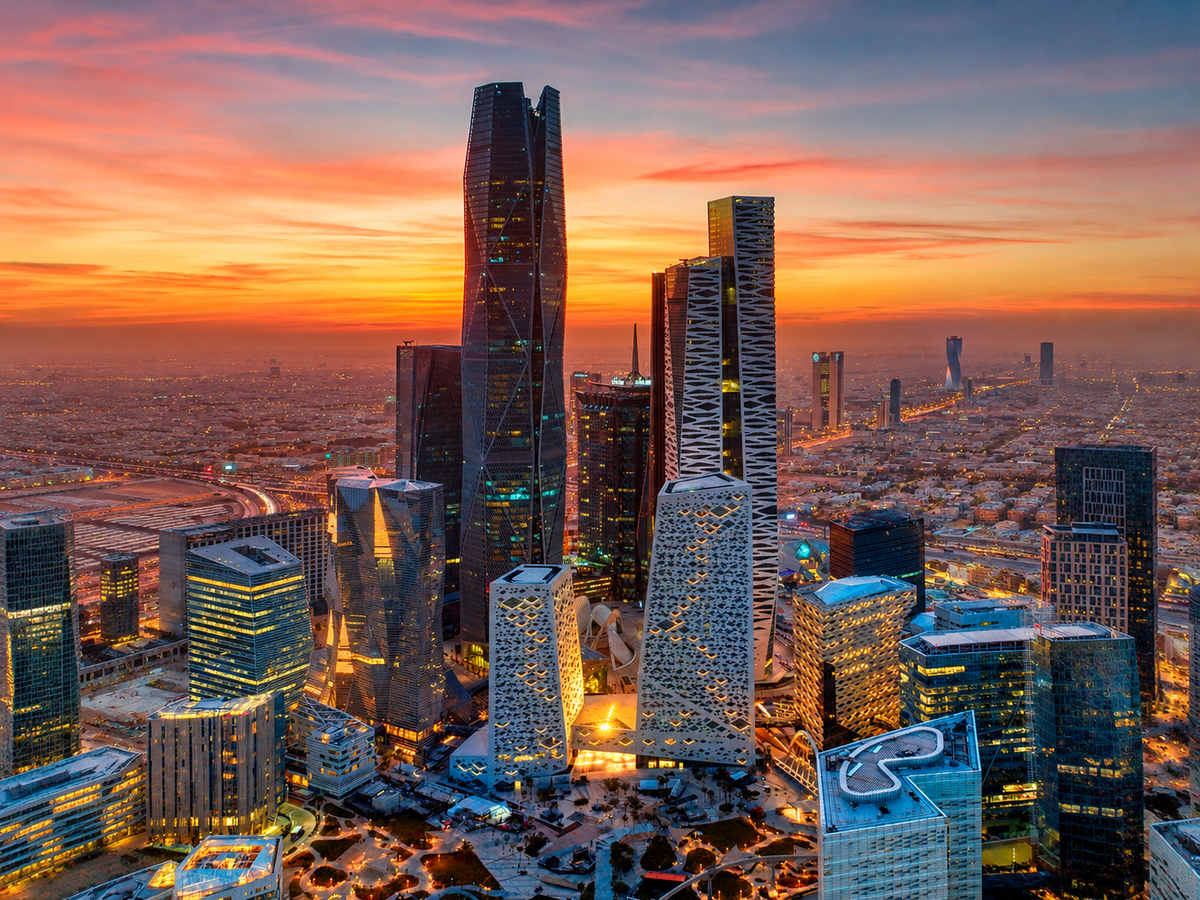
Saudi Arabia has spent years trying to convince the world that its future is about more than oil.
Riyadh wants to become a global center for investment, aviation, tourism, entertainment, technology and major international events.
The Houthis are now attacking exactly that vision.
In the past two weeks, Houthi missiles and drones have repeatedly struck Saudi targets, including King Khalid International Airport in Riyadh and Saudi Aramco’s headquarters in Dhahran. The airport attacks killed at least 13 people and wounded more than 300, while the strike on Aramco damaged offices inside the headquarters complex.
These are not random targets.
They sit at the center of Saudi Arabia’s economic transformation.
An airport attack threatens tourism, business travel and aviation.
A strike on Aramco threatens confidence in the kingdom’s energy infrastructure.
Missiles reaching Riyadh undermine the image of Saudi Arabia as a safe, stable destination for international capital.
That is precisely what makes the current Houthi campaign so dangerous for Crown Prince Mohammed bin Salman’s economic agenda.
Vision 2030 depends heavily on confidence.
Foreign investors must believe Saudi Arabia is a predictable place to deploy billions of dollars.
Tourists must believe Riyadh, Jeddah and the kingdom’s new resorts are safe.
Airlines must be willing to expand routes.
International companies must be comfortable moving executives and regional headquarters into the country.
Major sporting and entertainment events must continue attracting global audiences.
The Houthis do not need to destroy all of that.
They only need to make investors and visitors begin calculating a security premium.
Reuters reported this week that the increasing sophistication of Houthi attacks is already threatening Saudi Arabia’s image as a secure investment destination.
That is the real economic weapon.
A missile that damages one terminal causes immediate physical losses.
The larger damage comes if airlines cancel flights, insurers raise premiums, companies delay investments and tourists reconsider travel.
Saudi Arabia is trying to become one of the world’s major aviation hubs.
That requires the opposite of uncertainty.
King Khalid International Airport has now been attacked repeatedly.
One strike killed 12 people and injured more than 300. Another projectile struck a passenger terminal the following day.
The government has insisted that major events will continue.
The October 31 Canelo Alvarez title fight in Riyadh remains scheduled despite the attacks, according to Saudi entertainment chief Turki Alalshikh.
That response is understandable.
Cancelling events would hand the Houthis exactly the psychological victory they want.
But continuing events does not erase the underlying risk.
Saudi Arabia has spent enormous sums turning Riyadh into an international destination.
It is building airports, hotels, entertainment districts, financial centers and new infrastructure specifically to draw people and money into the kingdom.
Missiles landing in the capital directly attack that strategy.
The strike on Aramco carries a different kind of threat.
Saudi Arabia remains one of the world’s largest oil exporters, and Aramco is the financial engine behind much of the kingdom’s transformation.
Oil revenues help finance Vision 2030 projects.
The Public Investment Fund depends heavily on the strength of the Saudi state and energy sector.
Even as Riyadh diversifies, oil still provides the financial foundation for that diversification.
A Houthi missile striking Aramco headquarters therefore carries symbolic and economic weight far beyond the physical damage caused.
The Houthis have demonstrated before that Saudi energy infrastructure is vulnerable.
The 2019 attack on Abqaiq temporarily knocked out a huge portion of Saudi oil output and shocked global markets.
The lesson was obvious: relatively cheap drones and missiles can impose enormous costs on one of the richest countries in the world.
That asymmetric advantage has only grown.
Reuters reports that more than a decade of Iranian support, including training, weapons expertise and components, has helped transform the Houthis into a far more capable force able to assemble and operate sophisticated missiles and drones.
Saudi Arabia faces the opposite problem.
It possesses one of the most expensive arsenals in the world, including advanced American aircraft and missile defenses.
Yet defending a country the size of Saudi Arabia against repeated low-cost drones and ballistic missiles is extremely difficult.
Recent attacks have exposed gaps in those defenses, prompting Riyadh to investigate how missiles reached the airport despite its enormous security infrastructure.
This is economically dangerous because Saudi Arabia’s transformation strategy relies on scale.
Mega-projects such as NEOM, tourism developments, new airports, industrial zones and entertainment centers require enormous amounts of capital.
They also require continued government spending.
At the same time, the IMF now expects Saudi Arabia’s economy to contract sharply in 2026 as war disrupts regional energy production, trade and investment.
That means the kingdom is being hit from both directions.
Government revenues face pressure.
Security costs are rising.
Diversification projects still require huge investment.
And the very sectors intended to reduce dependence on oil are becoming more vulnerable to missile attacks.
Tourism is especially sensitive.
Saudi Arabia has aggressively expanded religious tourism, leisure travel, sports and entertainment.
But tourism is fundamentally built on perception.
A traveler choosing between Riyadh, Dubai, Istanbul or another destination will notice repeated airport attacks.
So will airlines.
So will insurers.
So will companies deciding where to host conferences.
The same applies to foreign investment.
Investors can tolerate political risk when returns are high enough.
But security instability increases required returns and can make projects more expensive to finance.
Saudi Arabia therefore faces a problem that cannot be solved simply by rebuilding damaged infrastructure after each attack.
It has to convince the world that the attacks will stop.
That is much harder.
The kingdom is now responding militarily.
Saudi-led forces have intensified operations against the Houthis in Yemen, while regional allies are increasingly discussing support.
Egyptian President Abdel Fattah al-Sisi said this weekend that Egypt is prepared to help defend Saudi Arabia if Riyadh formally requests assistance, reflecting how serious the regional security threat has become.
But escalation carries its own risk.
The harder Saudi Arabia strikes inside Yemen, the greater the incentive for the Houthis to attack Saudi cities, airports and energy infrastructure.
That creates a vicious cycle.
Saudi Arabia wants to reduce the Houthi threat so it can protect Vision 2030.
But the military campaign required to reduce that threat may trigger exactly the attacks that damage Vision 2030 in the short term.
This is why the conflict matters far beyond Yemen.
The Houthis have found Saudi Arabia’s economic pressure points.
Riyadh airport.
Aramco.
Oil infrastructure.
Major cities.
International events.
They do not have to defeat Saudi Arabia militarily.
They only have to make the kingdom look less safe, less predictable and more expensive to invest in.
Saudi Arabia’s economic transformation is still far too large to be derailed by several missile attacks.
The kingdom has enormous financial resources, sophisticated infrastructure and the ability to absorb shocks that would overwhelm smaller economies.
But Vision 2030 was built around a simple promise to the outside world:
Saudi Arabia is becoming a stable, modern global economic hub.
Every missile reaching Riyadh challenges that promise.