Can Lebanon's Northern Airport Become a Viable Business Hub or Will It Struggle to Attract Airlines?
Lebanon's René Mouawad Airport in Qlayaat is preparing to launch regular commercial flights on December 14, promising new economic opportunities for Akkar and Tripoli.
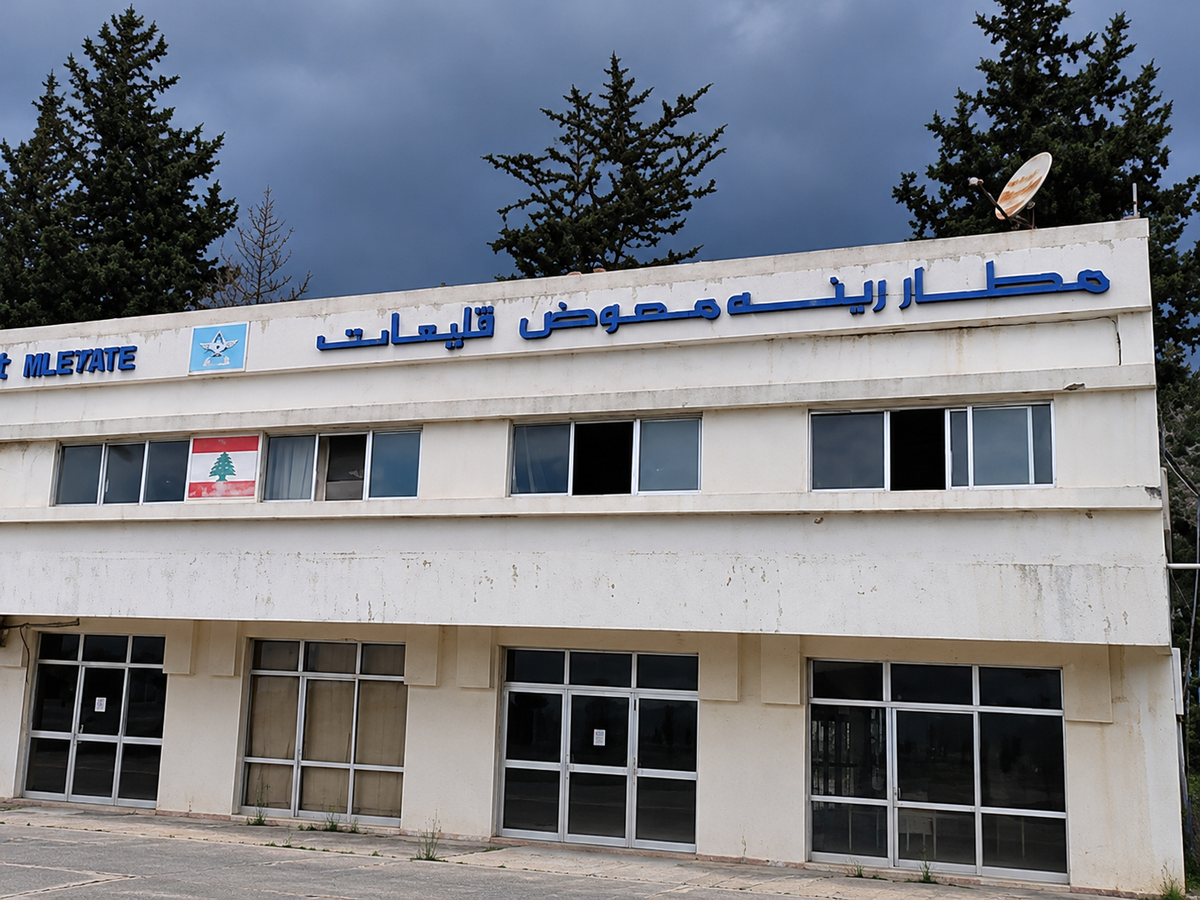
With commercial flights scheduled to begin in December, Lebanon's second airport could transform the economy of the north. But attracting established airlines, securing investment and generating sufficient passenger demand may prove more difficult than reopening the runway.
Lebanon is preparing to reopen René Mouawad Airport in Qlayaat for regular commercial flights on December 14, potentially ending decades of dependence on Beirut's Rafic Hariri International Airport as the country's sole operational commercial aviation hub.
Prime Minister Nawaf Salam announced that flight destinations, schedules and ticket bookings would be unveiled on November 15, with trial flights beginning November 22.
The project promises to stimulate economic activity in Akkar and Tripoli, attract investment and provide travelers with an alternative to Beirut. Yet its commercial viability remains uncertain, particularly as Lebanon attempts to persuade airlines to operate from a relatively small and untested market.
A New Economic Opportunity for Northern Lebanon
Located approximately 25 kilometers from Tripoli and seven kilometers from the Syrian border, Qlayaat Airport occupies a potentially strategic position.
Its 3,000-meter runway offers a foundation for international operations, while its proximity to northern Lebanon and western Syria could attract passengers who currently travel considerable distances to other airports.
The project could also create jobs in ground handling, logistics, maintenance, hospitality and transportation.
Lebanese officials envision a broader commercial hub combining passenger services, cargo operations, charter flights and aviation training.
A government investment proposal previously estimated that full development, including terminal expansion and infrastructure upgrades, could require approximately $100 million. That historical estimate should not be confused with the budget for the current initial reopening.
But Which Airlines Will Actually Come?
This is the project's biggest commercial challenge.
Lebanese authorities have approached several low-cost carriers, including Pegasus, AJet and Air Arabia, while exploring potential connections involving Ryanair and Aegean Airlines.
Proposed destinations have included Istanbul, Dubai, Cairo, Athens and cities in southern Turkey.
However, discussions with major international airlines have not yet translated into publicly confirmed long-term operating commitments.
The clearest initial interest has come from Lebanese operator IBEX, through its Mada Airways venture.
In September, MP Sajih Attieh acknowledged that major airlines were unlikely to operate from Qlayaat immediately, suggesting that Syrian passengers could become an important source of demand.
Airlines ultimately prioritize profitability. They need sufficient passengers, competitive airport charges, reliable infrastructure and confidence that flights can operate consistently.
Without those conditions, reopening the airport will not guarantee a sustainable network.
Indicative projections cited by Lebanese aviation officials, not confirmed bookings or guaranteed passenger volumes.
Officials estimate that Qlayaat could attract approximately 100,000 passengers during its first year, rising to 600,000 annually by the fourth year.
Achieving that growth would require airlines to establish regular services and maintain sufficient passenger loads throughout the year.
The airport may benefit from demand among northern Lebanese residents, expatriates and travelers from neighboring Syria.
However, Beirut Airport already benefits from established airlines, connecting services and a much larger passenger market.
Qlayaat must therefore offer a compelling advantage, whether through lower fares, shorter travel times for northern residents or specialized routes that Beirut does not serve competitively.
The airport's reopening has already experienced delays.
Earlier plans for commercial flights in October and November were revised as officials worked to complete security arrangements, terminal facilities and operational requirements.
On November 13, Transport Minister Fayez Rasamny reviewed outstanding work involving runway markings, navigation systems, firefighting equipment, customs facilities and ground handling.
Authorities are targeting an initial schedule of six flights weekly, with expansion dependent on demand and operational readiness.
Aviation safety certification remains essential. Airlines cannot be expected to commit aircraft and resources to an airport without confidence in its infrastructure, regulatory compliance and long-term operating environment.
Regional instability also presents challenges, particularly given the airport's proximity to Syria and Lebanon's ongoing security concerns.
Rather than attempting to compete directly with Beirut Airport, Qlayaat may be better positioned as a specialized regional hub.
Low-cost carriers could attract price-sensitive travelers, while charter operations could serve seasonal demand from expatriates and tourists.
Cargo services could eventually support agriculture, manufacturing and commercial activity in northern Lebanon, although meaningful investment would be needed in freight handling, storage and logistics.
The airport's proximity to Syria could also become an advantage if cross-border transport arrangements improve.
However, Syrian authorities are rebuilding their own aviation infrastructure, meaning Qlayaat cannot assume that Syrian travelers will automatically choose a Lebanese airport.
Qlayaat's reopening represents a significant opportunity for northern Lebanon, particularly in a region that has long suffered from inadequate infrastructure and limited investment.
But economic development cannot be measured by an inaugural flight or the number of airlines officials hope to attract.
Success will depend on sustainable passenger demand, competitive operating costs, reliable services and private investment.
Qlayaat does not need to become another Beirut Airport to succeed. It needs to identify a commercially viable market that Beirut does not adequately serve.
The December launch will demonstrate whether Lebanon can reopen the facility. The years that follow will determine whether airlines and passengers consider it worth using.