Hezbollah Challenges Lebanese Judiciary Over Seized Explosives as Five Embassies Demand Independent Investigation
Hezbollah is challenging Lebanon's judiciary after authorities seized nearly 800 kilograms of explosives intended, according to the group, for operations against Israeli forces.
A confrontation between Hezbollah and Lebanon's judiciary is intensifying following the seizure of nearly 800 kilograms of explosives, with the group demanding the release of detained suspects and the return of the shipment, while five foreign embassies have called for an independent investigation free from political interference.
The dispute centers on a truck intercepted on October 5 at the Dahr al-Baidar checkpoint along the Beirut–Bekaa highway. Authorities discovered approximately 780 kilograms of explosives, including C-4 and TNT, reportedly being transported from the Baalbek region toward Beirut's southern suburbs.
Hezbollah acknowledged ownership of the shipment, maintaining that the explosives were intended for military operations against Israeli forces in southern Lebanon. However, Lebanese authorities have pursued criminal proceedings over the unauthorized transportation of military-grade explosives.
Arrest Warrants Issued as Hezbollah Pressures Prosecutors
On November 5, First Military Investigating Judge Ghada Abu Alwan issued arrest warrants for Ali al-Kurdi and Haitham Amhaz, the two men detained in connection with the shipment.
The warrants followed charges filed against 13 suspects, including allegations involving unauthorized armed groups, illegal transportation of explosives and offenses affecting state security.
Proceedings against six other suspects were postponed until November 17 following procedural objections submitted by their lawyer.
Meanwhile, a Hezbollah delegation visited Prosecutor General Ahmad Rami al-Hajj on Thursday to challenge judicial measures targeting individuals linked to the organization.
According to L'Orient Today, the prosecutor rejected the delegation's objections, emphasizing that the judiciary was enforcing existing law.
The intervention raised concerns about political pressure on judicial institutions, particularly given Hezbollah's history of confronting investigations involving its members.
In September 2021, Hezbollah official Wafiq Safa visited the Justice Palace amid the investigation into the Beirut port explosion, an encounter widely interpreted as an attempt to pressure investigating judge Tarek Bitar.
Five Embassies Demand Accountability
The diplomatic controversy escalated when the embassies of the United States, United Kingdom, Australia, Canada and Japan issued a joint statement on November 5 supporting Lebanon's efforts to establish exclusive state control over weapons.
The five countries urged Lebanese authorities to ensure an independent judicial investigation into the Dahr al-Baidar case, without political interference, and to hold those responsible accountable.
They also called on Lebanese political parties and parliamentarians to publicly support the positions of President Joseph Aoun and Prime Minister Nawaf Salam that decisions concerning weapons, war and peace belong exclusively to the Lebanese state.
The statement represented a direct expression of international concern over the government's ability to enforce its authority in cases involving Hezbollah.
Notably, France did not join the statement.
According to L'Orient-Le Jour, Paris appeared to consider the American-led initiative insufficiently cautious and potentially intrusive in Lebanon's domestic affairs. The French Embassy declined to publicly explain its decision.
Hezbollah Accuses Foreign Governments of Interference
Hezbollah responded angrily to the diplomatic intervention.
Hezbollah MP Ali Ammar accused the five embassies of undermining Lebanese sovereignty and interfering in the country's judicial and political affairs.
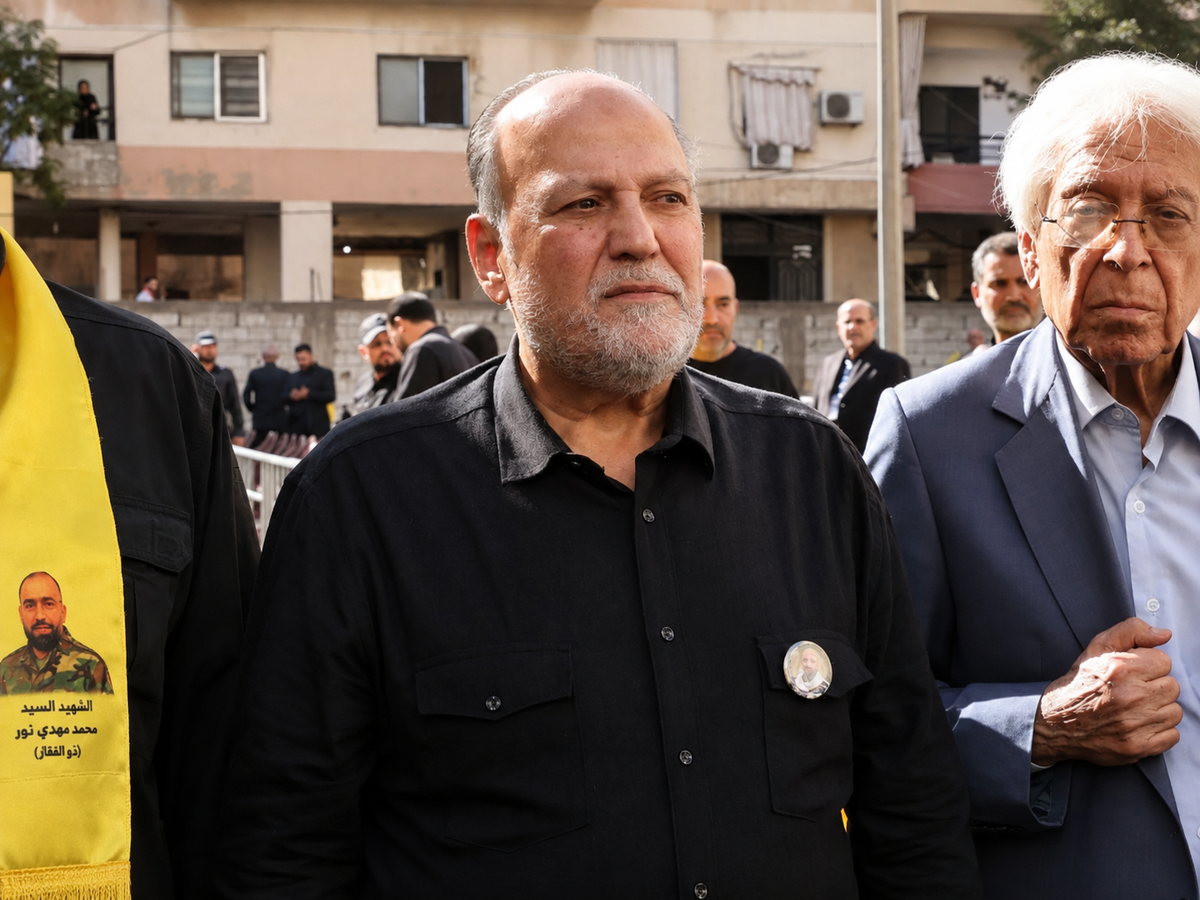
Sheikh Ali al-Khatib, vice president of the Higher Shiite Council, similarly condemned the statement, warning that foreign involvement in contentious domestic issues could deepen divisions and threaten civil peace.
Their response highlighted an increasingly contentious contradiction: Hezbollah rejects foreign interference in Lebanon's judicial affairs while simultaneously challenging the judiciary's authority to prosecute individuals associated with its own military activities.
Hezbollah argues that its weapons remain necessary while Israeli forces occupy Lebanese territory and continue military operations. The government, however, maintains that military activities outside state authority undermine Lebanon's sovereignty and expose the country to further conflict.
A Test of Lebanon's Authority Over Weapons
The explosives investigation comes amid growing disagreements within the government over how to address Hezbollah's military infrastructure.
Justice Minister Adel Nassar has advocated referring the case to the Judicial Council, which handles serious offenses involving national security. The Cabinet postponed a decision on October 22 pending further investigations.
The case has become particularly sensitive following the government's March declaration that Hezbollah's independent military activities were illegal, after the organization launched attacks against Israel during the renewed regional war.
Despite commitments to establish a state monopoly over weapons, Lebanon continues to face political and institutional obstacles to implementing that policy.
The investigation now represents a significant test of whether Lebanese judicial authorities can enforce the law against an armed organization with substantial political influence.
The outcome will depend not only on the prosecution of those implicated in the explosives shipment, but also on whether the judiciary can operate without intimidation or political intervention.
The central issue extends beyond a single truckload of explosives: can the Lebanese state enforce its laws when they conflict with Hezbollah's military interests, or will the organization continue to operate beyond the authority of public institutions?