Israel Prepares for Possible Renewed War With Hezbollah as Troops Detain Lebanese Resident Near Border
Israel is reportedly preparing for another major confrontation with Hezbollah as tensions with Iran intensify, while Israeli troops have expanded operations in southern Lebanon.
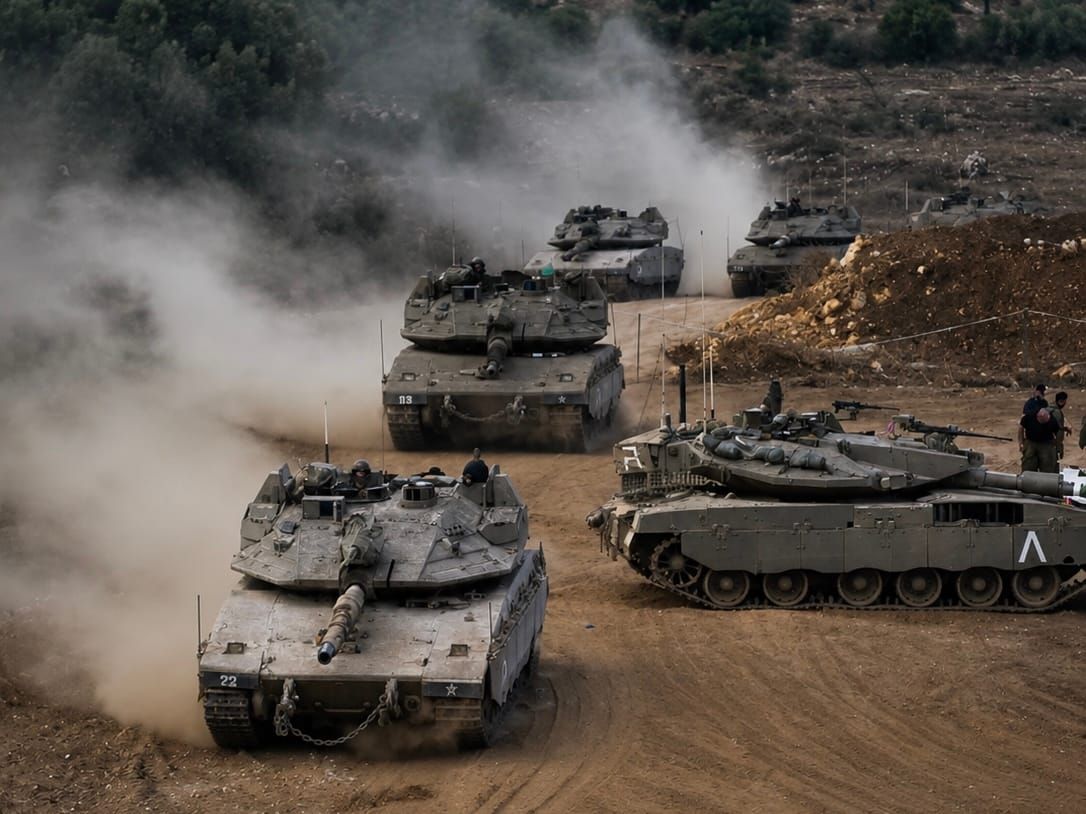
Israeli forces are reportedly updating military plans for another confrontation in Lebanon as tensions with Iran intensify. Meanwhile, an Israeli incursion into a southern Lebanese village and the detention of a resident have raised fresh concerns about the fragile ceasefire.
Israel's military is reportedly preparing for a possible resumption of large-scale hostilities with Hezbollah as the United States weighs renewed military action against Iran, while Israeli troops have intensified operations in southern Lebanon, including detaining a Lebanese resident near the border.
According to a November 6 report by Israeli newspaper Yedioth Ahronoth, the Israeli military is reviewing operational plans, reinforcing positions and maintaining heightened readiness for another confrontation on the Lebanese front.
The preparations are reportedly linked to concerns that Hezbollah could enter a renewed conflict between Israel and Iran, repeating its decision to attack Israel on March 2 following the US-Israeli offensive against Tehran.
Israeli Troops Enter Deir Mimas and Detain Resident
On Friday, November 6, Israeli forces advanced from Kfar Kila toward the outskirts of Deir Mimas, a predominantly Christian village in the Marjayoun district of southern Lebanon.
According to L'Orient Today, Israeli soldiers fired into the air to force farmers harvesting olives to leave the area before establishing positions around the village and blocking access roads.
The troops subsequently detained a Lebanese resident identified as Nakad Bechara as he passed through the area.
Israeli military vehicles were also reported moving near Mais al-Jabal, Wadi Slouqi and Khiam, while artillery strikes and gunfire were reported across several southern villages.
The operations followed a tense overnight confrontation in Zawtar Gharbieh, where Lebanese and Israeli soldiers reportedly took positions facing one another after Israeli vehicles advanced toward a local water reservoir.
The Israeli force eventually withdrew toward Zawtar Sharqieh without a reported exchange of fire between the two armies.
The incidents highlight the continuing volatility of southern Lebanon despite the June 26 framework agreement intended to facilitate an Israeli withdrawal and the extension of Lebanese state authority.
Israel Prepares for Another Confrontation
The reported Israeli preparations come as Washington considers its next steps against Iran following the Republican Party's defeat in the US midterm elections.
According to Yedioth Ahronoth, Israeli military planners are preparing for the possibility that a renewed American-Israeli campaign against Tehran could trigger another confrontation with Hezbollah.
Israeli Prime Minister Benjamin Netanyahu reportedly favors a more ambitious military campaign aimed at overthrowing Iran's government, while some officials in Washington prefer limited but intensive operations intended to force Tehran into negotiations.
The newspaper also reported disagreements within Israel's security establishment over the objectives and timing of another military confrontation.
No decision to launch another major offensive in Lebanon has been publicly confirmed.
However, Israeli Defense Minister Israel Katz warned in October that Hezbollah's participation in another conflict involving Iran could prompt Israel to capture additional territory in southern Lebanon, potentially extending its military presence toward Nabatieh and the Litani River.
Hezbollah Rebuilds as Lebanon Faces Renewed Pressure
Hezbollah is also reportedly preparing for another confrontation.
On October 26, Reuters reported that the organization had spent approximately three months replenishing weapons, acquiring explosives and producing attack drones, supported by additional funding from Iran.
The preparations followed extensive losses suffered during successive conflicts with Israel, including the destruction of military infrastructure and the deaths of senior commanders and fighters.
Despite those setbacks, Hezbollah has refused to surrender its weapons, maintaining that armed resistance remains necessary while Israeli forces occupy Lebanese territory.
Israel, meanwhile, has reportedly conveyed warnings to Beirut through American mediators, demanding that the Lebanese Army take measures to prevent Hezbollah from joining another war with Iran.
According to Israeli public broadcaster Kan, the requests included establishing checkpoints in areas where Hezbollah operatives are present.
The Israeli government reportedly warned that renewed Hezbollah attacks would trigger another military escalation in Lebanon.
Lebanon Risks Being Drawn Into Another Regional War
The developments place additional pressure on President Joseph Aoun and Prime Minister Nawaf Salam, whose government is attempting to strengthen state authority while preventing another devastating conflict.
The June framework agreement envisioned a gradual Israeli withdrawal alongside the deployment of Lebanese troops and measures addressing Hezbollah's military presence.
However, implementation has stalled over disagreements concerning disarmament, territorial control and security guarantees.
Continued Israeli military operations complicate the government's efforts to demonstrate that diplomacy can protect Lebanese sovereignty, while Hezbollah's continued rearmament increases the likelihood of another confrontation.
For southern Lebanese communities, the consequences are immediate. Farmers face restricted access to agricultural land, residents remain exposed to military incursions, and reconstruction efforts continue under the threat of renewed destruction.
The danger is that Lebanon could once again become a battlefield in a confrontation between Israel and Iran, with decisions made beyond its government's control determining whether another war begins.