How CMA CGM Is Becoming One of Lebanon’s Most Important Private Companies
CMA CGM is rapidly expanding far beyond shipping in Lebanon. The group now operates key container terminals, employs nearly 4,000 people following its acquisition of Fattal Group, and is investing $100 million to more than double Beirut Port’s container capacity.
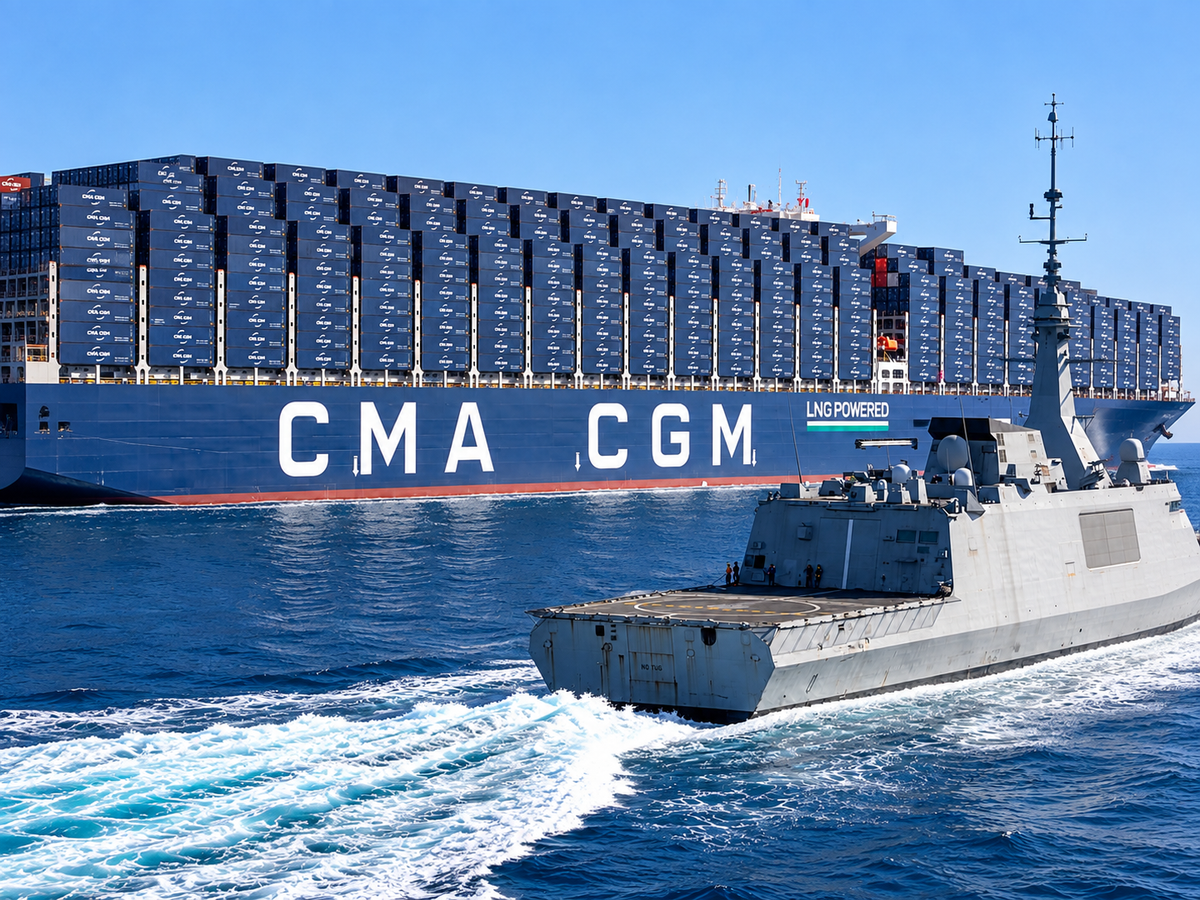
For most Lebanese, CMA CGM is still primarily associated with shipping.
But over the past several years, the French-Lebanese group has quietly built something much larger in Lebanon.
It now operates at the center of the country’s ports, logistics networks, distribution chains and employment market, while continuing to expand through major acquisitions and infrastructure investment. Taken together, those moves are turning CMA CGM into one of the most consequential private-sector companies operating in Lebanon.
The most visible sign came in September.
CMA CGM announced a $100 million expansion of the container terminal at the Port of Beirut, a project designed to more than double annual handling capacity from 1.2 million to 2.8 million twenty-foot equivalent units, or TEUs.
The terminal itself will expand from 45 to 80 hectares and undergo significant modernization. CMA CGM says the project should take around 18 months to complete.
The scale matters because the Port of Beirut remains one of the central arteries of the Lebanese economy.
Lebanon imports most of what it consumes, which means the efficiency of its ports directly affects businesses, supermarkets, factories and ultimately consumers.
CMA CGM already manages Beirut’s container terminal and has operated the container terminal at the Port of Tripoli since acquiring Gulftainer Lebanon in 2021.
According to the company, CMA CGM handles more than 40% of container volumes across Lebanon’s two main container terminals.
That alone gives the group an unusually important position in Lebanese trade.
But its expansion no longer stops at the port gate.
In August, CMA CGM completed its acquisition of Fattal Group through its logistics subsidiary CEVA Logistics, following regulatory approval of a deal first announced in April.
Fattal is one of Lebanon’s oldest and largest distribution groups, with operations spanning fast-moving consumer goods, electronics, pharmaceuticals, healthcare, cosmetics and other major consumer categories.
By acquiring it, CMA CGM effectively extended its presence further down the supply chain.
Instead of simply transporting products into Lebanon, the group can now participate much more directly in warehousing, logistics and distribution after those goods arrive.
That fits a much broader global strategy.
CMA CGM has spent years transforming itself from a traditional shipping company into an integrated logistics group capable of controlling more of the journey between producer and consumer.
CEVA Logistics has been central to that strategy internationally.
Fattal gives the group a substantial distribution platform in Lebanon and across parts of the Middle East, moving CMA CGM closer to the final consumer in industries far removed from container shipping.
The acquisition also dramatically increased the group’s Lebanese workforce.
Following the Fattal deal, CMA CGM’s total employment in Lebanon rose to nearly 4,000 people, placing it among the country's largest private-sector employers.
That represents a significant evolution from only a few years ago.
When CMA CGM won the concession to operate Beirut’s container terminal in 2022, the group said it employed around 1,000 people in Lebanon and had created almost 800 local jobs during the previous two years. It had also established its Levant regional headquarters, a digital hub and a shared-services center in Beirut.
The expansion continued even as Lebanon remained deep in economic crisis.
That is one reason CMA CGM’s position is unusual.
Since the financial collapse began in 2019, much of Lebanon’s private sector has focused on surviving, shrinking operations or moving activities abroad.
CMA CGM has largely moved in the opposite direction.
It has acquired businesses, expanded employment and committed capital to infrastructure at a time when large-scale private investment in Lebanon has remained limited.
In July, Chairman and CEO Rodolphe Saadé told President Joseph Aoun that the group intended to expand its investments and operations in Lebanon further.
There is also a personal and historical connection behind that strategy.
CMA CGM was founded in Marseille by Jacques Saadé, who was born in Beirut, and the company remains controlled by the Saadé family. Rodolphe Saadé, who now leads the group, has repeatedly emphasized the company's Lebanese roots despite CMA CGM having grown into one of the world's largest shipping and logistics groups.
Today, the company operates hundreds of vessels, serves more than 400 ports worldwide and employs around 170,000 people globally.
That global scale gives its Lebanese investments particular weight.
Lebanon has many prominent private companies, but relatively few have the capital, international network and infrastructure role of CMA CGM.
The group now touches several layers of the Lebanese economy at once.
Its ships connect Lebanon with international markets.
Its terminals influence how goods move through Beirut and Tripoli.
Its logistics operations manage supply chains.
Its acquisition of Fattal brings it directly into domestic distribution.
And its growing workforce makes it increasingly important as an employer.
That concentration also gives the company an unusual strategic position.
The future of Lebanese trade will depend heavily on modernizing ports, reducing logistical costs and rebuilding the country's role as a commercial gateway between the Mediterranean and the wider region.
CMA CGM is positioning itself directly inside that process.
Its $100 million Beirut terminal expansion may ultimately be the clearest example.
If completed as planned, Beirut's container capacity would more than double, giving the port substantially more room to handle future Lebanese trade and potentially regional transit business.
For a country still struggling to attract major investment after years of crisis, that makes CMA CGM increasingly difficult to view simply as another multinational operating in Lebanon.
It is becoming part of the infrastructure through which the Lebanese economy functions.
And with ports, logistics, distribution and thousands of employees now tied to the group, CMA CGM is steadily emerging as one of the most important private companies in the country.