How Did the Druze Faith Become Established in Mount Lebanon?
The Druze faith emerged in Fatimid Cairo in 1017. Through religious missions, local settlements and centuries of political leadership, Lebanon's mountains became one of its most enduring strongholds.
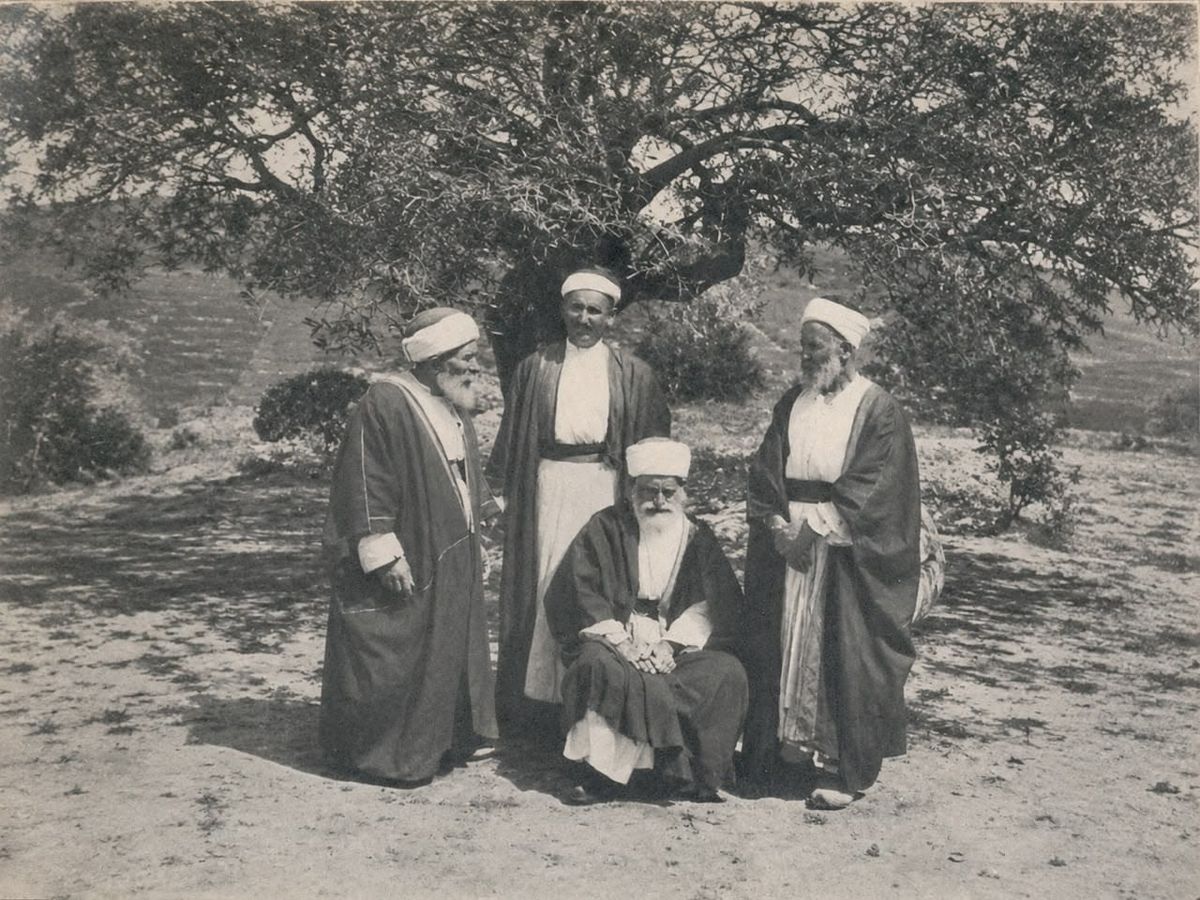
For nearly a thousand years, the Druze have been closely associated with the mountains of Lebanon.
From the villages of the Chouf to the hills of Aley and the slopes of Mount Hermon, their communities have shaped the region's political, religious and cultural history.
Yet the Druze faith did not originate in Mount Lebanon.
It emerged in the Fatimid Caliphate during the early eleventh century, with Cairo serving as its initial religious and intellectual center, before spreading across the Levant.
How did a religious movement established in Egypt become so deeply rooted in Lebanon's mountains?
The answer involves missionary activity, established communities, geography and centuries of political alliances.
The Origins of the Druze Faith
The Druze religious movement publicly emerged in 1017 AD during the reign of the Fatimid caliph al-Hakim bi-Amr Allah, who ruled from 996 to 1021.
The movement developed within the religious environment of Ismaili Shiite Islam, incorporating philosophical and esoteric interpretations of monotheism.
Hamza ibn Ali became its principal religious organizer and a central figure in the development of its doctrines.
The community's preferred religious designation is al-Muwahhidun, meaning the Unitarians, reflecting its emphasis on the absolute oneness of God.
The commonly used name Druze is associated with Muhammad al-Darazi, an early preacher whose teachings were repudiated by Hamza and his followers.
Although the faith emerged from an Islamic context, it developed into a distinct religious tradition with its own scriptures and theological teachings.
Missionaries carried its teachings beyond Egypt into Syria, Palestine and the territories of present-day Lebanon.
Why Mount Lebanon?
The spread of the Druze faith into Lebanon was closely connected to populations already living in the Levant.
Among the prominent families in early Druze history were those associated with the Tanukhids, an Arab tribal lineage with historical connections across the region.
Historical traditions associate the Tanukhids with settlements in al-Gharb, a mountainous district southeast of Beirut.
Although historians differ on the precise chronology of their settlement, families associated with this lineage subsequently became influential within the Druze community.
The establishment of the Druze population in Lebanon was not simply the result of a mass migration from Egypt. The faith attracted followers among existing Levantine populations, while subsequent migrations helped consolidate its presence in particular regions.
Wadi al-Taym: An Early Religious Center
One of the most important regions in early Druze history was Wadi al-Taym.
Located along the western slopes of Mount Hermon, around present-day Hasbaya and Rashaya, the valley became an important center of the Druze faith.
Its geographical position connected southeastern Lebanon with Damascus, the Bekaa Valley and the wider Syrian interior.
The region emerged as one of the earliest documented centers of Druze settlement and religious activity.
Even as Druze political influence developed elsewhere in Mount Lebanon, Wadi al-Taym retained an important place in the community's historical and religious heritage.
The Closing of the Religious Call
Following the disappearance of al-Hakim in 1021, the Druze movement experienced periods of persecution and uncertainty.
Baha al-Din al-Muqtana subsequently continued the religious mission before bringing the period of missionary activity, known as the da'wa, to a close in 1043.
This became a defining feature of Druze religious identity.
The Druze faith does not accept conversion, and membership in the religious community is traditionally inherited through birth to Druze parents.
Over time, this reinforced communal continuity, family connections and a distinct religious identity.
The community's subsequent geographical expansion occurred primarily through migration and settlement rather than conversion.
The Mountains and the Rise of Local Rulers
Mount Lebanon's rugged terrain, steep valleys and dispersed settlements complicated direct administration by regional powers.
Local leaders exercised considerable influence over villages, agricultural lands and strategic mountain routes.
By the twelfth century, the Buhturid family, which traced its ancestry to the Tanukhids, had established itself as a prominent ruling dynasty in al-Gharb.
During the Crusader and Mamluk periods, the Buhturid emirs maintained complex relationships with regional authorities, engaging in both military confrontation and political accommodation.
Their strategic position between Beirut and the Syrian interior strengthened their political importance.
The region also produced influential religious figures, notably the fifteenth-century Druze scholar Jamal al-Din Abdullah al-Tanukhi, known as al-Sayyid.
The mountains did not make Druze communities independent of outside rulers, but they provided conditions in which local leadership and religious institutions could endure.
From the Tanukhids to the Ma'an Dynasty
Following the Ottoman conquest of Syria in 1516, the political balance of southern Mount Lebanon gradually shifted.
The Buhturids declined in influence, while the Ma'an family, established in the Chouf, rose to greater prominence.
The Ma'ans were a Druze ruling dynasty whose authority expanded considerably during the sixteenth and seventeenth centuries.
Their most famous ruler was Fakhr al-Din II, whose influence reached its height during the early seventeenth century.
Under his leadership, the territories he governed developed extensive commercial and diplomatic connections, including relations with Tuscany. His expanding ambitions eventually brought him into conflict with Ottoman authorities, leading to his execution in 1635.
Deir el Qamar became an important political and administrative center.
Although the Ma'ans were Druze, their territories contained substantial Christian and Muslim populations. Their administration depended on alliances among different religious communities, landholding families and local leaders.
Their political prominence nevertheless strengthened the historical association between the Druze and Mount Lebanon.
The Shihabs and a Changing Mountain
When the Ma'an ruling line ended in 1697, leadership passed to the Shihab family.
Originally Sunni Muslim rulers from Wadi al-Taym, some members of the Shihab dynasty later converted to Christianity.
Their rule continued the tradition of mountain governance through alliances among influential families and religious communities.
During the eighteenth and nineteenth centuries, Maronite Christian settlement expanded in areas historically governed by Druze leaders.
Changing demographic conditions, economic inequalities, competition over political authority and foreign intervention contributed to growing tensions.
Shihab rule ended in 1842, and Mount Lebanon was subsequently divided into two administrative districts under Druze and Christian governors.
This arrangement failed to resolve underlying tensions, which culminated in the devastating communal violence of 1860, including widespread massacres of Christians.
In 1861, a new Ottoman administrative system, the Mount Lebanon Mutasarrifate, was established.
Why the Druze Remained Concentrated in the Mountains
Several factors explain the continuity of the Druze presence in Lebanon.
The early adoption of the faith among Levantine populations established a lasting territorial foundation.
Local ruling families maintained networks of political influence, while agriculture, village institutions, religious traditions and family relationships reinforced connections to particular areas.
The closure of the religious call also helped preserve a distinct communal identity.
But Druze history was never confined to Lebanon.
Communities developed across the Levant, including southern Syria, particularly Jabal al-Arab, and Palestine. Migration between these regions continued over the centuries, often influenced by political and social upheaval.
A History Written Into Lebanon's Geography
Today, the Druze presence in the Chouf, Aley, Hasbaya and Rashaya reflects approximately a millennium of history.
Their villages, religious institutions and historic residences preserve connections to generations of communities that maintained the faith.
The Druze relationship with Lebanon cannot be explained by geography alone. It emerged through the interaction of religious belief, established populations, migration, political leadership and the mountains' strategic importance.
The Druze faith did not originate in Lebanon.
But Lebanon's mountains became central to its survival, development and history.