Israel's Election Heads Toward Deadlock as Trump Reportedly Pushes Netanyahu to Abandon Far-Right Allies
Israel's latest preliminary election results project 54 seats for Netanyahu's bloc, 49 for Eisenkot's opposition and 17 for Arab parties, leaving the prime minister seven seats short of a majority. President Isaac Herzog has pledged to work toward a stable government and avoid another election.
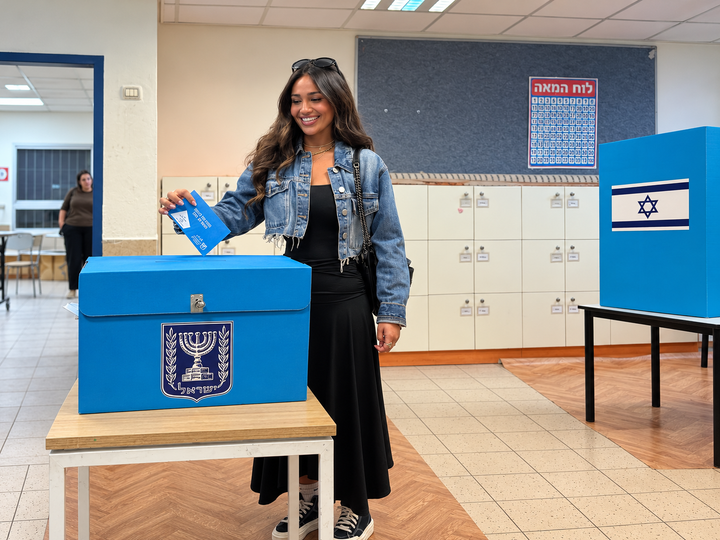
Israel's parliamentary election has produced no clear governing majority, leaving Prime Minister Benjamin Netanyahu and opposition leader Gadi Eisenkot facing weeks of potentially difficult coalition negotiations.
The latest preliminary results from October 28 project 54 seats for Netanyahu's bloc, 49 for Eisenkot's opposition bloc and 17 for the Arab parties.
That leaves Netanyahu seven seats short of the 61 needed to form a government in the 120-member Knesset.
Meanwhile, President Isaac Herzog has pledged to do everything possible to prevent another election, as reports emerge that U.S. President Donald Trump favors an Israeli government without Itamar Ben-Gvir and Bezalel Smotrich.
The possibility of Netanyahu replacing his nationalist-right allies with opposition figures could fundamentally change Israel's next government.
Netanyahu Leads, but Cannot Govern Alone
With approximately 84% of the count completed, Netanyahu's Likud remains the largest individual party, but his governing bloc lacks a parliamentary majority.
The 54–49–17 allocation is an unofficial projection based on partial results, not a certified outcome.
The election has also delivered a substantial increase in Arab political representation.
The Joint List and Ra'am are projected to control 17 seats, potentially making them influential in coalition negotiations.
Eisenkot's opposition bloc could theoretically secure a majority with their support.
However, several opposition leaders have opposed forming a government dependent on Arab parties, complicating that possibility.
Netanyahu faces a different problem.
His existing coalition partners cannot provide enough seats to guarantee another term, forcing him to consider alternative alliances.
Herzog Wants to Avoid Another Election
President Isaac Herzog has made clear that preventing another round of voting will be an important priority.
Herzog pledged to use his constitutional role to encourage the formation of a stable government, warning that Israel faces major national challenges.
His appeal reflects the country's recent political history.
Between 2019 and 2022, Israel held five parliamentary elections as rival coalitions repeatedly struggled to secure durable majorities.
The president cannot simply appoint a government of his choosing.
After official results are finalized, he will consult parliamentary parties and assign the task of forming a government to the candidate he considers best positioned to assemble sufficient support.
That candidate generally receives 28 days, with a possible 14-day extension.
If negotiations fail, alternative procedures could eventually lead to another election.
For now, Herzog's position adds pressure on rival parties to explore compromises.
Trump Reportedly Wants Ben-Gvir and Smotrich Out
The political negotiations now have an international dimension.
According to Israeli outlet Walla, citing American sources, Trump wants the next Israeli government to exclude National Security Minister Itamar Ben-Gvir and Finance Minister Bezalel Smotrich.
The reported concern centers on West Bank annexation, settlement policy and their possible effects on Washington's regional diplomatic agenda.
Both ministers advocate policies that complicate efforts to reach new agreements with Arab governments.
Trump has opposed Israeli annexation of the West Bank while pursuing an expansion of the Abraham Accords, particularly normalization between Israel and Saudi Arabia.
A government dependent on Ben-Gvir and Smotrich could make those negotiations substantially more difficult.
The Jerusalem Post has separately reported that figures within Trump's circle favor a broader Israeli unity government involving Netanyahu and Eisenkot.
Some discussions have reportedly included a rotating premiership, allowing Netanyahu to serve initially before transferring leadership to another figure.
However, these remain reported proposals rather than agreed arrangements.
Trump has not formally endorsed a specific coalition.
Could Netanyahu Turn to Eisenkot?
The parliamentary arithmetic creates an opening for an unexpected alliance.
If Netanyahu cannot secure 61 seats with his existing partners, he could attempt to replace Ben-Gvir and Smotrich with parties from Eisenkot's opposition camp.
Such an arrangement could provide a more comfortable parliamentary majority while reducing the government's dependence on politicians advocating West Bank annexation.
It could also create greater diplomatic flexibility in negotiations involving Saudi Arabia, Gaza and Lebanon.
But the obstacle is substantial.
Eisenkot campaigned on replacing Netanyahu and has repeatedly rejected joining a government led by him.
He has demanded accountability for the failures surrounding Hamas's October 7, 2023, attack and supported an independent state investigation.
Joining Netanyahu would require a major political compromise.
Former Prime Minister Naftali Bennett and other opposition leaders also have reservations about serving under Netanyahu.
An alternative arrangement could involve a rotating premiership or an agreement defining when Netanyahu would leave office.
Yet Israel has experienced failed political power-sharing arrangements before, making trust between the prospective partners a central problem.
The Saudi Normalization Question
Washington's interest is closely connected to the future of the Abraham Accords.
Trump wants to expand diplomatic relations between Israel and Arab countries, with Saudi Arabia representing the most significant potential agreement.
But Riyadh has maintained that progress on Palestinian statehood is necessary for normalization.
Ben-Gvir and Smotrich have promoted settlement expansion and annexation policies that conflict with that position.
Removing them from government would not automatically deliver a Saudi agreement.
Netanyahu and Eisenkot themselves remain opposed to establishing an independent Palestinian state under current conditions.
Nevertheless, changing Israel's coalition could alter its approach to settlement expansion and create more room for diplomatic negotiations.
That explains why Washington may view Israel's election deadlock as an opportunity to encourage a different governing arrangement.
What Would Change for Lebanon?
The eventual coalition will also influence Israel's approach to Lebanon.
Negotiations over Israeli withdrawal from southern Lebanon remain unresolved, while Israeli officials continue linking withdrawal to Hezbollah's disarmament.
A broader Israeli government might approach negotiations with Washington and Beirut differently.
However, Eisenkot is a former military chief who also supports maintaining strong deterrence against Hezbollah and Iran.
Replacing Ben-Gvir and Smotrich would therefore not necessarily produce a fundamental change in Israel's security policy.
The most significant differences could emerge over annexation, regional diplomacy and the government's willingness to reach negotiated agreements.
For Lebanon, the practical question remains whether Israel's next government will pursue an enforceable withdrawal arrangement alongside credible Lebanese state control over weapons.
A Coalition That Could Reshape Israeli Politics
Israel's election has left every major political camp facing difficult choices.
Netanyahu leads the largest party but lacks a governing majority.
Eisenkot has enough parliamentary support to challenge him but faces obstacles to assembling an alternative coalition.
Arab parties could influence the outcome, although cooperation with them remains politically contentious.
Herzog wants to prevent another election.
And Trump is reportedly interested in a coalition that would remove two of Netanyahu's most controversial partners.
These developments raise the possibility of a major realignment.
Netanyahu could remain prime minister while abandoning parts of the coalition that sustained his previous government.
Alternatively, opposition parties could reach an arrangement that removes him from office.
Neither outcome is guaranteed.
But the election has created a political situation in which alliances may matter more than the distinction between the two competing blocs.
Israel's voters have delivered a fragmented parliament.
The next government will depend on which leaders are prepared to compromise, which partnerships can command 61 seats and whether the president can help prevent another prolonged electoral crisis.
The election is over.
The struggle to determine who governs Israel has only begun.