Jordan Bombs Daraa Following Church Massacre: Is Syria Becoming a Jihadist Stronghold?
Jordan has bombed suspected terrorist positions in southern Syria following an attack on a Greek Orthodox church in Karak that killed nine people. Syrian authorities say the airstrikes killed seven people, including children, and dispute Jordan's account of the operation.
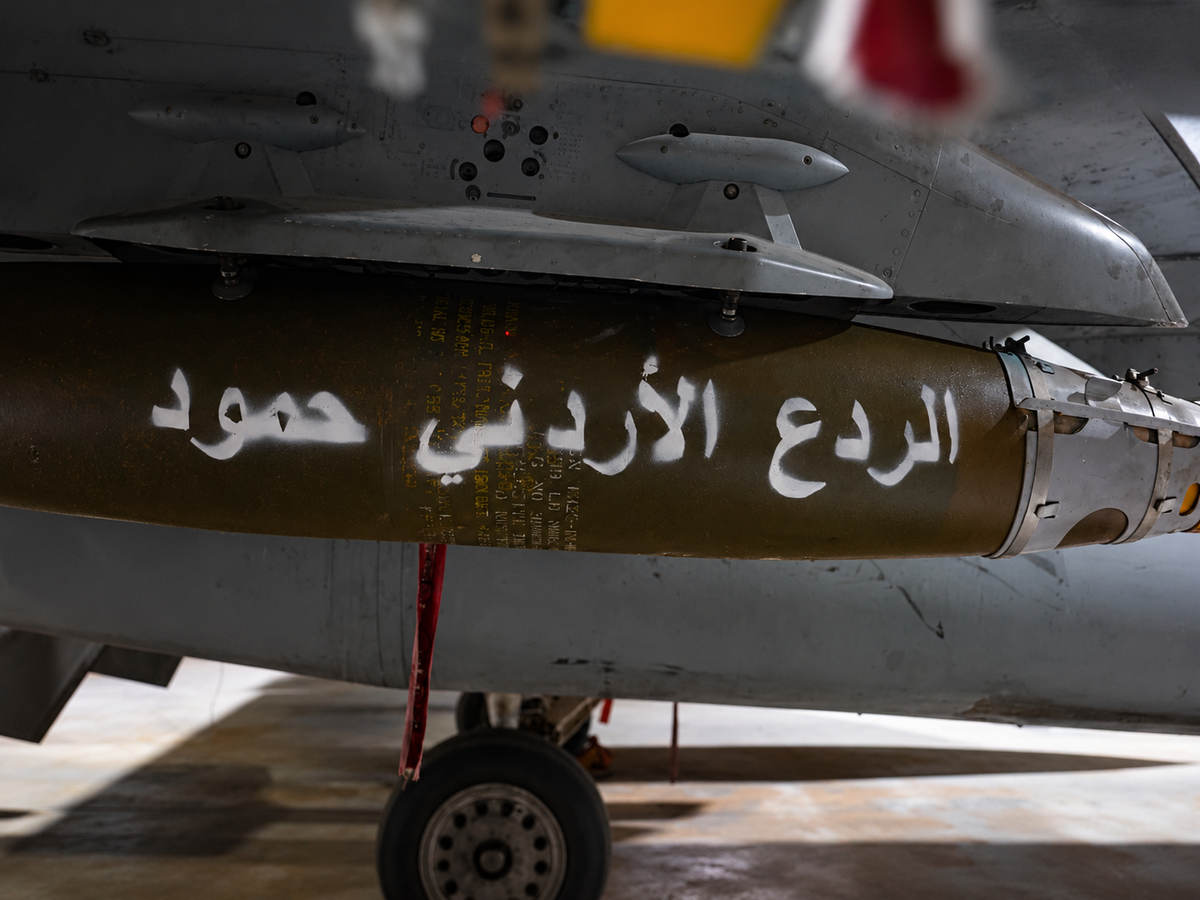
Jordan has launched airstrikes against terrorist positions in southern Syria following a deadly attack on a Christian church, raising renewed concerns about jihadist activity under President Ahmed al-Sharaa's (al-Jolani) government.
The strikes, carried out on October 26, targeted locations in Daraa province that Jordanian authorities said were connected to extremist groups responsible for an attack that killed nine people at a Greek Orthodox church in the Jordanian city of Karak.
Syrian authorities reported that seven people, including three children, were killed in the airstrikes. Jordan maintained that its aircraft had targeted terrorist hideouts, vehicles and armed militants.
The confrontation raises a broader question about Syria nearly two years after the fall of Bashar al-Assad.
Has the country become a sanctuary for jihadist organizations under a government led by a former al-Qaeda commander?
The evidence points to serious and persistent jihadist threats, an incomplete transition from militia rule and continuing failures to protect religious minorities.
A Christian Funeral Turns Into a Massacre
The events began on October 23, when gunmen attacked mourners attending a funeral at Hamoud Greek Orthodox Church in Karak.
Nine people were killed and more than two dozen wounded.
Jordanian authorities subsequently arrested three suspects following an armed confrontation with security forces.
The suspects, two brothers and their brother-in-law, were described by Jordanian officials as extremists motivated by takfiri ideology, which declares other Muslims or religious groups to be unbelievers.
Jordan's security chief said the attackers were not known to belong to an organized terrorist group.
However, the Jordanian military subsequently announced that its investigation had identified connections between those responsible and terrorist groups operating in southern Syria.
It launched retaliatory airstrikes across the border.
Jordan Strikes Daraa, Damascus Protests
Jordanian warplanes reportedly struck several locations in the countryside of Daraa, including areas around al-Muzayrib.
The Jordanian military said the operation destroyed militant positions and vehicles.
Syrian officials disputed Jordan's account, reporting civilian casualties and condemning the strikes as a violation of sovereignty.
Damascus also contradicted Jordan's claim that the operation had been coordinated with Syrian authorities.
The disagreement quickly escalated diplomatically.
Syria suspended operations at the Nasib border crossing, a major commercial route connecting the two countries.
For Jordan, the attack on a Christian church exposed the continuing threat of extremist violence.
For Syria, the airstrikes highlighted the difficulty of controlling armed networks operating within its borders.
Neither government has publicly established the full circumstances connecting the church attackers to the locations bombed in Daraa.
Syria's New President Has a Jihadist Past
The controversy is inseparable from the background of Syria's current leadership.
Ahmed al-Sharaa, previously known as Abu Mohammed al-Jolani, rose to prominence through jihadist organizations during the Syrian civil war.
He was associated with al-Qaeda in Iraq before establishing Jabhat al-Nusra, the Syrian branch of al-Qaeda.
His organization later separated from al-Qaeda and evolved into Hayat Tahrir al-Sham, or HTS.
HTS subsequently became the dominant force in northwestern Syria, controlling Idlib before leading the offensive that overthrew Assad in December 2024.
In January 2025, Sharaa became Syria's transitional (unelected) president.
That transformation was remarkable.
A former jihadist commander became the head of a state seeking diplomatic recognition, foreign investment and normalized relations with Western governments.
The United States, Britain and European governments subsequently removed terrorist designations and expanded engagement with the new authorities.
Supporters of the transition argue that Sharaa has moved away from transnational jihadism and is attempting to create a functioning Syrian state.
His government joined the international coalition against ISIS in November 2025.
These developments are significant, but they do not erase the leadership's history or settle concerns over the composition and conduct of Syria's new security institutions.
The Minority Question
Since Assad's overthrow, Syria has experienced repeated episodes of sectarian violence.
In March 2025, mass killings took place in predominantly Alawite areas along the Mediterranean coast.
Investigations documented abuses involving members of forces affiliated with the new authorities, alongside violence involving Assad loyalists and other armed groups.
Months later, massacres in the southern province of Sweida devastated Druze communities.
The violence involved government-linked terrorist forces and local groups, leaving substantial civilian casualties and displacement.
The response to these events raised questions about whether Damascus could control the fighters operating under its authority and protect communities outside the Sunni Arab majority.
The government has announced investigations and prosecutions over some abuses.
Nevertheless, international reporting indicates that accountability remains incomplete and agreements intended to restore security in Sweida have faced significant implementation problems.
These incidents are particularly important when evaluating the new Syrian state.
Replacing Assad's dictatorship does not automatically establish a government capable of protecting minorities, enforcing the law or controlling armed organizations.
A transition must be judged by institutional conduct, not simply by international recognition.
How Strong Are Jihadist Groups in Syria Today?
ISIS remains active in Syria despite having lost the territorial caliphate it once controlled.
A United Nations assessment in July 2026 estimated that approximately 3,000 ISIS fighters remained in the country.
Their activities primarily involved dispersed cells and intermittent attacks rather than conventional territorial administration.
Other jihadist factions and extremist networks continue to operate, although they differ in ideology, affiliations and their relationship with Damascus.
The security situation has also been complicated by the government's attempt to integrate former rebel organizations into a unified military.
Some fighters have entered official institutions, while other armed groups retain considerable autonomy.
This creates obvious challenges.
A government may publicly oppose international terrorism while lacking effective control over every militia, commander or armed network operating inside its territory.
Why Jordan Is Concerned
Jordan has long considered instability in southern Syria a serious national-security threat.
For years, its authorities have confronted cross-border drug trafficking, weapons smuggling and armed networks operating near the frontier.
The latest church attack introduces another concern: the possibility that Syria-based extremist networks could support violence inside Jordan.
The attack was especially sensitive because it targeted a Christian religious gathering in a country where Christian communities form an established part of national society.
Jordan's response was intended to demonstrate that such violence would not go unanswered.
Has the New Regime Made Syria a Jihadist Stronghold?
There are several facts that cannot be ignored.
Syria's president emerged from organizations with direct historical links to al-Qaeda.
Former Islamist fighters hold influential positions within the post-Assad security order.
ISIS cells remain active.
Serious sectarian violence has occurred under the transitional authorities, including abuses involving government-linked forces.
And Jordan now says terrorist networks operating from southern Syria were connected to a deadly attack on Christian worshippers.
Taken together, these developments demonstrate that jihadist violence and the legacy of militant rule remain significant problems for the country.
Jordan's airstrikes have brought those concerns back into focus.
For the region, the standard should be straightforward.
Syria must not become a base for attacks against its neighbors.
Its religious and ethnic minorities must be protected.
Armed groups must be subordinated to accountable state institutions.
And accusations of terrorist activity must be investigated with credible evidence rather than handled exclusively through military retaliation.
The overthrow of Assad ended one era of Syrian rule.
It did not automatically resolve the security threats that emerged during thirteen years of civil war.
The events in Daraa and Karak demonstrate how dangerous those unresolved problems remain.