They Made the Same Promise Before: Hezbollah Pledges Not to Enter Another War for Iran
Hezbollah has reportedly assured Parliament Speaker Nabih Berri that it will not intervene in another war involving Iran. Berri conveyed the pledge to President Joseph Aoun, while Iranian officials reportedly said Tehran would not request Hezbollah's assistance.
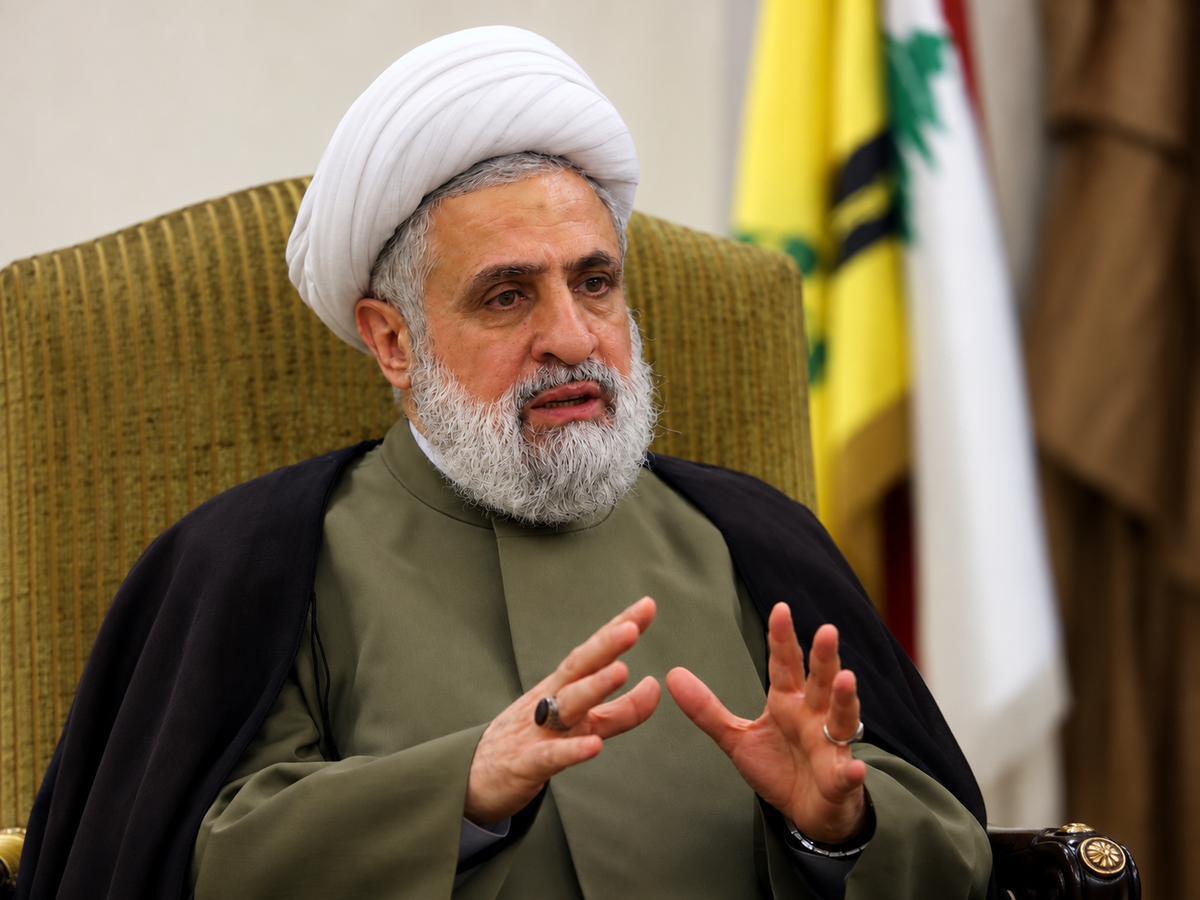
Hezbollah has reportedly assured Lebanese officials that it will not intervene in another war between Iran and the United States, as fears grow that renewed regional fighting could once again turn Lebanon into a battlefield.
According to an October 24 report by Asharq Al-Awsat, Hezbollah conveyed its position to Parliament Speaker Nabih Berri, who subsequently informed President Joseph Aoun.
The reported commitment comes amid renewed American threats against Tehran and Israeli warnings that another Hezbollah intervention could trigger a major expansion of military operations inside Lebanon.
But there is one significant problem with Hezbollah's latest assurance.
The organization made a similar promise before the March war and broke it.
A Promise Lebanon Has Heard Before
Before the outbreak of the previous conflict with Iran, Hezbollah had reportedly assured Berri that it would remain outside the confrontation.
That commitment did not hold.
Following the assassination of Iranian Supreme Leader Ali Khamenei in March, Hezbollah launched six rockets toward Israel in retaliation, drawing Lebanon into another dangerous regional escalation.
The decision embarrassed Berri, who had conveyed Hezbollah's earlier assurances to Aoun and Prime Minister Nawaf Salam.
It also raised an uncomfortable question about who actually controls the organization's military decisions.
If Hezbollah's leadership can reassure Lebanon's highest officials that it will remain neutral, only to enter a war when Tehran is attacked, what value do those assurances carry?
The latest reports suggest that Berri is once again attempting to prevent Hezbollah from making a decision that could have devastating consequences for Lebanon.
But there is an important difference this time.
Iran itself reportedly does not want Hezbollah to intervene.
Iran Says It Does Not Need Hezbollah's Help
During a recent visit to Beirut, Iranian Deputy Foreign Minister Saeed Khatibzadeh reportedly met lawmakers affiliated with Hezbollah and the Amal Movement.
According to parliamentary sources cited by Asharq Al-Awsat, Khatibzadeh said Tehran would not request Hezbollah's military assistance if the United States launched another attack against Iran.
He reportedly argued that Iran had strengthened its defenses and was capable of confronting American military action without involving its Lebanese ally.
The Iranian official also acknowledged the changed military balance between Hezbollah and Israel.
According to the report, Tehran recognizes that Hezbollah's intervention would be unlikely to alter the outcome of a direct American-Iranian confrontation.
That is a significant admission.
For decades, Hezbollah's military capabilities have formed a central component of Iran's regional deterrence strategy.
The organization was widely understood to provide Tehran with the ability to threaten Israel from Lebanese territory during a major confrontation.
But years of fighting, the loss of senior commanders and extensive damage to Hezbollah's military infrastructure have weakened that position.
A new confrontation with Israel could impose enormous costs on Lebanon without delivering a meaningful strategic advantage to Iran.
The reported Iranian position suggests that Tehran understands those limitations.
It does not, however, establish that Hezbollah has abandoned its military relationship with Iran or surrendered its ability to intervene independently.
Hezbollah Is Facing Pressure From Its Own Supporters
There is another reason Hezbollah may be reluctant to enter a new war.
Its own support base has already paid an enormous price.
The conflict has displaced large numbers of Lebanese families, destroyed residential neighborhoods and severely damaged communities across southern Lebanon, the Bekaa Valley and Beirut's southern suburbs.
Many households remain dependent on financial assistance while waiting to rebuild their homes.
Hezbollah has announced housing support for displaced families, but reconstruction remains a substantial challenge.
Another war would threaten to deepen that crisis.
According to parliamentary sources quoted by Asharq Al-Awsat, Hezbollah's leadership is concerned that another decision to fight on Iran's behalf could provoke a serious backlash among its own supporters.
The report suggests that the broader Shiite community may be far less willing to accept another conflict initiated in response to events in Tehran.
That pressure is particularly relevant given Israel's latest threats.
Israeli Defense Minister Israel Katz has warned that Israel could expand its security zone deeper into southern Lebanon, potentially advancing toward the Litani River and targeting Beirut's southern suburbs.
Such an operation could trigger another major wave of displacement.
The reported estimates cited by Lebanese parliamentary sources suggest that up to one million people could be affected by a wider escalation.
Those figures are scenarios rather than confirmed displacement projections, but the underlying risk is substantial.
Hezbollah therefore faces a difficult calculation.
It must maintain its relationship with Iran while recognizing that its Lebanese constituency may no longer tolerate the consequences of another regional war.
The State Is Still Not Making the Decision
There is a deeper issue that the latest assurances do not resolve.
Why is Hezbollah deciding whether Lebanon enters a war in the first place?
The reported discussions involve Hezbollah informing Nabih Berri of its intentions, Berri relaying those intentions to President Aoun, and Iranian officials explaining whether Tehran wants Hezbollah's assistance.
Yet Lebanon has a president, a prime minister, a Cabinet and an army.
Under any functioning system of state authority, the decision to enter an international armed conflict should belong to the country's constitutional institutions.
It should not depend on an armed organization's calculations or instructions from a foreign government.
The Lebanese government has repeatedly committed itself to establishing the state's monopoly over weapons and decisions of war and peace.
President Aoun and Prime Minister Salam have declared that no organization should independently determine Lebanon's military future.
But Hezbollah continues to maintain its own arsenal and military command structure.
The recent Dahr al-Baidar explosives case illustrated that unresolved contradiction.
Lebanese security forces seized a shipment containing hundreds of kilograms of military explosives.
Hezbollah subsequently acknowledged ownership and demanded that the authorities return the confiscated material.
The dispute has become a major test of the government's ability to enforce its authority.
Now the same organization is reportedly offering assurances that it will not launch another war.
The underlying problem remains unchanged.
Lebanon's security is still being treated as a decision Hezbollah can make, rather than one reserved for the Lebanese state.
A Critical Moment for Lebanon
The reports arrive as Lebanese and Israeli military representatives have concluded another round of American-mediated discussions in Florida.
Those negotiations are intended to advance Israeli withdrawal from Lebanese territory and establish a security arrangement based on Lebanese Army control.
But progress remains limited.
Israel continues to demand action against Hezbollah's military infrastructure.
Lebanon continues to demand Israeli withdrawal and an end to military operations.
Hezbollah continues to resist disarmament.
A renewed conflict involving Iran could undermine the negotiations entirely.
That explains why Washington, Beirut and regional intermediaries are attempting to keep Hezbollah outside any future confrontation.
The immediate priority is preventing another devastating escalation.
But avoiding war cannot depend indefinitely on Hezbollah's private assurances.
The organization reportedly promised neutrality before March and then entered the conflict.
Its latest pledge may reflect a genuine recognition of Lebanon's increasingly fragile position.
It may also reflect Iran's conclusion that Hezbollah can no longer offer meaningful military support in a direct confrontation with the United States.
Those explanations are not mutually exclusive.
What matters now is whether the reported commitment holds if another war actually begins.
For Lebanon, the lesson should be clear.
A promise from Hezbollah not to intervene is preferable to another decision to launch rockets.
But it is not a substitute for sovereignty.
The country's future cannot continue depending on whether Hezbollah decides to honor an assurance conveyed through Nabih Berri.
Lebanon needs the authority to decide for itself whether it goes to war.
Until that authority is restored, every new confrontation involving Iran will continue to threaten Lebanon, regardless of how many promises Hezbollah makes.