Lula Wins Controversial Reelection After His Former Lawyer Extends Voting by Two Hours
Luiz Inácio Lula da Silva has won reelection in Brazil with 51.79% of the vote after Supreme Court Justice Cristiano Zanin, who previously served as Lula's personal lawyer, ordered voting extended by two hours just minutes before polls were due to close.
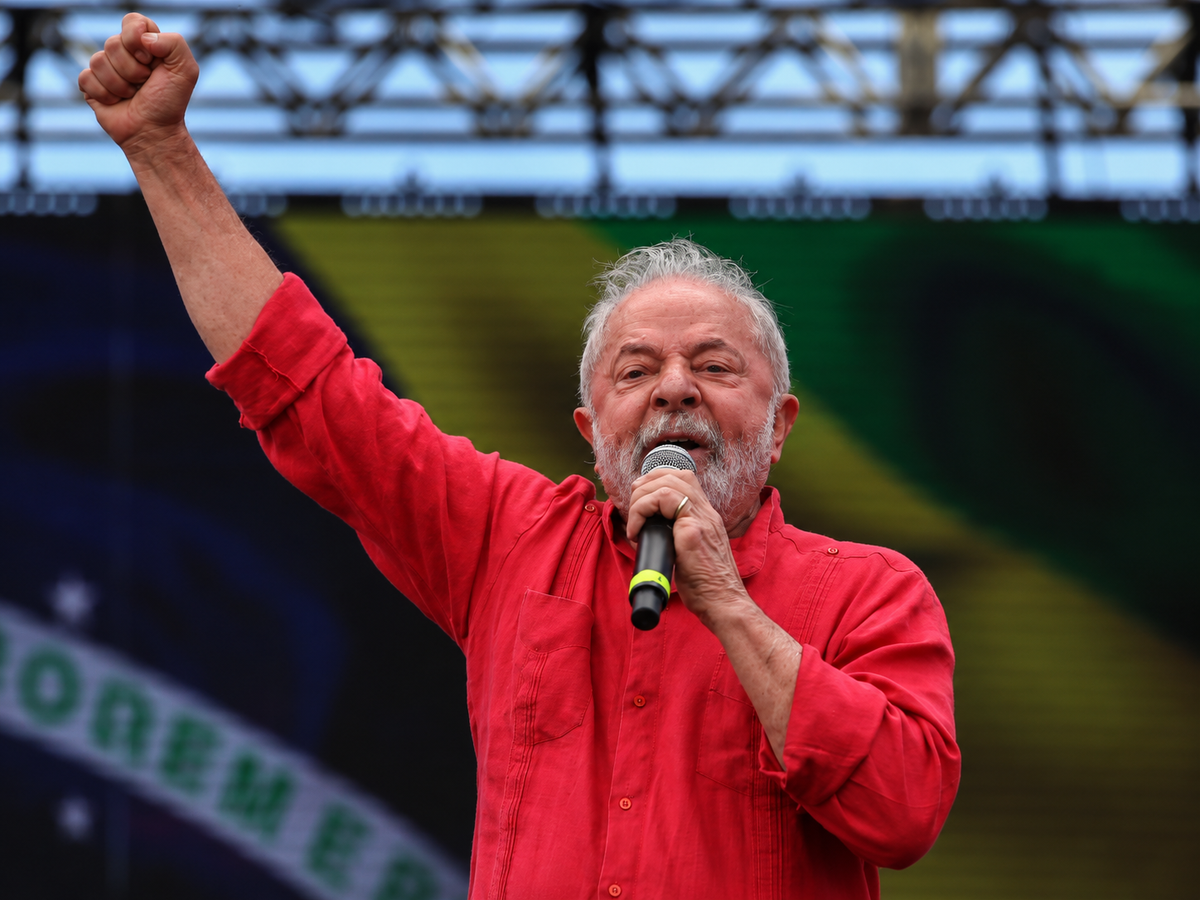
Brazilian President Luiz Inácio Lula da Silva has won reelection to a fourth term following a contentious presidential runoff marked by a last-minute judicial intervention, confusion at polling stations and accusations of electoral interference.
Lula defeated conservative challenger Flávio Bolsonaro, son of former President Jair Bolsonaro, with 51.79% of the vote against 48.21%.
The margin was approximately 4.43 million votes.
But the controversy surrounding Sunday's election began before the final results were announced.
Just minutes before polling stations were scheduled to close at 5 p.m., Supreme Court Justice Cristiano Zanin ordered voting extended by two hours.
Zanin is not an ordinary judge in this context.
He previously served as Lula's personal lawyer, representing the president in major legal proceedings before Lula appointed him to Brazil's Supreme Court in 2023.
The fact that a former lawyer of one of the candidates intervened in the voting process on election day has raised questions about judicial impartiality.
A Last-Minute Decision That Changed Election Day
The controversy began when Lula's campaign complained about public transportation problems that allegedly prevented voters from reaching polling stations, particularly in areas where the president enjoyed substantial support.
Bolsonaro's campaign had separately requested extended voting in certain areas affected by severe weather.
Both campaigns therefore sought additional voting time in specific locations.
However, Zanin's initial ruling extended voting nationwide until 7 p.m., going considerably further than those localized requests.
The decision came approximately three minutes before the scheduled closing time.
By the time election officials received the instructions, some polling stations had already closed.
Others continued accepting voters.
The resulting confusion forced electoral authorities to pause the publication of election results while officials determined how to implement the ruling.
Zanin subsequently clarified that the extension applied only to polling stations whose electronic voting machines had not already been shut down.
That left voters in different locations operating under different practical conditions.
Some polling stations continued receiving votes until 7 p.m.
Others could not reopen because their voting equipment had already been closed.
The President of Brazil's Superior Electoral Court, Kassio Nunes Marques, later acknowledged the serious operational difficulties created by the decision.
He noted that the extension was unprecedented and that there had been no established legal procedure authorizing such a last-minute change.
His comments highlighted the dispute over how the decision was made, independently of which candidate ultimately won.
Bolsonaro Takes the Lead, Then Lula Overtakes Him
The sequence of election results added to the controversy.
When the electoral authorities initially began publishing figures, Lula was leading with only a fraction of ballots counted.
After the counting resumed, Flávio Bolsonaro moved ahead.
At approximately 8:14 p.m., with 36.77% of polling stations counted, Bolsonaro held 50.32% of the valid votes compared with Lula's 49.68%.
The opposition candidate's lead was approximately 286,000 votes.
But the advantage did not last.
According to Brazil's Senate news agency, Bolsonaro remained ahead for approximately 38 minutes before Lula regained the lead at 8:24 p.m.
As additional results arrived, Lula's advantage grew.
He ultimately won by approximately 4.43 million votes.
The reversal was dramatic, particularly because Bolsonaro had also finished ahead of Lula in the first round earlier in October.
Bolsonaro Refuses to Recognize the Result
Flávio Bolsonaro has refused to concede defeat.
He described the last-minute extension as an unacceptable change to the election's rules and demanded that the results be annulled.
His campaign argues that the intervention created inconsistent conditions between polling stations and undermined confidence in the process.
The fact that the decision came from Lula's former lawyer has intensified scrutiny.
Zanin's previous professional relationship with the president is well documented.
The Superior Electoral Court has maintained that the voting extension did not alter the final outcome.
Nevertheless, the process has raised legitimate questions about judicial procedure and consistency.
Brazil's Long-Running Judicial Controversies
The latest dispute comes against the backdrop of years of political conflict involving Brazil's judiciary.
Lula himself benefited from major judicial decisions before returning to the presidency.
His previous corruption convictions were annulled in 2021 following judicial findings involving procedural problems and the impartiality of the judge who had handled his case.
That cleared the way for his political comeback.
Zanin, who represented Lula in those proceedings, was subsequently appointed to the Supreme Court by the president.
Those events were legal and political developments in their own right, but they help explain why Zanin's involvement in Sunday's election has become especially sensitive.
A judge's prior representation of a political figure does not automatically disqualify that judge from every case involving the politician.
But questions of impartiality become especially important when a judicial decision changes election procedures immediately before polls close.
The legitimacy of an election depends not only on the accuracy of the final count, but also on consistent rules and public confidence in how those rules are applied.
What Happens Next?
Lula's victory has been formally announced by Brazil's electoral authorities.
He is scheduled to begin his fourth presidential term on January 5, 2027.
Bolsonaro's refusal to concede means the dispute may continue through legal challenges.
Any challenge would need to establish a legal basis for overturning the result, rather than rely solely on the timing of Zanin's intervention or the reversal in the published vote count.
What remains clear is that Brazil's already polarized political environment has been further strained by an unprecedented election-day decision.
A Supreme Court justice who previously represented the incumbent president extended voting hours just as polling stations were closing.
The decision created confusion, prompted criticism from electoral officials and became central to the losing candidate's challenge.
Those circumstances warrant scrutiny.
But the central questions remain distinct: whether the judicial intervention complied with election law, whether it was administered consistently and whether it materially affected the result.
Lula has secured another presidential term.
Whether Brazil's political institutions can resolve the dispute surrounding his victory is now the next challenge.