Lebanon Before Weather Apps: How Farmers Predicted Rain, Snow and the Seasons
Long before weather apps and satellite forecasts, Lebanese farmers, shepherds and fishermen relied on clouds, wind, humidity, feast days and traditions such as the bawahir to anticipate the seasons.
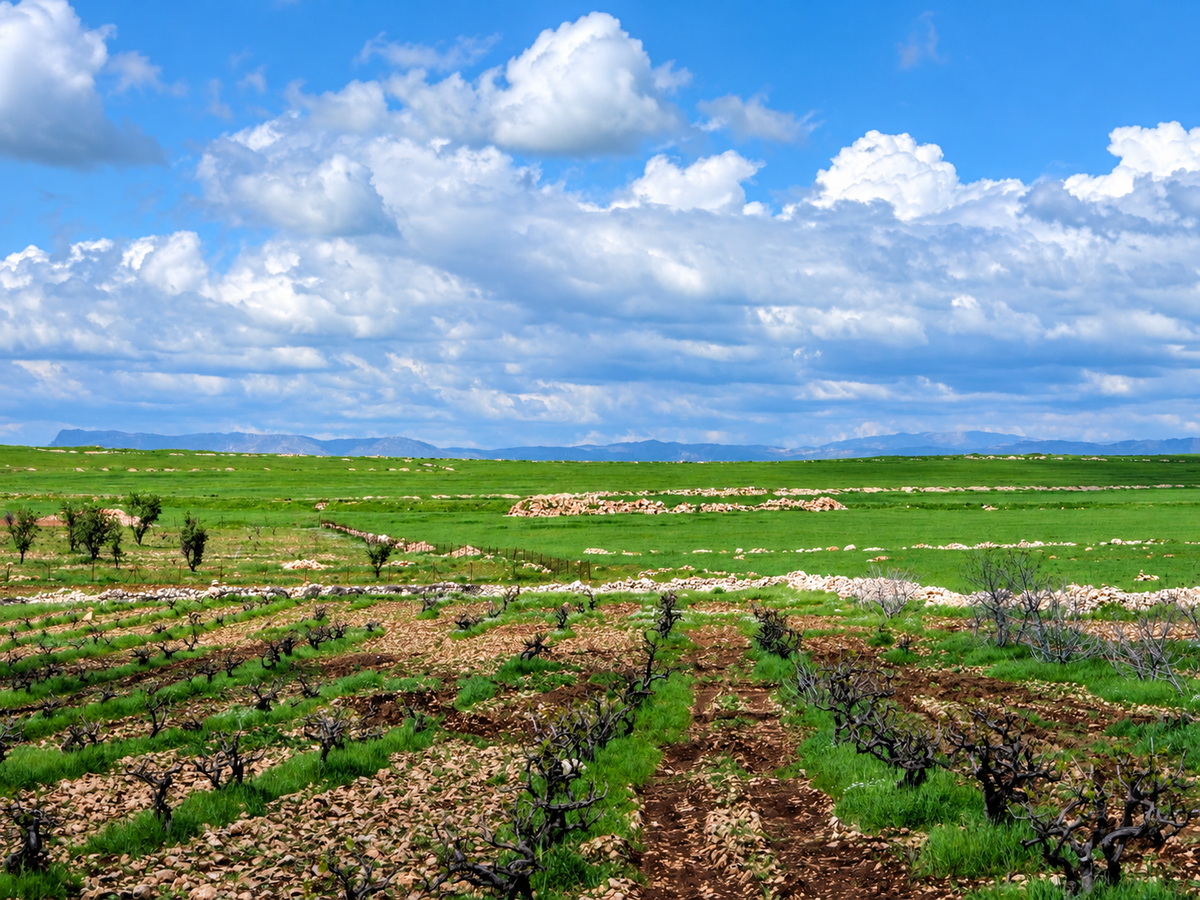
Before satellite forecasts, radar maps and hourly weather notifications, Lebanese farmers still had to answer many of the same questions they ask today.
When will the first rain arrive? Will winter bring enough snow? When should crops be planted? Is it time to move livestock down from the mountains? And what kind of summer will follow?
For generations, many of the answers came not from a screen, but from the landscape itself.
Farmers, shepherds and fishermen watched clouds, wind, humidity, stars, the moon and the behavior of animals. They followed religious feast days and remembered what the weather had done during particular periods of the year. Over time, these observations became part of a body of rural knowledge passed from one generation to another.
Some of it was practical observation.
Some was folklore.
And one of Lebanon’s most distinctive traditions was known as the bawahir.
The practice is documented in the Register of Intangible Cultural Heritage of Mediterranean Countries as a traditional Lebanese method of weather forecasting connected to agricultural life, particularly in Christian rural communities.
The idea behind the bawahir was remarkably simple.
Beginning around the Feast of the Cross in September, people observed weather conditions over a sequence of days and used them to anticipate the weather of the months ahead.
According to the heritage register, the Western calculation begins on September 14, coinciding with the Feast of the Cross, while the Eastern calculation, following the Julian Christian calendar, begins on September 27.
For 12 days, villagers paid close attention.
Was the air humid?
Were clouds gathering?
What direction was the wind blowing?
Was there dew or unusual dryness?
The heritage documentation describes observers studying the movement, temperature, strength, direction and humidity of winds, as well as the color, height and density of clouds. Dew, frost, humidity and temperature could all form part of the calculation.
Each day was then associated with a month of the coming year, allowing people to construct a traditional forecast of the seasons ahead.
There were different versions of the practice.
One documented technique involved placing salt on a fig leaf or flat piece of wood and observing whether it remained dry or absorbed moisture. In parts of southern Lebanon, shepherds have described another version in which salt was placed on a stone during the 12-day calculation. If it dissolved or became damp, its condition was interpreted as a sign of the weather expected during the corresponding period.
In southern Lebanon, the tradition has also been associated with what is called “Qadib Ayloul,” or the September rod. Shepherds interviewed about the practice described using such traditional calculations to help determine the beginning of agricultural seasons and the movement of livestock between higher and lower elevations.
This was not simply entertainment.
In an agricultural society, understanding the seasons could influence when crops were planted, when animals were moved and how communities prepared for the coming winter.
The Feast of the Cross itself once had an important place in Lebanon’s agricultural calendar. According to the Mediterranean heritage register, September 14 traditionally marked the practical end of summer and the beginning of a new agricultural cycle in some communities. Agricultural agreements could run from one Feast of the Cross to the next, including arrangements involving orchards, vineyards, shepherds and agricultural workers.
But the bawahir was only one part of a much larger system of traditional environmental knowledge.
Farmers and fishermen read the sky, the shape and color of clouds, the stars and the cycle of the moon. The flight of birds and behavior of animals and insects could also be interpreted as signs of changing weather.
Knowledge accumulated through repetition.
Certain winds were associated with particular conditions. Certain clouds appeared before storms. Seasonal changes tended to return around recognizable points in the agricultural calendar.
Lebanese villages also developed an enormous vocabulary of seasonal sayings.
The months themselves almost became characters.
August became “Ab el-Lahhab” — the blazing August — in reference to its intense heat. September inspired the familiar saying “Ayloul tarfo bil-shita mabloul,” roughly meaning that September ends with its edge wet from rain. Other sayings connected the calendar to grapes, figs, olives, planting and preparations for winter.
These sayings were easy to remember because they compressed generations of observation into a sentence.
They did not necessarily predict whether rain would arrive at 3 p.m. on Thursday.
They told farmers something broader: where they were in the rhythm of the year.
And nowhere was that rhythm more dramatic than in the mountains.
Lebanese folklore even developed a tradition around three major snowfalls expected during January and February.
Known as the “Three Hoods,” or Tlet Allousset, the tradition is associated with three Christian feast days: Saint Anthony the Great on January 17, Saint Ephrem the Syrian on January 28 and Saint Maron on February 9.
Traditionally, people compared the amount of snowfall around each feast day and later decided which saint had “whitened” the mountains the most. The tradition, rooted particularly in Christian and Maronite rural culture, is documented as part of Lebanon’s intangible cultural heritage.
For people living at elevation, snow was far more than picturesque.
It affected movement and agricultural life, while accumulated mountain snow also contributes to Lebanon’s water resources. At high elevations, snowfall helps sustain springs during the dry season.
That helps explain why weather occupies such a prominent place in Lebanon’s traditional rural culture.
The country’s geography creates striking climatic differences across a very small territory. The narrow coastal strip, Mount Lebanon, the Bekaa Valley and the Anti-Lebanon range experience different temperatures and precipitation patterns. Rainfall generally increases dramatically over the mountains and decreases toward the interior, creating multiple local microclimates.
A farmer on the coast, a shepherd in the high mountains and a cultivator in the Bekaa could therefore experience very different conditions.
Long before modern forecasts were available in every household, communities accumulated detailed knowledge of their own surroundings.
Lebanon was not entirely without scientific meteorology during the modern era. Meteorological observations at the American University of Beirut date to 1874, the Ksara Observatory operated from the early 20th century, and the first official Lebanese meteorological institution was established in 1921. Today, Lebanon’s Meteorological Service operates a national observation network and issues regular forecasts.
But for much of rural life, especially before forecasts became instantly accessible, traditional knowledge remained an important way of interpreting the seasons.
That does not mean methods such as the bawahir were scientifically reliable long-range forecasts.
Modern meteorology uses atmospheric pressure, temperature, humidity, wind measurements, radar, satellite observations and numerical models in ways traditional systems could not. The heritage documentation itself presents the bawahir as a surviving traditional practice rather than a scientifically validated method for predicting individual months far in advance.
But dismissing it simply because it cannot compete with modern forecasting misses what makes the tradition interesting.
The Lebanese farmer of generations past did not have a weather app in his pocket.
He had years of observation.
He knew how the mountains looked before certain weather arrived. He recognized familiar winds and clouds. He remembered when the first rains tended to fall. And he knew which agricultural tasks belonged to which part of the calendar because his parents and grandparents had followed similar rhythms.
Some of that knowledge was empirical.
Some was belief.
Some was coincidence.
Together, however, it reflected an extraordinarily close relationship between rural communities and their environment.
Today, a farmer can pull a phone from a pocket and see a forecast within seconds.
The old systems are no longer necessary in the same way.
Yet the bawahir, seasonal sayings and memories of traditional weather signs have not entirely disappeared. Heritage documentation notes that older people in rural communities continue to preserve such knowledge, while contemporary Lebanese reporting still finds farmers and shepherds calculating the bawahir and comparing their predictions with the weather that follows.
Every September, the old calculation begins again.
Twelve days.
Clouds, wind, humidity and salt.
And the question Lebanese farmers have asked for generations:
What kind of year is coming?
Before Lebanon had weather apps, part of its forecast was written in clouds, wind, feast days, salt and generations of memory.