Lebanon’s Cost-of-Living Crisis Is Getting Harder to Ignore
Lebanon is facing another wave of economic pressure as oil prices above $100, higher fuel costs, renewed conflict and rising inflation squeeze households already weakened by years of financial crisis.
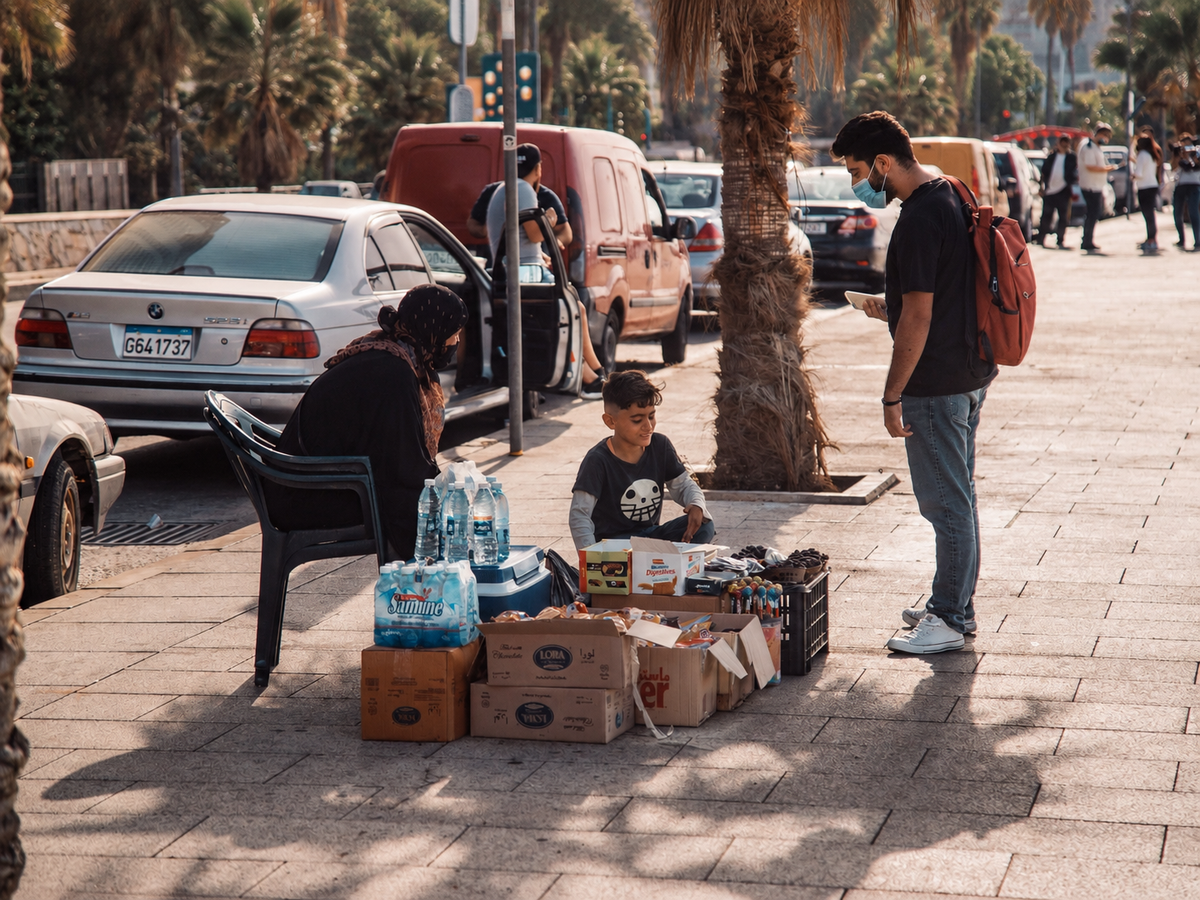
Across Lebanon, frustration over fuel prices, inflation and the cost of basic necessities is becoming increasingly visible. The pressure is part of a wider regional problem: in neighboring Syria, a sharp increase in diesel and gasoline prices has already triggered the country’s largest protests since the fall of Bashar al-Assad, with demonstrators blocking roads and disrupting fuel transport.
Lebanon has not reached that scale of unrest, but the ingredients are increasingly familiar.
The country entered 2026 hoping for a fragile economic recovery after years of financial collapse. Instead, renewed conflict, higher oil prices, supply disruptions and weaker tourism have pushed the economy back into contraction. The World Bank now expects Lebanon’s economy to shrink by 6.4% this year, reversing the 4.2% growth recorded in 2025.
Inflation is also accelerating again. The World Bank expects consumer prices to rise by around 17.5% in 2026, driven partly by higher shipping costs, supply disruptions and more expensive oil. For Lebanese households that have already endured years of currency collapse and the destruction of savings, another inflationary wave is particularly painful.
Fuel sits at the center of the problem.
Lebanon remains heavily dependent on imported energy for transportation, electricity generation and private generators. When global oil prices rise, the increase does not stay confined to petrol stations. It moves quickly through the entire economy.
Brent crude has now climbed above $107 a barrel following renewed attacks on Middle Eastern energy infrastructure, disruptions around the Strait of Hormuz and the temporary shutdown of Saudi Arabia’s East-West pipeline. That pipeline alone normally carries around 4 million barrels per day, roughly 4% of global oil supply.
Diesel is particularly important for Lebanon. Trucks use it to move food and goods. Businesses use it to run generators. Farmers use it for machinery and irrigation. Buildings depend on it for backup electricity.
When diesel becomes more expensive, virtually everything becomes more expensive.
That is why rising fuel prices are beginning to feel less like another temporary inconvenience and more like a new economic shock.
Lebanon’s situation is especially vulnerable because households never fully recovered from the 2019 financial collapse. Bank deposits remain largely inaccessible, conventional lending remains severely constrained, and many salaries still fail to match the cost of a largely dollarized economy.
At the same time, private citizens continue paying directly for services that functioning states normally provide more reliably: electricity, generators, water, education, healthcare and transportation.
The result is that inflation hits Lebanese households twice.
They pay more for imported goods because of higher energy and shipping costs, while also paying more for the private alternatives required because public infrastructure remains weak.
The war has intensified that pressure. More than one million people were displaced during the latest escalation, tens of thousands of homes were damaged, tourism was disrupted and economic activity slowed sharply. The World Bank estimates that the conflict alone has reduced Lebanon’s 2026 growth trajectory by more than 10 percentage points compared with what might otherwise have occurred.
Lebanon therefore faces something close to stagflation: economic contraction combined with rising prices.
That is one of the hardest economic environments for ordinary households. When an economy grows, rising prices can sometimes be offset by stronger wages and employment. When an economy contracts while prices rise, families face higher expenses while opportunities and incomes weaken at the same time.
The problem is not unique to Lebanon.
In Syria, the government raised diesel prices by 40% this weekend, from 125 to 175 Syrian pounds per liter, while also increasing gasoline and gas prices. Demonstrators responded by burning tires, blocking the Damascus-Aleppo highway and preventing crude tankers from reaching refineries. Roughly 90% of Syrians are estimated to live below the poverty line.
The reaction is a reminder of how politically explosive energy inflation can become.
Fuel prices are different from many other economic indicators because people experience them immediately. A rise in the price of oil quickly becomes a larger generator bill, a more expensive taxi ride, higher delivery charges and more expensive food.
There is little room for households to avoid those costs.
And the pressure is becoming global. Higher energy prices are already pushing inflation higher in the United States and Europe, increasing expectations that central banks may need to keep interest rates elevated or raise them further. U.S. diesel prices have exceeded $6 per gallon, while European policymakers are warning that higher fuel and natural gas costs could reignite inflation.
Lebanon is exposed to the same shock without many of the protections available to richer economies.
The government has limited fiscal capacity to subsidize fuel. The banking system remains damaged. Public debt is still unsustainable. And the state has little ability to shield households from sudden increases in the cost of imported energy.
For years, Lebanese have adapted to crisis by earning dollars, relying on remittances, cutting consumption or emigrating.
But adaptation has limits.
When the cost of fuel, food, housing, electricity, education and healthcare all rise together, economic pressure eventually becomes political pressure.
The protests appearing across the region should therefore not be viewed simply as anger over gasoline or diesel.
They are signs of something deeper: populations that have absorbed years of inflation, war and economic instability are increasingly reaching the point where another price increase becomes difficult to accept.
Lebanon has already endured one of the most severe economic collapses in modern history.
The danger now is that, just as the country appeared to be stabilizing, another regional energy shock is beginning to push the cost of everyday life sharply higher again.