Somaliland’s President Visits Washington in a Historic Push for U.S. Recognition
Somaliland President Abdirahman Irro has arrived in Washington for his first official U.S. visit, seeking deeper security and economic ties while pushing one of Somaliland’s biggest goals: American recognition of its independence.
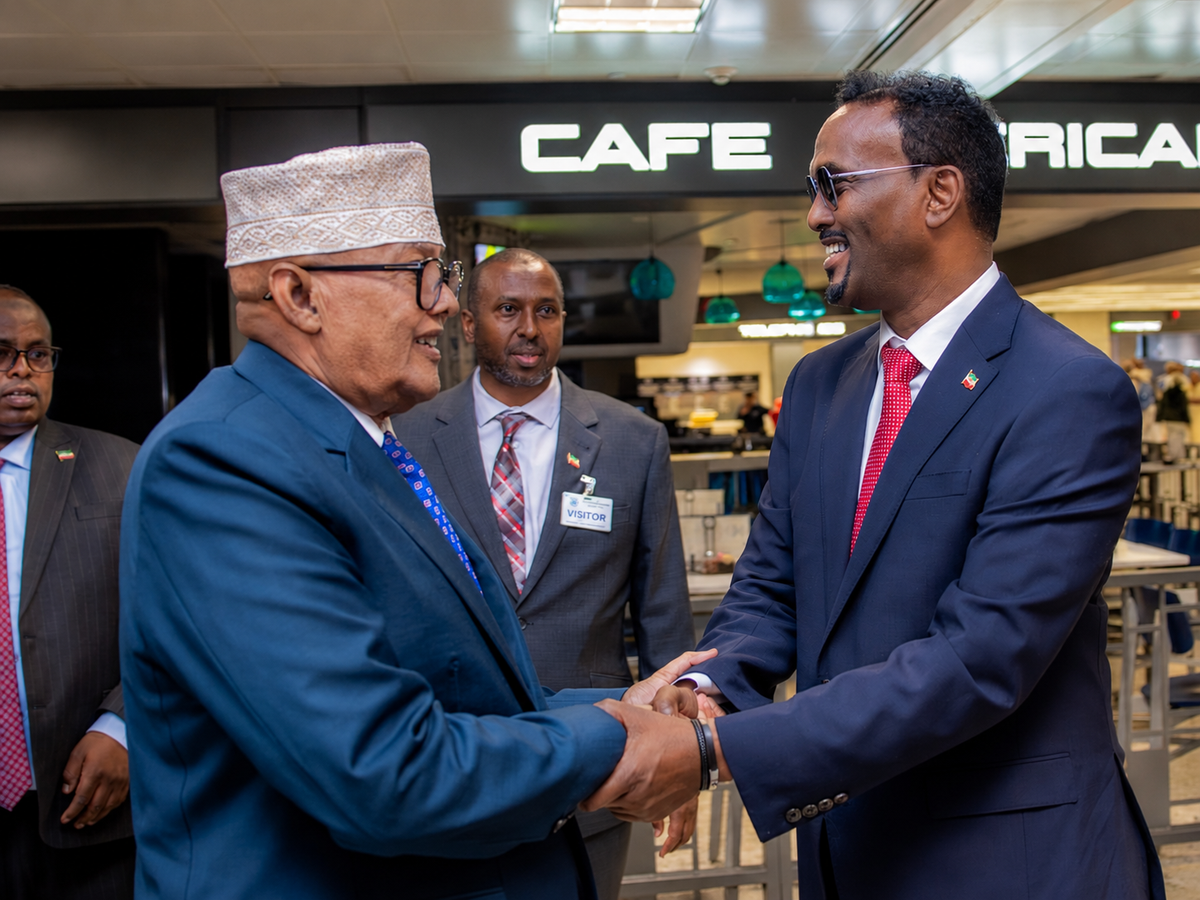
Somaliland President Abdirahman Mohamed Abdullahi Irro has arrived in Washington for his first official working visit to the United States since taking office, in what could become one of the most consequential diplomatic trips in Somaliland’s three-decade campaign for international recognition. Irro arrived on September 5 accompanied by a senior delegation that includes Somaliland’s foreign affairs, defense and aviation ministers, as well as economic and foreign-policy advisers.
The visit is centered on four issues: strengthening political relations with Washington, expanding security cooperation, attracting American investment and, most importantly, advancing Somaliland’s effort to be recognized as an independent state. Irro is expected to meet members of the U.S. House and Senate, alongside policymakers, business figures and members of the Somaliland diaspora.
Somaliland declared independence from Somalia in 1991 and has since maintained its own government, security forces, currency and political institutions. Yet for decades it remained internationally isolated, with most governments continuing to recognize Somalia’s territorial integrity and treating Somaliland as part of the Somali state.
That isolation began to crack dramatically in late 2025, when Israel became the first UN member state to formally recognize Somaliland. Irro subsequently visited Israel and opened a Somaliland embassy there, giving Hargeisa’s recognition campaign new momentum and raising expectations that another major country could eventually follow.
The United States is the biggest prize.
Somaliland’s argument to Washington increasingly rests not only on democratic legitimacy, but on strategic geography. Its coastline sits along the Gulf of Aden, close to the Bab el-Mandeb Strait, one of the world’s most important maritime chokepoints linking the Red Sea to the Indian Ocean. That location has become significantly more valuable as Houthi attacks, regional warfare and great-power competition have made control of Red Sea shipping routes a major strategic concern.
At the center of that strategic pitch is Berbera, where Somaliland has a major deep-water port and airfield. For Washington, access to infrastructure there could offer additional options for monitoring the Red Sea, protecting commercial shipping and countering threats from Yemen and the Horn of Africa. Somaliland, in turn, hopes that deeper American security and economic involvement could eventually translate into diplomatic recognition.
The visit is also taking place in the middle of a much larger regional contest. Somalia strongly opposes recognition of Somaliland and continues to insist that the territory remains part of the Federal Republic of Somalia. Mogadishu has reportedly sent its own delegation to Washington as Irro visits, underscoring how seriously the Somali government views the diplomatic challenge.
There is still no indication that Washington has decided to recognize Somaliland. Earlier reports suggesting that the United States had already done so were false, and U.S. recognition has remained politically sensitive because of its implications for Somalia and the wider Horn of Africa.
But Irro’s visit matters because Somaliland’s position has changed substantially. After more than three decades of lobbying for recognition largely from the diplomatic sidelines, its leadership is now arriving in Washington with something more tangible to offer: a strategic location, relative political stability, potential access to Berbera and an increasingly important role in Red Sea security.
If Israel’s recognition broke the diplomatic taboo, the larger question is whether the United States could eventually turn Somaliland from a partially recognized breakaway territory into a fully fledged state actor.