Trump Says the Iran War Cost Republicans Congress. But Was It the War, or the Ceasefires?
Donald Trump admits the Iran war contributed to Republicans losing both houses of Congress. But was the real problem the decision to confront Iran, or the repeated ceasefires and months of indecision that followed?
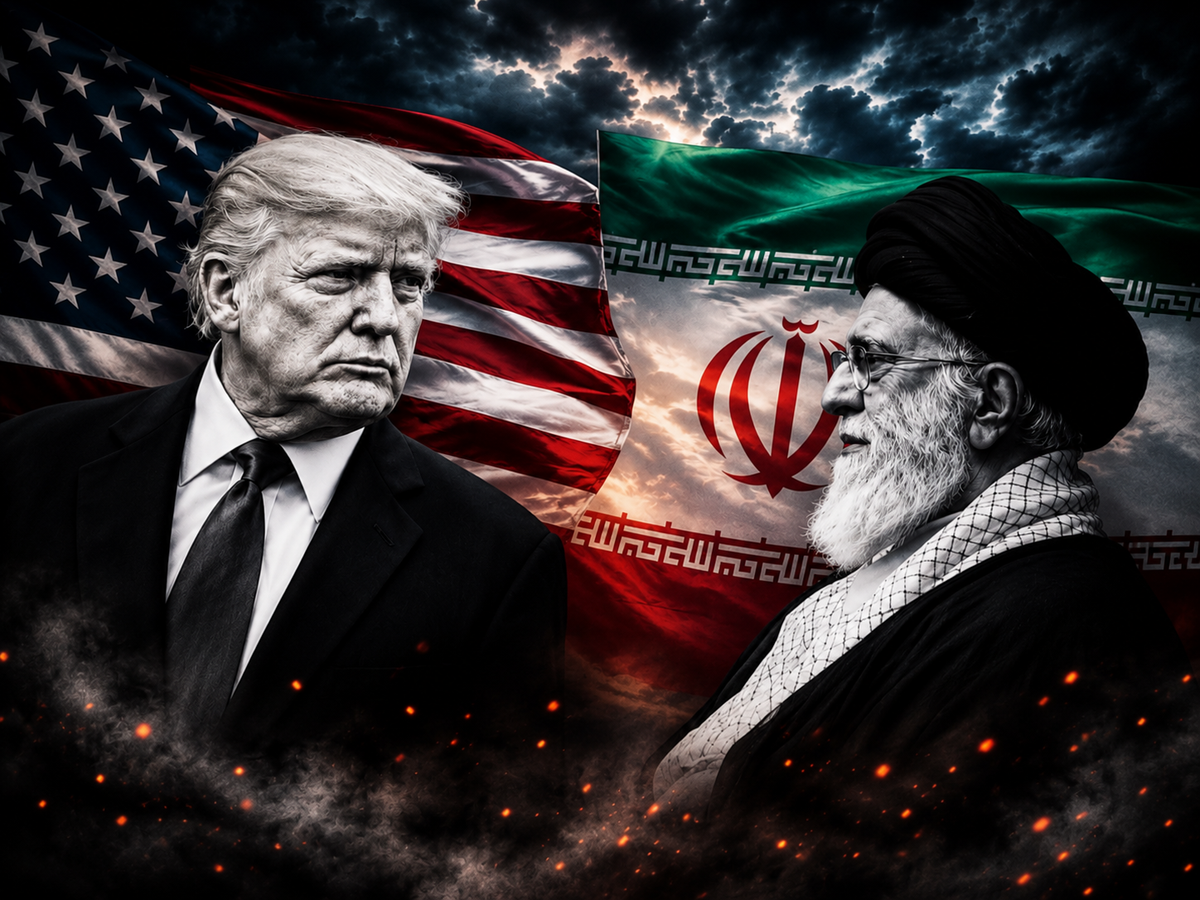
After Democrats swept both chambers of Congress, Donald Trump acknowledged that the Iran war contributed to his party's defeat. But a different interpretation deserves consideration: perhaps the greater political failure was not confronting Iran, but spending nearly two years alternating between military escalation, ceasefires and negotiations without securing a lasting resolution.
President Donald Trump has acknowledged that the war with Iran contributed to Republicans losing control of both houses of Congress in the November 3 midterm elections, but he has defended the decision to launch the military campaign.
Speaking to Fox News and The Wall Street Journal on November 4, Trump conceded that Iran played a role in the electoral defeat, while insisting that preventing Tehran from obtaining nuclear weapons justified the operation.
Vice President JD Vance offered a more categorical assessment, explicitly blaming the war for the Republican losses. Democratic candidates, meanwhile, capitalized on public frustration with rising gasoline prices, economic uncertainty and a conflict that had stretched into its ninth month.
Yet the conventional explanation, that launching the war cost Republicans Congress, leaves an important question unanswered.
Did voters turn against the administration because it confronted Iran, or because the confrontation produced months of economic disruption without a decisive outcome?
The distinction matters. A prolonged war and a decisive military campaign are not politically or strategically interchangeable.
The February 2026 offensive began with ambitious objectives.
Washington announced plans to destroy Iran's nuclear and missile capabilities, weaken its military infrastructure and encourage political change in Tehran.
However, the conflict quickly expanded beyond Iran itself.
Iranian attacks on regional targets and disruption of shipping through the Strait of Hormuz drove up international energy prices, while Hezbollah's renewed participation triggered another major confrontation in Lebanon.
By April, the United States and Iran had agreed to a temporary ceasefire mediated by Pakistan.
In June, the two sides signed a memorandum outlining potential arrangements for ending hostilities, reopening the Strait of Hormuz and negotiating restrictions on Iran's nuclear activities.
But the diplomatic process failed to deliver a durable settlement.
The June agreement subsequently unraveled, and intermittent hostilities continued alongside negotiations.
By September, Reuters reported that senior White House advisers were seeking to prevent another major escalation before the November elections, fearing the political consequences of renewed fighting.
On October 8, Trump publicly promised that the United States would not launch another attack against Iran before election day, citing productive diplomatic discussions.
The result was a conflict that had neither decisively ended nor produced a stable peace.
For American voters, the consequences continued accumulating even as the administration moved between military threats and diplomatic overtures.
Ceasefires Are Not the Same as Peace
The central criticism of Trump's strategy is not that negotiations are inherently misguided or that ceasefires are always a mistake.
Ceasefires can save lives, create opportunities for diplomacy and prevent costly regional escalation.
But a ceasefire is only as durable as the political and security arrangements supporting it.
The November 2024 agreement in Lebanon failed to resolve Hezbollah's armed presence. The June 2025 Israel-Iran ceasefire ended a confrontation but left the nuclear dispute unresolved. The temporary arrangements reached in 2026 reduced hostilities without producing a lasting settlement.
Viewed together, these developments raise a strategic concern: repeated pauses in military operations did not necessarily produce progress toward resolving the underlying conflict.
Indeed, the failure to secure durable agreements meant the United States and its regional partners continued facing many of the same threats after successive rounds of fighting.
There is an important counterargument. It cannot be assumed that a more aggressive military campaign would have achieved a decisive victory, eliminated Iran's nuclear capabilities or avoided a wider war. Escalation could have inflicted far greater human, economic and geopolitical costs.
Nevertheless, the administration's inability to convert either military pressure or negotiations into a stable outcome remains a legitimate subject of criticism.
Americans Paid the Price for an Unfinished War
The strongest evidence connecting the Iran conflict to the Republican defeat concerns its economic consequences.
The war disrupted energy markets, increased gasoline prices and contributed to broader cost-of-living pressures.
According to Associated Press polling, approximately six in ten voters considered military action against Iran a mistake, although economic concerns and government corruption were even more influential in voters' decisions.
These findings complicate the argument that voters were primarily punishing Trump for failing to defeat Iran decisively.
There is no clear evidence that a majority of Americans wanted a more extensive military campaign. Indeed, available polling indicates substantial opposition to military action itself.
But the political consequences of prolonged uncertainty are undeniable.
A government can ask voters to accept short-term economic sacrifices in pursuit of a clearly articulated objective. Sustaining that support becomes considerably harder when the objective shifts, the timeline remains uncertain and the promised outcome never materializes.
Trump's own statements illustrated this problem.
At different points, the administration suggested the war could end quickly, threatened renewed military escalation and pursued negotiated arrangements that failed to settle fundamental disputes.
For voters facing rising fuel prices, the distinction between active combat and an unstable ceasefire may have mattered less than the fact that the economic disruption continued.
The Cost of Indecision
Trump entered office promising to avoid new wars while projecting military strength and a willingness to confront adversaries.
His administration ultimately pursued a strategy that combined major military operations with repeated diplomatic initiatives and temporary pauses.
The problem was not necessarily the use of diplomacy or military force individually. It was the absence of a clearly achieved political end state.
Iran's nuclear program remained a source of dispute. Freedom of navigation through the Strait of Hormuz remained vulnerable. Hezbollah continued to pose a security challenge in Lebanon. And the administration entered the midterms without a definitive resolution to the war.
A more coherent strategy might have established narrower, achievable military objectives followed by enforceable diplomatic arrangements. Alternatively, Washington could have prioritized negotiations from the beginning to avoid a prolonged conflict.
Neither approach would have guaranteed success.
What proved politically damaging was a combination of high expectations, significant economic costs and an outcome that remained uncertain after months of confrontation.
Was It the War or the Ceasefires?
The evidence points to the war as an important contributor to the Republican defeat. American voters were concerned about military involvement, rising prices and the administration's handling of the conflict.
It would therefore be misleading to claim that Americans rejected Republicans because they wanted a more aggressive war.
But there is a separate question of strategic responsibility.
The Trump administration chose military action, negotiated ceasefires, threatened renewed escalation and repeatedly suggested that a resolution was within reach. Yet nearly nine months after the February offensive, the conflict remained unresolved.
From this perspective, the administration's failure was not simply launching a war. It was failing to bring the confrontation to a sustainable conclusion.
The Republicans may have lost Congress because of the war's consequences. But those consequences were magnified by a strategy that repeatedly suspended the fighting without resolving the conflict.
The lesson is not that every war should be fought to its military extreme or that diplomacy represents weakness.
It is that neither military action nor diplomacy can succeed without clear objectives, credible commitments and a realistic path to a lasting outcome.
After nearly two years of ceasefires, renewed hostilities and unfinished negotiations across the region, the Trump administration was left facing the political consequences of a conflict that had become both expensive and seemingly endless.