Tesla May Finally Be Ending Two Years of Declining Sales
Tesla delivered 486,532 vehicles in the third quarter, beating expectations and putting the company on course to end two consecutive years of falling annual deliveries.
After two consecutive years of falling vehicle deliveries, Tesla may finally be returning to growth.
The electric-car maker delivered 486,532 vehicles worldwide in the third quarter of 2026, significantly above analysts’ expectations of roughly 456,900 and strong enough to put Tesla on course to end its two-year sales decline.
The result matters because Tesla’s core automotive business has spent much of the past two years under pressure.
Global deliveries fell in both 2024 and 2025 as the company faced a combination of aging models, stronger competition, weaker demand in some major markets and intensifying pressure from Chinese and European electric-vehicle manufacturers.
For much of 2026, the question was whether that decline had become structural.
The third quarter suggests the answer may be no.
Tesla now needs fewer than 311,448 vehicle deliveries in the fourth quarter to finish 2026 above last year’s full-year total, according to Reuters. Analysts have consequently raised their expectations for the year, with consensus forecasts now around 1.82 million deliveries.
That would mark a significant change in direction.
Tesla’s problems over the past two years have not come from a collapse in the wider electric-vehicle market.
In many countries, EV sales continued rising while Tesla lost ground.
The company’s reliance on a relatively narrow lineup, dominated by the Model 3 and Model Y, became increasingly difficult as competitors launched dozens of newer electric vehicles at different prices and body styles.
That was particularly visible in Europe.
Chinese manufacturers expanded aggressively, while established European automakers introduced more electric models of their own.
Tesla, meanwhile, launched no major new mass-market vehicle in Europe through the first nine months of 2026, even as non-Chinese competitors introduced 27 new battery-electric models.
Yet Europe is now also becoming one of the clearest signs of Tesla’s recovery.
September registrations rose sharply across several major markets.
Tesla registrations increased 61.9% from a year earlier in France, 38.4% in Sweden and 24.8% in Spain. Portugal recorded an increase of more than 128%.
Across the European Union, United Kingdom and EFTA countries, Tesla registrations were already up 43.3% during the first eight months of 2026, slightly ahead of growth in the wider battery-electric market.
Several factors are helping.
Higher fuel prices have made electric vehicles more attractive in some markets.
Government incentives remain important in parts of Europe.
And year-on-year comparisons have become easier because Tesla’s sales were particularly weak during parts of 2025.
But the recovery also suggests that demand for the Model 3 and Model Y remains substantial despite increasing competition.
The third-quarter result was stronger than expected for another reason.
The United States ended its federal consumer EV tax credit in September 2025, removing one of the incentives that had historically supported electric-car demand.
Many analysts expected Tesla’s U.S. business to face additional pressure after the credit disappeared.
Instead, the company has managed to produce a global delivery rebound even without that support.
That does not mean Tesla’s automotive problems are solved.
Competition remains intense.
China has become the center of the global EV industry, with manufacturers such as BYD, Geely and others expanding rapidly both domestically and overseas.
Chinese automakers can often develop new vehicles significantly faster than traditional Western manufacturers and increasingly compete on software, charging speeds, range and price.
Tesla’s product lineup also remains concentrated.
The Model 3 and Model Y continue to account for the overwhelming majority of deliveries, leaving the company dependent on two vehicles whose basic designs have now been on the market for years.
The Cybertruck remains a comparatively small-volume product, while Tesla’s next major product strategy increasingly revolves around autonomous vehicles rather than conventional cars.
That reflects a much bigger change inside the company.
Elon Musk has repeatedly argued that Tesla should no longer be viewed primarily as an automaker.
Much of the company’s valuation increasingly rests on artificial intelligence, autonomous driving, robotaxis and humanoid robots rather than vehicle sales alone.
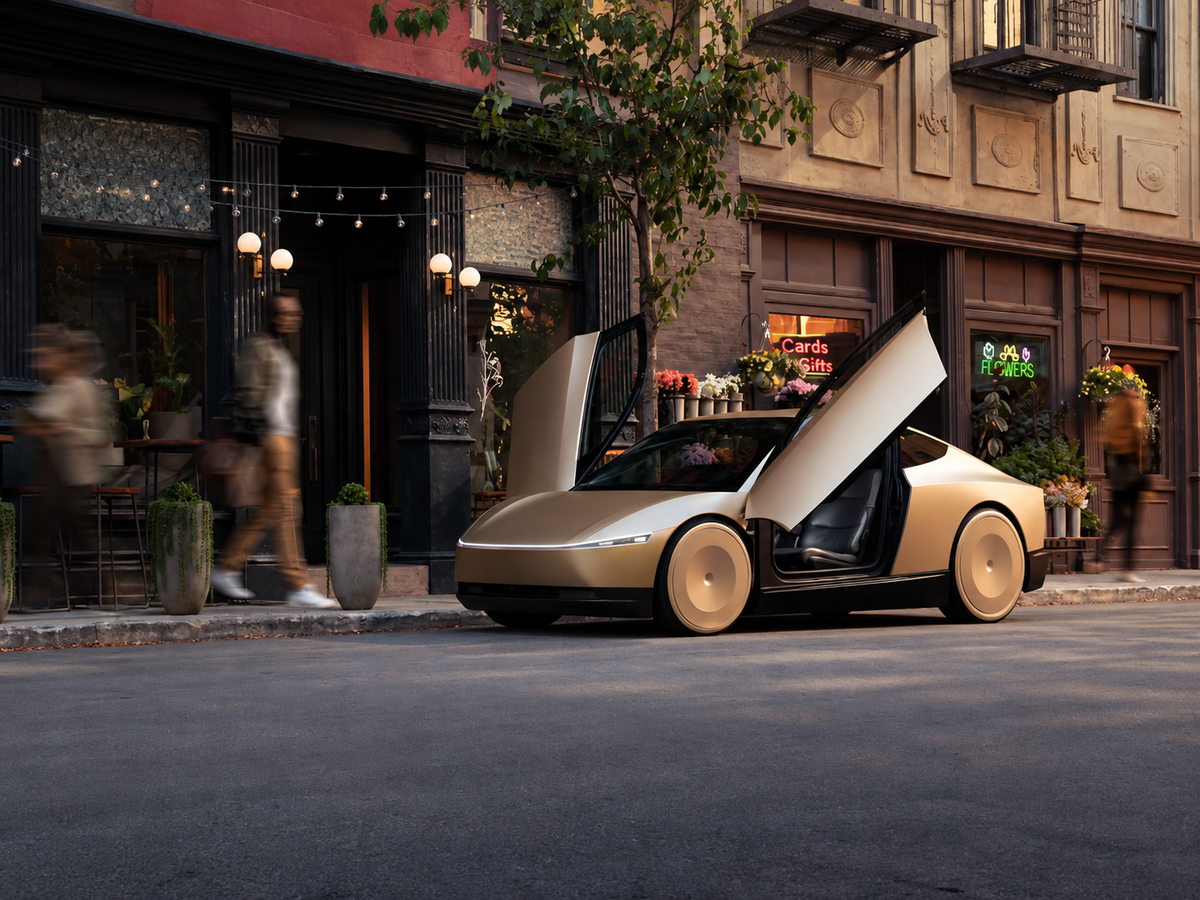
Tesla has already begun deploying its Cybercab within its robotaxi fleet in Texas, while its Full Self-Driving software has now received approval in eight European countries.
Investors therefore increasingly face two different Tesla stories.
The first is the traditional one: a global electric-car company trying to defend its market share and return vehicle deliveries to growth.
The second is the company Musk increasingly wants Tesla to become: an AI and robotics business in which autonomous driving, robotaxis and humanoid machines eventually become more important than selling cars.
The automotive business still matters enormously because it generates the revenue and cash needed to fund those ambitions.
That is why the latest delivery numbers are significant.
Tesla does not necessarily need its car business to return to the extraordinary growth rates of the early 2020s.
But it does need to demonstrate that the decline has stopped.
After two years of falling annual deliveries, the third quarter provides the clearest evidence yet that it may have.
If Tesla clears roughly 311,000 deliveries in the final three months of 2026, the company will finish the year back in growth.
That would not resolve every question surrounding its automotive business.
But it would close one of the most difficult chapters in Tesla’s recent history.