The Old Souks, Cafés and Public Spaces Where Lebanese Social Life Happened
Before malls, smartphones and social media, Lebanese social life revolved around souks, cafés, village squares, neighborhood shops and the seafront.
Before shopping malls, WhatsApp groups and coffee shops designed around laptops, Lebanese social life happened somewhere much more public.
It happened in the souk.
At the neighborhood café.
On the pavement outside a shop.
In the village square.
Along the seafront.
And in places where people did not necessarily arrange to meet. They simply knew someone would be there.
For much of Lebanon’s history, public life was built around spaces where commerce, conversation and daily routine overlapped.
The souk was one of the most important.
In cities such as Tripoli, Sidon and Beirut, markets were not simply places where people bought things.
They were dense social networks.
Tripoli’s old city still preserves this structure particularly clearly. Its historic souks remain organized around specialized trades, including gold, spices, textiles, soap and tailoring, connected by narrow streets and khans that once accommodated merchants and goods moving through the city.
A person going to buy fabric might encounter a relative, hear news from another neighborhood, negotiate with a merchant who knew the family, stop for coffee and return home knowing considerably more than when they left.
Shopping was only part of the experience.
The souk functioned almost like an informal information network.
Before telephones became universal, and long before social media, news travelled through people.
Merchants heard things from customers.
Travellers brought information from other towns.
Barbers, shopkeepers, coffeehouse owners and tradesmen interacted with dozens of people every day.
A marketplace therefore became one of the fastest places to learn what was happening.
The same was true of the coffeehouse.
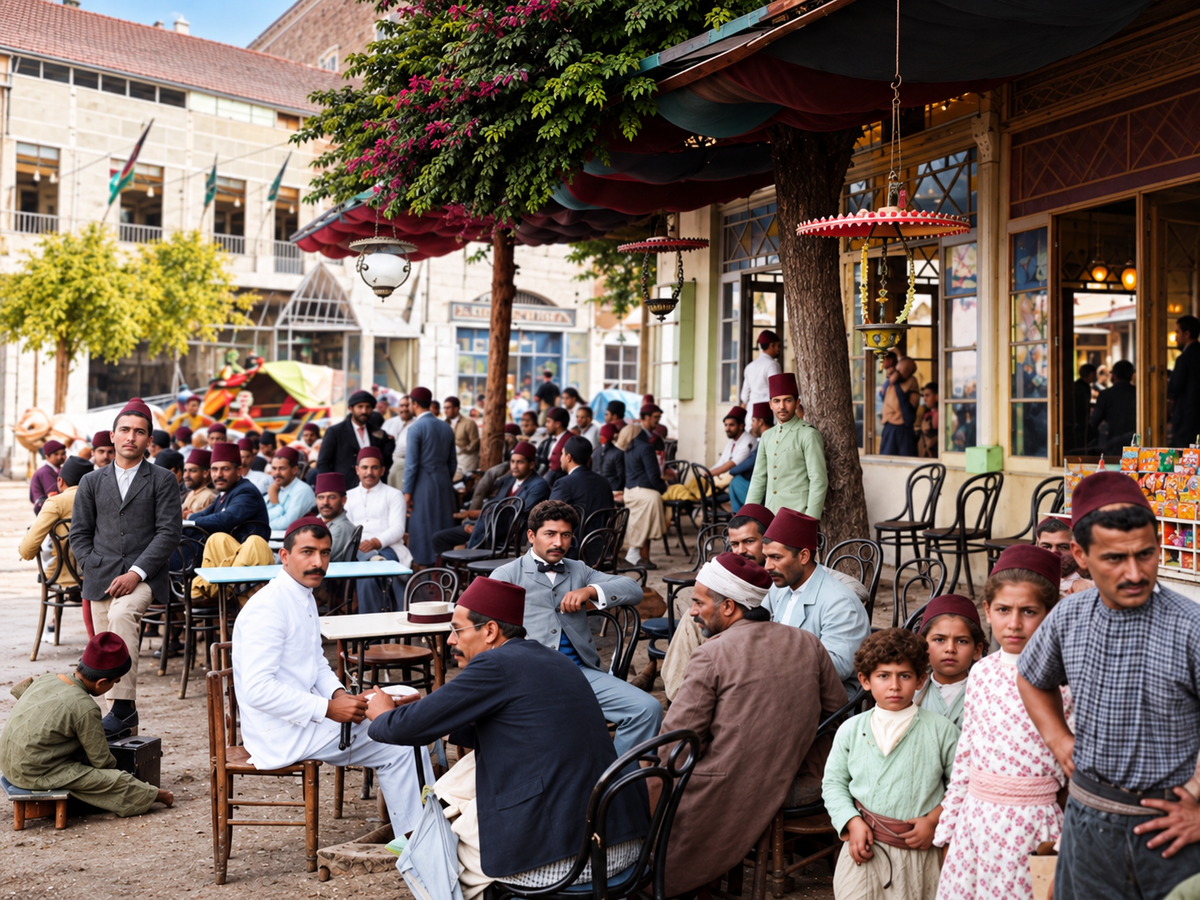
Coffeehouses became an important feature of Beirut’s urban life under the Ottoman Empire and remained central well into the 20th century. They offered something that homes could not always provide: a semi-public place where people from different professions and backgrounds could sit together for hours.
People drank coffee or tea.
They smoked nargileh.
They played backgammon.
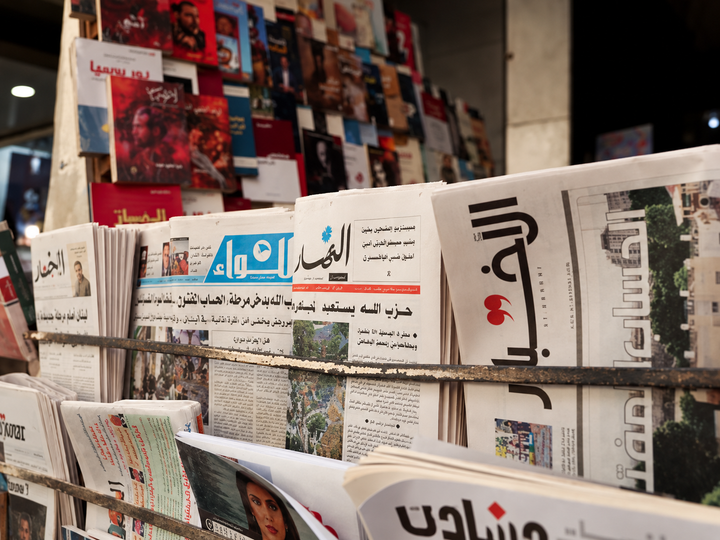
They read newspapers.
They argued.
Sometimes they simply watched the street.
That last activity mattered more than it sounds.
A traditional café was positioned between private and public life.
You could sit for hours without needing to organize an event, while still remaining connected to everything happening around you.
In old Beirut, cafés clustered around what was then known as Burj Square, later Martyrs’ Square.
One of the best remembered was Café al-Ezez — traditionally pronounced by Beirutis as “Café el-Kjez” — also known as Café Abou al-Nasr, which became associated with Beirut’s cultural and intellectual life in the early 20th century.
Martyrs’ Square itself was more than a monument or traffic junction.
At different points in its history, it functioned as one of Beirut’s principal meeting grounds, surrounded by cafés, shops, administrative buildings and transportation.
Historical research into the square shows how cafés and commercial activity developed around it as Beirut expanded under Ottoman rule.
Then, during the mid-20th century, the center of Beirut’s café culture began moving west.
Hamra became one of the most famous social spaces in the Arab world.
By the 1960s and early 1970s, cafés such as Horseshoe, Modca, Wimpy and Café de Paris were filled with Lebanese and Arab journalists, writers, artists, students, politicians and exiles.
The cafés did not merely serve them.
They became part of their work.
Journalists exchanged information at tables.
Writers met publishers.
Political activists argued about events unfolding across the region.
Students from the nearby American University of Beirut mixed with intellectuals and visitors from around the Arab world.
Some cafés developed reputations of their own.
The Horseshoe became strongly associated with artists and intellectuals.
Wimpy and the Express Café attracted journalists and writers.
Modca became another prominent meeting point for businessmen and intellectuals.
For a relatively small city, Beirut had created something unusual.
The café was functioning almost like a public salon.
A person did not need an invitation.
For the price of a coffee, they could remain inside a social and intellectual world for hours.
That accessibility helped make Hamra important.
It brought together people who might otherwise have occupied separate circles.
Researchers describing pre-war Hamra have emphasized this mixture of students, artists, journalists, businesspeople, political activists and intellectuals sharing the same cafés, theatres, bookshops and pavements.
But Lebanese social life was never limited to Beirut’s intellectual cafés.
There was another, simpler version everywhere.
The village square.
In towns across the mountains, the sahat al-balad could contain the church, mosque, fountain, grocery shop, bakery, café or municipal building.
It was where taxis waited.
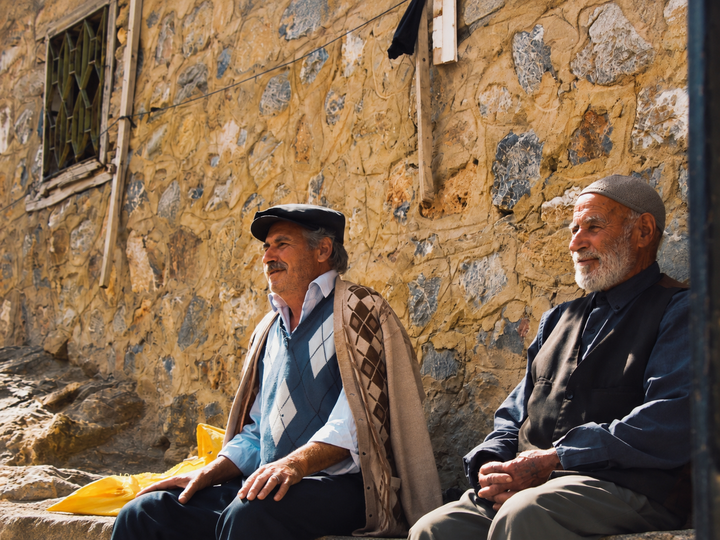
Where older men sat outside.
Where children passed on their way home.
Where people gathered after religious services.
Where announcements, funerals, weddings and political conversations spilled naturally into public space.
The square worked precisely because people had reasons to pass through it every day.
You did not necessarily go there to socialize.
Socializing happened because you went there.
The same principle existed in neighborhood shops.
The local grocer often knew who was visiting from abroad.
The butcher knew which families were preparing for a large lunch.
The barber heard conversations from an endless rotation of customers.
The bakery became crowded at predictable times.
These businesses doubled as social institutions.
Even the street itself carried a different role.
Before cars occupied so much urban space, pavements and doorsteps could function as extensions of homes and shops.
Chairs appeared outside.
Neighbors spoke between balconies.
Shopkeepers spent part of the day standing at their entrances.
Children played within sight of surrounding homes.
The boundary between public and private life was softer.
Beirut’s seafront created another distinctive kind of gathering place.
Places such as Manara and Raouché allowed people from very different backgrounds to occupy the same public landscape.
Café al-Rawda, established around the beginning of the French Mandate era, became particularly associated with Beirut’s writers, artists and intellectual crowd while maintaining the older Lebanese café traditions of long conversations, food, backgammon and nargileh beside the sea.
The Corniche performed a similar function without even requiring the price of a coffee.
People walked.
Families sat.
Fishermen gathered.
Friends met.
Vendors circulated.
The attraction was partly that nobody needed a specific reason to be there.
Many of these spaces still exist.
Tripoli’s souks remain working markets rather than museum reconstructions.
The Corniche still fills with walkers.
Neighborhood cafés remain part of everyday life.
Village squares continue to become crowded during holidays and summer months when emigrants return.
But the way Lebanese people use public space has changed.
The Civil War destroyed or fragmented many of Beirut’s traditional meeting places.
Postwar reconstruction altered much of the old city center.
Cars reshaped streets.
Shopping malls created private commercial environments.
Television moved entertainment into the home.
Smartphones moved conversation onto screens.
And social networks made it possible to know what friends were doing without physically going somewhere to find them.
Something was gained from those changes.
But something was also lost.
Older Lebanese public spaces had one quality that is difficult to recreate digitally: accidental contact.
You ran into someone.
You overheard something.
You sat beside people you had not chosen through an algorithm or invitation list.
You became part of the life of a neighborhood simply by being physically present within it.
That may be why memories of old souks and cafés carry so much nostalgia in Lebanon.
People are not necessarily remembering the coffee.
They are remembering what surrounded it.
The shopkeeper who knew every family.
The café table that belonged to the same group every afternoon.
The square where everybody eventually passed.
The souk where buying something could take twice as long because half the village wanted to talk.
These places were not simply where Lebanese people spent their free time.
They were where communities repeatedly saw one another.
And before so much of social life moved indoors and online, that repetition was one of the things that made a neighborhood feel like a neighborhood.