Why Lebanon’s Olive Harvest Is More Than Just a Harvest
Every autumn, Lebanese families return to ancestral villages to pick olives from trees that may have been in the family for generations. The harvest ends with oil, but the tradition is about far more than agriculture.
Every autumn, something familiar happens across Lebanon.
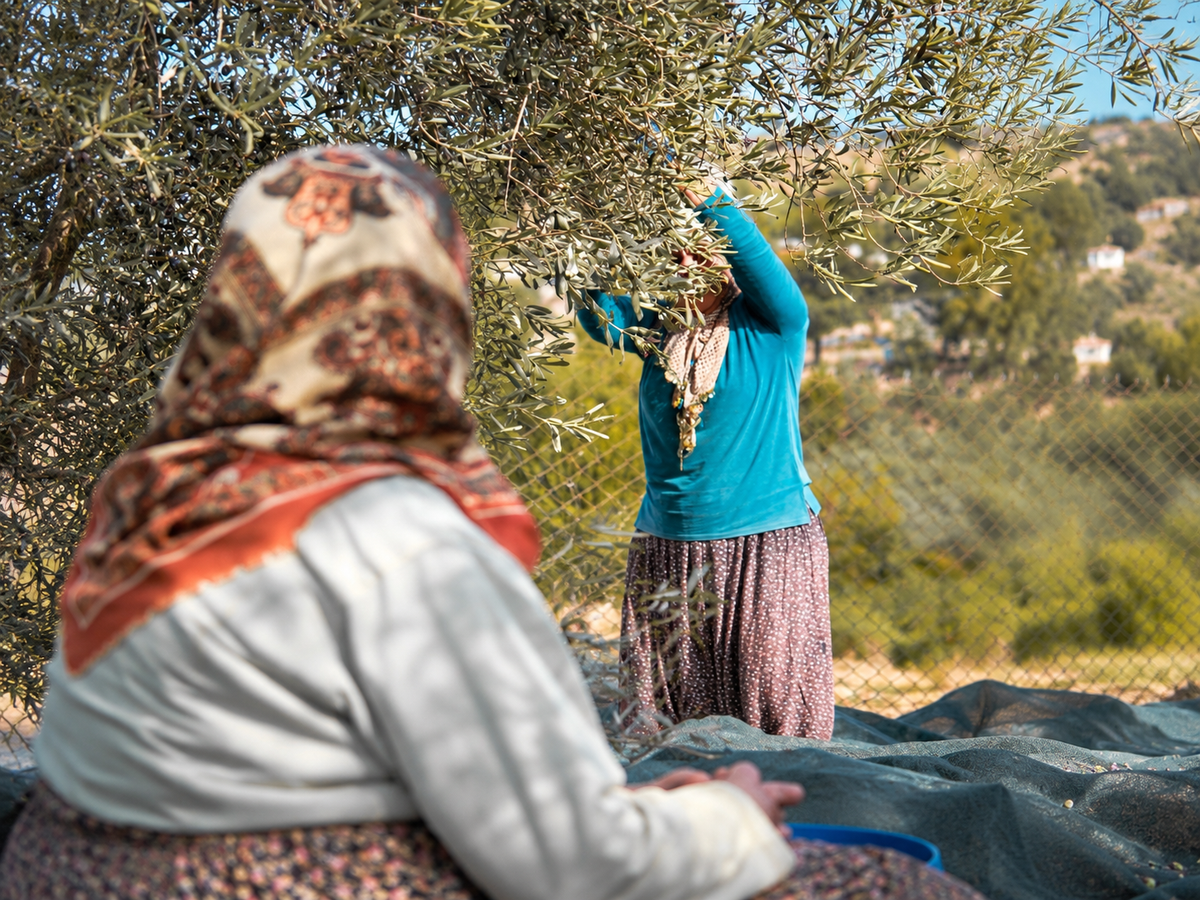
Families return to their villages. Cars arrive from Beirut. Relatives who may barely visit during the rest of the year gather around the same plots of land. Nets are spread beneath old olive trees. Children pick what falls. Older family members argue about whether the olives are ready. Food appears under the trees.
Then, at the end of the day, the harvest is taken to the local press.
The result is olive oil.
But for many Lebanese families, that is almost beside the point.
Olive season is one of the rare moments when agriculture, family history and attachment to land still come together in a single ritual.
Lebanon’s relationship with the olive tree reaches back thousands of years. Archaeological research across the southern Levant shows olive cultivation and oil production developing several millennia before the modern states of the region existed, with clear evidence of cultivation by around 5,000 BCE. AGRIS
Lebanon remains one of the tree’s natural Mediterranean homes. The Ministry of Agriculture says the country today has around 13 million olive trees and describes the crop not simply as an agricultural product but as part of Lebanon’s heritage, identity and rural economy. Ministry of Agriculture
Olives are grown from the coast to elevations approaching 1,200 meters, producing different oils depending on geography and climate. Traditional Lebanese varieties include Souri, Baladi, Ayruny, Nabali and Khoudairy, with Souri or Baladi historically among the most widespread. FAOHome
But statistics explain only a small part of why the olive tree became so important.
For generations, an olive grove was a family asset in the most literal sense.
Unlike a seasonal crop, an olive tree can outlive the person who planted it.
A father could tend trees inherited from his father and eventually leave them to his own children. A piece of land therefore carried not only monetary value, but continuity.
That is why olive groves often remain emotionally important even to Lebanese who no longer depend on agriculture for a living.
Someone may work in Beirut all year and still return to Batroun, Koura, the Chouf or the South when the harvest begins.
Another may live abroad and arrange a visit around the season.
The trees are still “ours” even when agriculture is no longer the family profession.
That relationship was once economically essential.
Olive oil was food, household supply and tradable wealth. It could be stored for long periods and used throughout the year for cooking, preservation and soapmaking. Traditional olive-oil soap remains closely tied to the October-November harvest in Lebanon, with lower-grade oil and olives unsuitable for eating historically finding another use rather than being wasted. L'Orient Today
Harvesting itself was labor-intensive and communal.
Traditionally, families spread cloths or nets underneath the trees while olives were picked by hand or knocked from branches using long sticks. The fruit was gathered, sorted and transported to the village press.
Some of that has changed. Mechanical harvesting equipment and modern mills are increasingly common.
Yet remarkably much of the basic ritual survives.
A report from a Batroun olive farm described olives still being collected using largely traditional methods before being taken to a mechanized local press. Earlier Ministry figures found that traditional presses remained widespread well into the modern era. L'Orient-Le Jour
The press itself is part of the social experience.
During harvest season, village presses become gathering points.
Families arrive with sacks or crates from their land, wait their turn and watch the transformation of fruit into oil.
Historically, pressing was far more physical. Ancient Mediterranean extraction methods involved crushing olives into paste, placing the paste in woven mats and applying pressure so that the oil could separate and collect below. Archaeological evidence from the wider Levant preserves several versions of these early techniques. UNESCO World Heritage Centre
Modern presses can produce cleaner oil much more efficiently, and the Ministry of Agriculture now encourages farmers to minimize the time between picking and pressing because prolonged storage can damage quality. Ministry of Agriculture
But the anticipation remains.
There is something unusually tangible about watching olives from trees your family owns become the oil your household will use for the coming year.
Once pressed, the oil is often divided.
One container goes to one household.
Another to a sibling.
Some is kept by parents.
Bottles may be sent to children living abroad.
Some is sold, while some is stored for the family.
In many cases, the division is not particularly formal. It reflects the way rural property itself has historically moved through Lebanese families: shared, inherited and repeatedly divided across generations.
That can leave a family owning trees on plots fragmented among cousins who now live in completely different places.
Yet harvest season temporarily reverses that fragmentation.
People return.
Meals are another part of the ritual.
Picking olives is slow work, often beginning early and continuing for hours. Lunch in the grove becomes part of the day: bread, cheese, labneh, vegetables, olives and whatever the family has prepared.
The meal is not necessarily elaborate.
Its significance comes from where it is eaten and with whom.
The harvest turns land that may sit quiet for much of the year into a social space again.
Children hear stories about who planted a tree.
Grandparents explain how olives used to be picked.
Someone remembers where a house once stood.
The grove becomes a family archive without anything being written down.
That is particularly important in Lebanon because migration has repeatedly separated people from their villages.
Urbanization moved families toward Beirut.
Civil war displaced communities.
Economic migration sent generations abroad.
The collapse after 2019 pushed another wave of Lebanese to leave.
Yet property, especially agricultural land, remained behind.
An olive tree can therefore become one of the few physical things connecting a Lebanese family in Montreal, Dubai or Paris with a village their grandparents knew intimately.
The importance of that connection becomes clearest when trees are threatened.
Lebanon’s recent wars damaged olive-growing areas particularly heavily in the South. The Ministry of Agriculture said losses to the olive sector through the end of 2024 exceeded $236 million and included more than 56,000 destroyed trees, some estimated to have been more than 150 years old. Ministry of Agriculture
This year, the ministry has been working with southern farmers to secure access to groves in areas affected by continuing insecurity, explicitly describing protection of the olive harvest as both a livelihood issue and a way of helping families remain connected to their land. Ministry of Agriculture
That is why losing an old olive tree feels different from losing an ordinary crop.
Another tree can be planted.
But the replacement cannot immediately replace the decades or centuries embodied in the original.
Lebanon’s olive traditions are changing.
Fewer younger Lebanese work permanently in agriculture. Modern presses have replaced many older ones. Laborers may now carry out work once done by extended families. Some groves are neglected because their owners have emigrated.
The Ministry itself has warned that traditional knowledge about pruning, fertilizing, harvesting and storage is no longer reliably being transmitted from one generation to the next. Ministry of Agriculture
Yet every autumn, much of the ritual somehow survives.
Perhaps because olive picking offers something increasingly rare in modern Lebanon.
It gives families a reason to return to land they inherited but no longer live on.
It brings different generations into the same place.
And at the end of the season, the connection becomes something physical.
A tin of oil in a Beirut kitchen.
A bottle packed into a suitcase for France.
Olives from a tree planted before the person eating them was born.
Lebanon’s olive harvest matters economically.
But its deeper significance is harder to measure.
For many families, an olive tree is not simply agricultural property.
It is proof that someone was there before them, cared for the land and expected someone to come after.
And every harvest is a small act of keeping that chain intact.