Israel's Vote Count Is Complete: Netanyahu Wins 53 Seats but Falls Short of a Majority
Israel's completed vote count gives Netanyahu's bloc 53 seats, Eisenkot's opposition 48 and Arab parties 19. Likud remains the largest party with 27 seats, but Netanyahu is eight seats short of a governing majority.
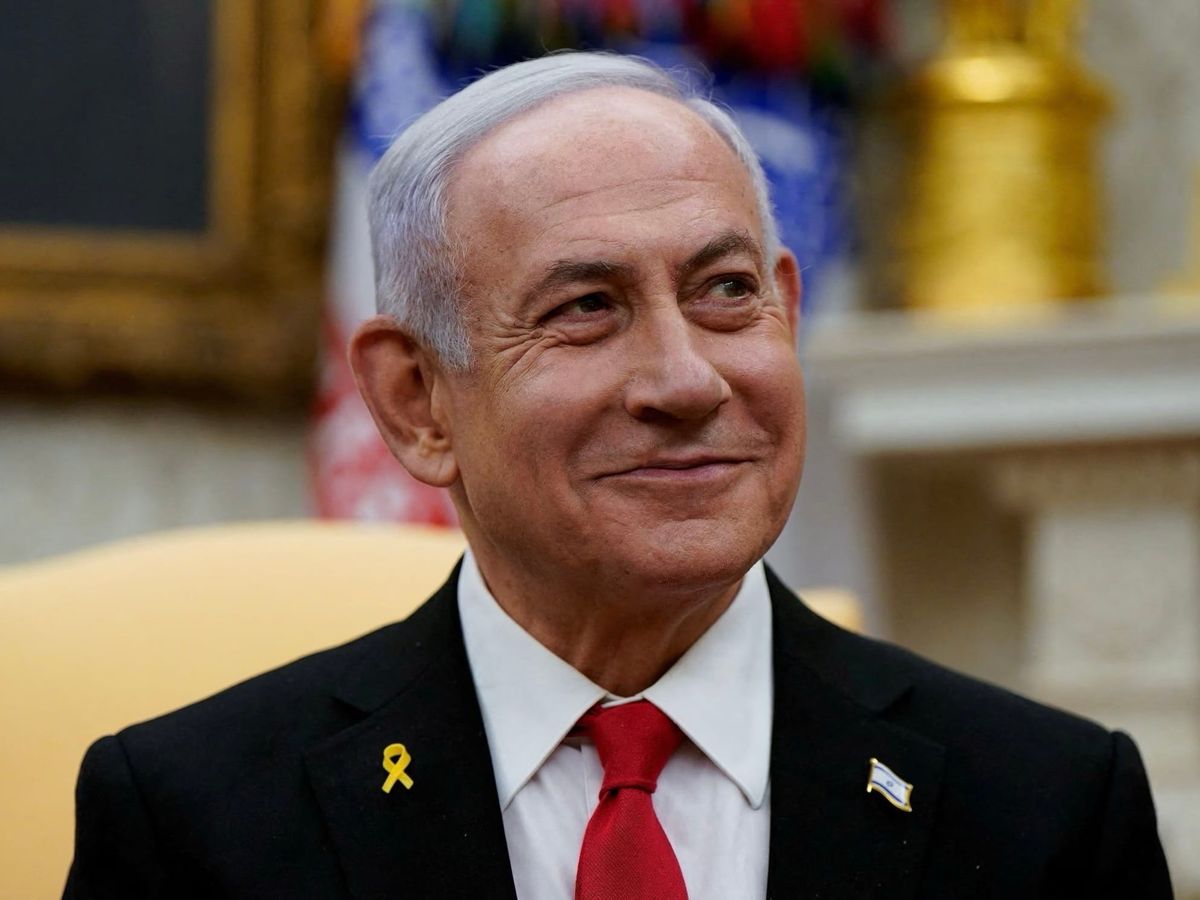
Israel has completed counting votes from its October 27 parliamentary election, confirming that Prime Minister Benjamin Netanyahu's political bloc has fallen well short of the majority needed to form a government.
The completed count gives Netanyahu's bloc 53 seats, the opposition led by Gadi Eisenkot 48, and the two Arab-led parties a combined 19 seats.
That leaves Netanyahu eight seats short of the 61 required to control Israel's 120-member Knesset.
His Likud party remains the largest individual party with 27 seats, followed by Eisenkot's Yashar with 21 and Naftali Bennett's B'Yachad with 12.
The result marks a significant setback for Netanyahu's governing coalition, which held 68 seats in the outgoing parliament.
Yet it does not automatically mean Netanyahu will lose power.
Israel's next government will be determined by coalition negotiations, and neither major political camp has a straightforward parliamentary majority.
The Final Seat Distribution
The Central Elections Committee's completed count produced the following distribution:
| Party | Seats |
|---|---|
| Likud — Benjamin Netanyahu | 27 |
| Yashar — Gadi Eisenkot | 21 |
| B'Yachad — Bennett and Lapid | 12 |
| Joint List | 11 |
| Democrats — Yair Golan | 8 |
| Ra'am — Mansour Abbas | 8 |
| Yisrael Beytenu — Avigdor Liberman | 7 |
| Otzma Yehudit — Itamar Ben-Gvir | 7 |
| United Torah Judaism | 7 |
| Shas | 6 |
| Religious Zionism — Bezalel Smotrich | 6 |
The election also recorded turnout of 77.9%, with approximately 5.72 million ballots cast.
The completed count remains subject to final verification before the official results are submitted to President Isaac Herzog on November 4.
Arab Parties Become Central to Coalition Arithmetic
One of the election's most significant developments was the performance of the Arab-led parties.
The Joint List secured 11 seats, while Ra'am won eight, bringing their combined representation to 19 seats.
That is nearly double their representation in the outgoing Knesset.
Together with Eisenkot's 48-seat opposition bloc, they account for 67 parliamentary seats.
Mathematically, that is more than enough to replace Netanyahu.
Politically, however, the situation is far more complicated.
Several opposition leaders have rejected forming a government dependent on Arab parties.
Avigdor Liberman has explicitly ruled out serving in a coalition with either Netanyahu or the Arab factions.
Eisenkot has explored options for replacing Netanyahu, but an agreement involving the entire opposition and Arab parties remains uncertain.
The result is an unusual situation in which Netanyahu's opponents collectively hold a parliamentary majority but have not agreed on how to use it.
Could Netanyahu Abandon Ben-Gvir and Smotrich?
Netanyahu now faces a difficult choice.
His existing allies cannot deliver the parliamentary majority he needs.
One possibility would be to seek additional partners from Eisenkot's opposition camp.
That would raise the prospect of a broader unity government, potentially excluding some of Netanyahu's current partners.
The idea has also attracted international attention.
Israeli media recently reported that figures close to U.S. President Donald Trump favor a government without Itamar Ben-Gvir and Bezalel Smotrich.
The reported American concern centers on the ministers' support for West Bank annexation and the consequences for Washington's regional diplomatic ambitions.
Trump hopes to expand the Abraham Accords, particularly through normalization between Israel and Saudi Arabia.
Annexation could undermine those efforts.
However, the reported American preference has not become an official demand that Israel form a particular coalition.
And replacing Ben-Gvir and Smotrich would require Netanyahu to secure support from politicians who campaigned against him.
Eisenkot has rejected serving under Netanyahu, including through a rotating premiership arrangement.
That makes a unity government possible in parliamentary terms but difficult to negotiate.
Herzog Wants to Prevent Another Election
President Isaac Herzog has urged political leaders to approach coalition negotiations with an open mind.
He has emphasized the importance of avoiding another election after years of political instability.
Between 2019 and 2022, Israel held five parliamentary elections because rival blocs repeatedly failed to establish stable governments.
Once the results are formally submitted, Herzog will consult parliamentary parties before assigning a candidate the task of forming a government.
That candidate will generally receive 28 days, with a possible extension of 14 days.
If negotiations fail, additional procedures could allow another candidate to attempt to form a coalition.
Only after those options are exhausted would another election become necessary.
The new Knesset is scheduled to be sworn in on November 10.
Until a replacement government takes office, Netanyahu remains prime minister.
Allegations of Election Interference
The completed count also comes amid controversy over allegations of foreign electoral interference.
Likud figures have claimed that the election was improperly influenced, with reports focusing on suspected foreign financing.
Israel's Shin Bet security service is investigating allegations of foreign involvement.
However, the Central Elections Committee has rejected claims of widespread voting irregularities and stated that the investigation does not affect the election results.
The allegations remain under investigation and have not established that the vote count was manipulated.
The controversy nevertheless adds another complication to an already difficult political transition.
What the Result Means for the Middle East
Israel's next coalition will inherit major regional decisions involving Iran, Lebanon, Gaza and the West Bank.
The government will need to address Israeli military positions in southern Lebanon, continuing negotiations over Hezbollah's disarmament and the possibility of renewed conflict involving Iran.
It will also determine Israel's approach toward Palestinian territories and Washington's regional diplomatic initiatives.
A coalition involving centrist or center-right opposition figures could alter Israel's approach to annexation and negotiations with Arab states.
But a change in coalition composition would not necessarily produce a fundamental shift in security policy.
Eisenkot is a former military chief who also supports a strong military posture toward Iran and Hezbollah.
The key distinction may therefore concern diplomatic strategy, political accountability and coalition priorities rather than Israel's underlying security concerns.
Netanyahu Won the Largest Party, Not a Majority
The completed results have clarified the election's parliamentary arithmetic without resolving its political outcome.
Netanyahu's Likud finished first.
His coalition lost its majority.
Eisenkot's opposition cannot govern alone.
And Arab parties now hold enough seats to influence the formation of the next government, provided other parties are willing to cooperate with them.
Herzog wants to avoid another election, but forming a government will require compromises that several leaders have publicly resisted.
For Netanyahu, the challenge is whether he can attract new partners without losing the support of existing allies.
For Eisenkot, it is whether he can assemble a majority from parties divided over cooperation with Arab lawmakers and Netanyahu's Likud.
The vote count is complete.
But Israel's election has not yet produced a government.
And the negotiations that follow could prove just as consequential as the ballots themselves.