Macron and Aoun Promise Lebanese Sovereignty Again, but the Record Gives Reason for Skepticism
Emmanuel Macron and Joseph Aoun are again promising to restore Lebanese sovereignty, this time through a Paris initiative aimed at strengthening the army and establishing the state’s monopoly over weapons.
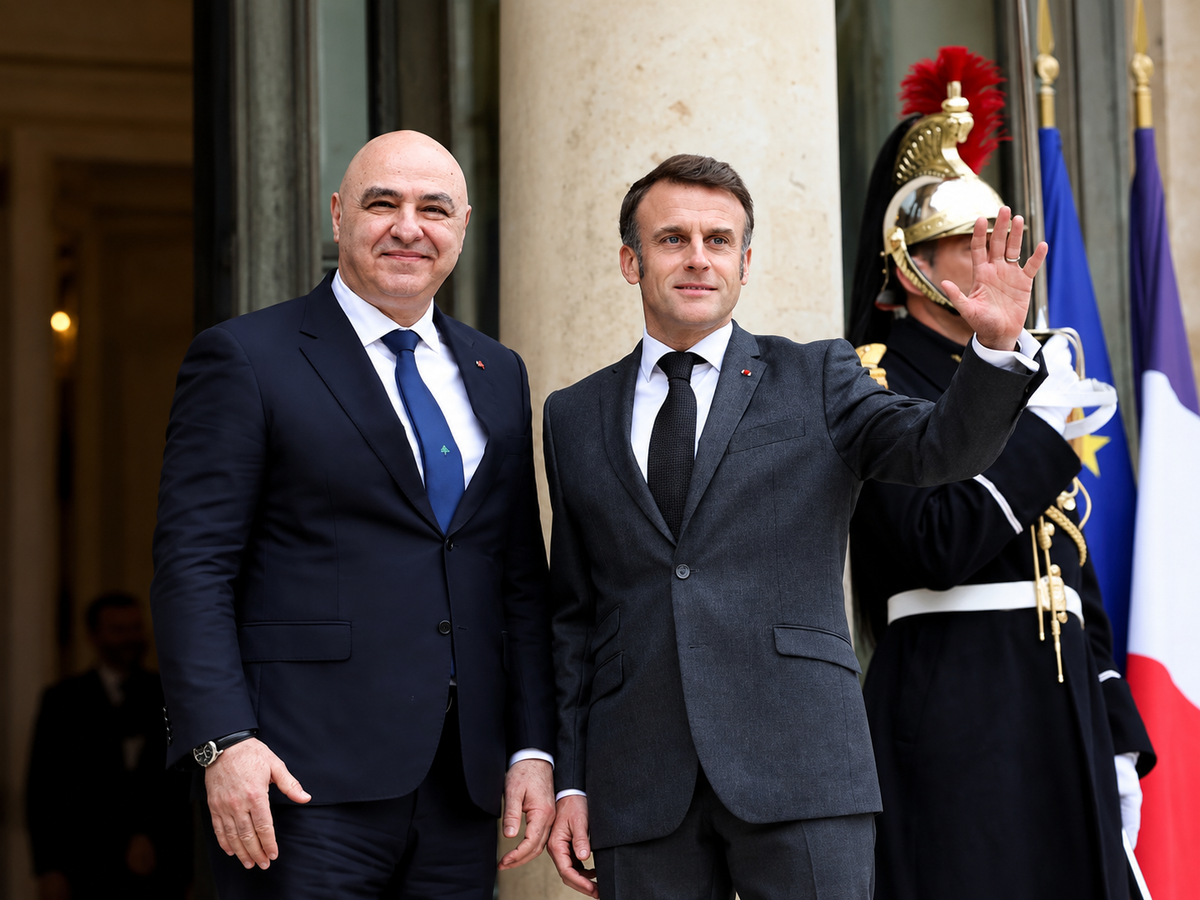
France and Lebanon are once again presenting a major international conference as a turning point for Lebanese sovereignty.
President Emmanuel Macron hosted Lebanese President Joseph Aoun and Jordan’s King Abdullah II in Paris this week for talks aimed at strengthening the Lebanese Armed Forces, preparing for the end of UNIFIL’s current mission and helping the state extend its authority across the country. The Élysée said the objective is to reinforce the army as the institution capable of ensuring “the monopoly of the state on weapons.”
On paper, that is exactly what Lebanon has needed for years.
But for many Lebanese, the promises sound familiar.
Macron arrived in Beirut immediately after the August 4, 2020 port explosion and presented himself as an unusually active international advocate for political change. He toured devastated neighborhoods, met Lebanese leaders and promised to push for reforms and a new political compact. He returned to Lebanon weeks later and repeatedly warned the political class that France expected action.
At the time, Joseph Aoun was commander of the Lebanese Armed Forces.
Six years later, Macron is still calling for the restoration of Lebanese sovereignty, while Aoun is now president and Hezbollah’s weapons remain outside the full control of the Lebanese state.
That does not mean nothing has changed.
The regional environment today is dramatically different. Hezbollah has been weakened militarily, Israel controls parts of southern Lebanon after the latest war, and Lebanon has formally committed under a U.S.-brokered framework to extending state authority and addressing Hezbollah’s weapons. Aoun has also publicly said he supports disarming Hezbollah peacefully and wants a security agreement with Israel after an Israeli withdrawal.
But implementation remains the central problem.
The June framework linking Israeli withdrawal to Hezbollah’s disarmament has stalled. Hezbollah continues to reject disarmament on the terms demanded by Israel and the United States, while Israel continues military operations and maintains forces inside Lebanese territory.
The Paris meeting is therefore attempting to solve a problem that international conferences have repeatedly failed to solve: how to turn declarations about sovereignty into actual state control.
France says the answer is to strengthen the Lebanese Army.
The Paris talks focused on equipment, training, intelligence cooperation and financial support for the military, particularly as UNIFIL is expected to begin winding down from January 2027. European and Arab officials are also studying alternatives to the UN mission in southern Lebanon.
The logic is straightforward.
If Lebanon is expected to deploy its army across the south, secure the border and eventually establish a monopoly over weapons, the military needs money, manpower, equipment and political backing.
But resources have never been the only obstacle.
The Lebanese state has received billions of dollars in military assistance over the years. The more difficult question has always been whether Lebanon’s political leadership is willing and able to enforce state authority when doing so directly challenges Hezbollah.
That is where skepticism toward the latest Paris initiative becomes understandable.
Macron has spent much of his presidency trying to preserve French influence in Lebanon. After the port explosion, he championed political reform. He later backed initiatives to break Lebanon’s presidential deadlock. France has repeatedly organized conferences, mobilized donors and argued for stronger Lebanese institutions.
Yet Hezbollah remained armed throughout that period, the port investigation was obstructed for years, Lebanon’s financial collapse remained unresolved and the state never established an uncontested monopoly on force.
Aoun faces a similar credibility test.
As army commander, he led the institution that was widely regarded as Lebanon’s most legitimate national body. As president, he now has significantly greater political authority and has repeatedly stated that weapons should ultimately be controlled by the state.
But those statements will increasingly be judged against results.
The current Paris process does contain elements that distinguish it from earlier diplomatic efforts.
First, the military balance inside Lebanon has changed significantly.
Second, UNIFIL’s expected withdrawal creates an immediate deadline rather than an open-ended diplomatic process.
Third, the United States is simultaneously mediating direct Lebanese-Israeli negotiations. A new round is expected in Rome in October, with Washington pushing a security arrangement tying Israeli withdrawal to Lebanese state control and Hezbollah’s disarmament.
And fourth, the Lebanese government has formally committed itself more clearly than previous governments to neutralizing non-state armed groups.
Those differences matter.
But they do not guarantee success.
The fundamental question remains the same one Lebanon has faced for decades: what happens when the state’s declared sovereignty collides with the political and military power of Hezbollah?
More money for the Lebanese Army can strengthen the institution.
International conferences can coordinate diplomatic support.
A replacement for UNIFIL may help prevent a security vacuum.
None of those measures, by themselves, answer the political question of who ultimately decides matters of war, peace and weapons inside Lebanon.
That is why the Paris conference should be judged less by its declarations than by what follows.
Does the Lebanese Army actually deploy throughout areas previously controlled by Hezbollah?
Are unauthorized weapons and military infrastructure removed?
Does Israel withdraw from Lebanese territory as agreed?
Does the state become the sole authority responsible for Lebanon’s borders and security?
Those are measurable outcomes.
Macron and Aoun are now asking the international community to believe that Lebanon is entering a different chapter.
Given the record since Macron walked through devastated Beirut in 2020, skepticism is not unreasonable.
This time, however, both leaders face a clearer test than before.
If sovereignty is truly the objective, the measure of success will not be another conference in Paris.
It will be whether the Lebanese state finally becomes sovereign on the ground.